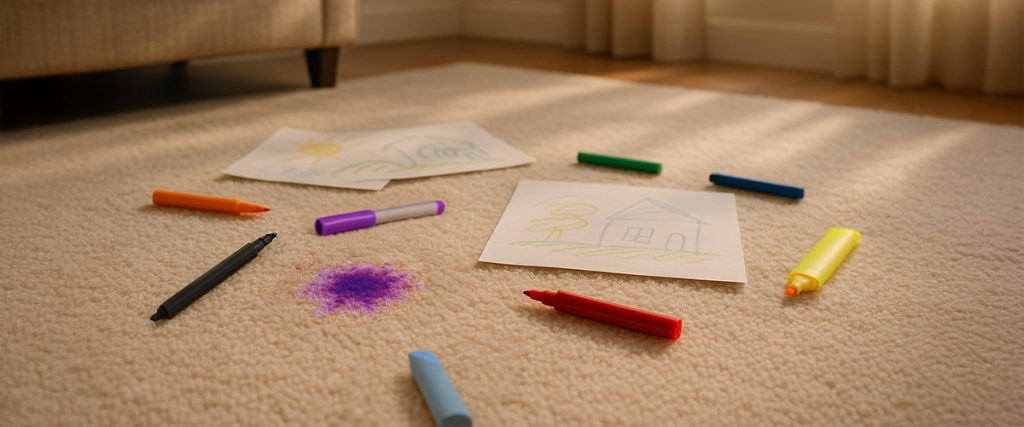
I know that we’ve all been there, and the moment it happens, ink stains on your gorgeous carpet can feel like a disaster. One moment, a pen is working fine, and the next, it leaks on your favorite rug. A marker rolls off a table. A child forgets to put the cap back on. Or a printer cartridge pops open when you least expect it. Whatever the source, ink sinks fast and spreads quickly, especially on lighter carpets.
Here in Central Florida, the warm and humid environment can make ink stains even trickier. If ink sits too long, it settles deep into the fibers and becomes harder to lift. Add in the pigments, dyes, and oils that many inks contain, and you have a stain that needs fast attention and the right approach.
The good news is that many ink stains can be removed at home if you act quickly. And when the stain is large, old, or coming from tough products like permanent markers, Mint Condition’s IICRC-certified technicians bring professional tools and eco-friendly methods to restore your carpet safely and effectively.
Why Ink Stains Carpet
Have you ever wondered why ink stains or how it’s possible to have permanent vs non-permanent markers? Ink may look like a simple liquid, but it’s actually a mix of pigments, solvents, oils, and sometimes resins. These components help ink flow smoothly and dry quickly on paper, but they also make it cling stubbornly to carpet fibers.
Ink Composition
Ink can include several ingredients, each contributing to why it stains so aggressively. Here are a few of the troublemakers:
Pigments and Dyes
These give ink its color. Pigments sit on the surface of fibers, while dyes soak into them. Both can bond quickly, especially on light or absorbent carpets.
Lubricants
Many pens contain small amounts of lubricants to help the ink flow. These oily components make the stain spread and cling, similar to a grease spot.
Resins (Permanent Ink)
Permanent markers use resins that bind firmly to whatever surface they touch. On carpet, these resins hold on tightly to fibers, and believe me, it can be extremely difficult to remove without professional help.
Ink Types and Their Behavior
Different inks behave differently in carpet, so choosing the right cleaning method depends on the type of pen or product that caused the stain.
Water-Based Ink
Found in washable markers and some pens. These are the easiest to remove because they dissolve in water.
Ballpoint Ink
Contains dyes, oil, and solvents. Ballpoint stains spread slowly, but don’t get fooled; they cling firmly, and most of the time they require stronger cleaners than rubbing alcohol.
Gel Ink
Thicker and more vibrant, gel ink contains pigments that can seep deep into fibers. It often leaves behind a shadow if not cleaned properly.
Permanent Markers
These are the scariest, because they are designed to last forever, and they contain strong dyes and resins. These stains are the toughest to remove and often need professional cleaning.
Ink Types and Their Cleaning Difficulty
Different inks behave differently once they hit carpet fibers. Some dissolve easily, while others cling like glue. Here’s a quick breakdown of the most common ink types and what you can expect when trying to clean them.
| Ink Type | Common Source | Cleaning Difficulty | Why It’s Hard or Easy to Remove |
|---|---|---|---|
| Water-Based Ink | Washable markers, kids’ pens | Easy | Dissolves in water and contains fewer pigments |
| Ballpoint Ink | Standard pens used at home or office | Moderate | Contains oils and dyes that bond to carpet fibers |
| Gel Ink | Gel pens, journaling pens | Hard | Thick, vibrant pigments sink deep into fibers |
| Permanent Marker | Sharpies and industrial markers | Very Hard | Resins and strong dyes are designed to last permanently |
Why Prompt Action Is Important
Ink doesn’t sit politely on the surface. It sinks quickly and starts bonding to the fibers within minutes. Once dry, ink becomes much harder to lift and can leave behind color shadows even after cleaning.
If you act fast, you’ll have the best chance to save your carpet. Blotting immediately and choosing the right cleaner can make a huge difference and prevent a small accident from turning into a permanent reminder.
Mint Condition Tip: In Florida homes, we often see ink stains get worse because the wrong product was used first. Sometimes people think that harsh chemicals like Hairspray or bleach can help, but the truth is that they can set the stain deeper or damage the carpet. When in doubt, start with gentle solutions, or call us before the stain spreads.
How to Remove Ink Stains from Carpet
How to Remove Ink from Carpet
We know that ink stains can look intimidating, but with the right tools and a careful approach, they can be lifted before they settle deep into the fibers. The key is patience, gentle pressure, and choosing the right cleaning solution based on the type of ink.
⚠️ Disclaimer: Use these cleaning methods at your own risk. Carpet materials vary and may react differently to certain products, which could cause damage or discoloration. Always test on a hidden area first. For delicate, valuable, or heavily stained carpets, it’s best to contact a certified professional.
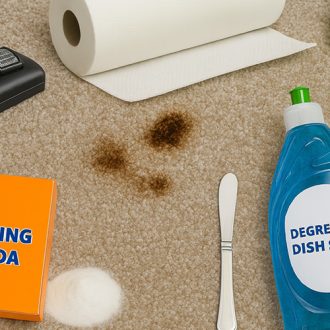
Tools & Materials Needed
Here are the basic items you’ll want on hand before you start:
- Clean white cloths or paper towels
- Cold water
- Rubbing alcohol (isopropyl alcohol)
- White vinegar
- Mild dish soap
- Spray bottle (optional)
Other optional cleaners:
- Enzymatic cleaner
- Commercial ink remover
Pro tip: Using white cloths is important because colored towels can transfer dye into your carpet during the cleaning process.
Step 1. Act Quickly
Ink dries fast, especially in warm weather, so the sooner you start, the better your chances of removing the stain. Fresh ink sits closer to the surface, while older stains soak deeper and bond more tightly to carpet fibers.
Step 2. Blot Up as Much of the Spilled Ink as Possible
- Gently blot the stain with a clean white cloth.
- Do not rub, since rubbing spreads ink outward and pushes it deeper.
- Blot from the outside of the stain inward to prevent it from widening.
Mint Condition pro tip: We often see stains get worse because they were smeared instead of blotted. Please remember that light pressure makes a big difference here.
Step 3. Choose a Cleaning Solution
Different inks respond to different cleaners. Here are the most effective options:
a. Vinegar and Water
Vinegar helps break down pigments, while soap lifts the residue:
- Mix one tablespoon of white vinegar with one tablespoon of mild dish soap and two cups of cold water.
- This works best for water-based inks and lighter stains.
b. Rubbing Alcohol (Isopropyl Alcohol)
- Alcohol is very effective on ballpoint inks and gel inks.
- It dissolves oily residues and prevents the ink from bonding deeper.
- Important: Apply alcohol to a cloth first, never directly onto the carpet.
c. Enzymatic Cleaner
- These cleaners break down organic compounds and work well on inks mixed with other substances, like children’s markers or gel pens.
- Don’t forget to check the label to make sure it is safe for carpet fibers.
d. Commercial Ink Removers
- Products made specifically for ink stains can be effective, especially on tough marks.
- Please remember that you always need to test them in a hidden area first, since some formulas are strong and may lighten carpet fibers.
Step 4. Application and Blotting
Choose a solution from the list above. Apply it lightly and carefully:
- Dampen a clean white cloth with your chosen cleaner.
- Blot the stain gently.
- Avoid scrubbing, since aggressive rubbing can push ink deeper.
- Rotate the cloth to a clean spot each time to avoid reapplying ink back onto the carpet.
Repeat the process until the stain begins to lift.
Step 5. Rinse and Dry
Once the stain is gone or noticeably lighter:
- Rinse the area with a cloth dipped in cold water to wash away cleaning residue.
- Blot dry with a clean towel.
- Let the carpet air dry fully.
- Vacuum the area once dry to lift the fibers and restore texture.
Moisture left behind in carpet can cause wicking (a process in which stains reappear), so thorough drying is key.
Summary: Cleaning Solutions for Ink Stains
| Cleaning Solution | Best For | Why It Works | Notes / Cautions |
|---|---|---|---|
| Vinegar + Water | Water-based inks, light stains | Mild acidity helps loosen pigments while dish soap breaks surface tension | Avoid soaking the carpet; blot gently |
| Rubbing Alcohol (Isopropyl) | Ballpoint ink, gel pens, standard office pens | Dissolves oils and solvents found in most pen inks | Test first; strong on delicate fibers like wool |
| Enzymatic Cleaner | Children’s markers, mixed-ingredient inks | Breaks down organic compounds and ink binders | Choose a carpet-safe formula and follow label instructions |
| Commercial Ink Remover | Permanent markers, deep or old ink stains | Designed specifically to lift ink pigments and resins | Can lighten carpet fibers; always test in a hidden area |
Mint Condition tip: We recommend starting with alcohol for most pen inks, but always test first. Some delicate carpets, especially wool, can react to strong solvents.
Troubleshooting to Remove Different Types of Ink Stains on Carpet
Not all ink stains behave the same. Different inks have different formulas, colors, and thickness levels, which means the cleaning method has to change too. Here’s how to tackle the most common ink stains found in homes.
How to Remove Ink Stains from Carpet
Removing Ballpoint Pen Ink from Carpet
Ballpoint ink contains dyes and oils, so it tends to cling to carpet fibers while spreading slowly.
- Blot gently with a dry white cloth to remove any ink sitting on the surface.
- Dampen a cloth with rubbing alcohol and lightly dab the stain. Alcohol helps dissolve the oily part of the ink.
- Keep blotting with clean sections of the cloth until the stain lifts.
- Rinse with cold water and blot dry.
Pro Tip: Avoid over-saturating the carpet with alcohol. A little goes a long way, especially on synthetic carpets like polyester or nylon.
Cleaning Up Permanent Ink Stains from Carpet
Permanent ink is the toughest type to remove because it contains resins designed to “stick forever.”
- Apply a small amount of rubbing alcohol, commercial ink remover, or an oxygen-based cleaner to a cloth (never directly to the carpet).
- Blot slowly, working from the outer edges inward to prevent spreading.
- Repeat as needed, switching to clean cloth sections each time.
- Rinse with cold water to remove residue.
It’s important to keep in mind that permanent marker stains may not lift completely without professional help, especially on light carpets or high-pile fibers.
Mint Condition expertise: Our IICRC-certified technicians often treat permanent marker stains left behind on playroom carpets in Central Florida homes. Professional extraction tools can reach deep pigment that DIY methods miss.
Getting Rid of Water-Based Ink Marks from Carpet
Water-based inks, found in washable markers or kids’ drawing pens, are usually the easiest to remove.
- Mix a small amount of dish soap with cold water.
- Dab the mixture onto the stain with a cloth.
- Blot until the ink begins to transfer to the cloth.
- Rinse and dry thoroughly.
These stains lift more easily because water-based formulas do not contain heavy oils or resins
How to remove printer cartridge ink from carpet
Printer ink cartridges spill more often than people expect, especially when replacing them over carpet.
- Start by blotting the fresh spill immediately. Printer ink spreads fast.
- Apply a mixture of dish soap and cold water or use an oxygen-based cleaner for darker pigments.
- Blot gently to avoid pushing the ink deeper.
- For dried printer ink, use a small amount of rubbing alcohol on a cloth.
Printer ink is very concentrated and can leave behind faint shadows even after cleaning, making professional cleaning the best option for large spills.
How to Treat Marker and Felt-Tip Pen Stains
Felt-tip pens use vibrant dyes that soak into fibers quickly.
- Blot any fresh ink using a dry cloth.
- Apply rubbing alcohol or a commercial ink remover to a cloth, then dab the stain.
- Blot repeatedly, rotating to clean sections of the cloth.
- Rinse and dry thoroughly.
For children’s washable markers, you may be able to use just dish soap and water. For art markers or permanent felt-tip pens, use stronger solutions like alcohol.
Troubleshooting Guide: Best Methods for Different Ink Stains
Each type of ink has its own formula. Some contain oils, some rely on water, and others use tough resins that grab onto carpet fibers. This guide shows you the safest, most effective method for each stain.
| Ink Type | Best Cleaning Method | Why It Works | Notes / Cautions |
|---|---|---|---|
| Ballpoint Pen Ink | Rubbing alcohol + blotting | Dissolves the oily binders used in ballpoint ink | Use lightly, especially on wool or delicate fibers |
| Permanent Ink / Sharpie | Alcohol or commercial ink remover | Breaks down resins and strong dyes | May not fully lift without professional cleaning |
| Water-Based Ink | Dish soap + cold water | Water dissolves these inks easily | Gentle method safe for most carpets |
| Printer Ink | Soap solution or oxygen cleaner, alcohol for dried stains | Oxygen cleaners lift deep pigments; alcohol cuts concentrated dyes | Printer ink spreads fast, treat quickly |
| Markers / Felt-Tip Pens | Rubbing alcohol or ink remover | Loosens vibrant dyes and pigment-heavy formulas | Watch for color spreading, blot carefully |
Best Spot Cleaners to Remove Carpet Stains
There are many stain removers on the market, but not all of them work well on ink. Different inks respond to different ingredients, so choosing the right product can save you time and prevent damage.
Ink formulas vary a lot. Water-based inks break down easily, while ballpoint and permanent inks contain oils, dyes, and resins that need stronger solvents. This table helps you match the right cleaner to the specific ink on your carpet.
| Cleaner Type | Best For | Why It Works | Notes |
|---|---|---|---|
| Mild Dish Soap + Water | Water-based inks | Breaks surface tension and loosens pigment | Safe for most carpets |
| Vinegar + Water Mix | Washable marker stains | Mild acidity helps lift dyes | Test on light carpets first |
| Enzymatic Cleaner | Children’s markers, mixed-ink formulas | Breaks down organic binders | Choose a carpet-safe version |
| Oxygen-Based Cleaner (Oxi-type) | Deep dye stains and bright colors | Releases oxygen to lift pigment from fibers | May lighten delicate fibers |
Best for Ballpoint Ink Spills
Ballpoint ink contains oils that water alone cannot dissolve.
Ballpoint pens are tricky because their ink includes oil-based dyes that cling to fiber surfaces. You need a solvent that breaks down those oily binders without damaging the carpet.
| Cleaner | Why It Works | Best Application Method | Caution |
|---|---|---|---|
| Rubbing Alcohol (Isopropyl) | Dissolves oils and dye molecules | Dab onto cloth and blot ink | Avoid over-saturation |
| Commercial Ink Remover | Designed for oily, stubborn inks | Apply sparingly and blot | Test first to avoid discoloration |
| Citrus-Based Solvent Cleaner | Breaks down oily residues | Great for ballpoint stains on synthetic carpets | Not ideal for wool |
Common Ink Removal Mistakes to Avoid
Even small mistakes can make an ink stain set deeper or spread. Here are the most common issues our technicians see in Orlando and Central Florida homes:
- Rubbing instead of blotting
Rubbing pushes the ink deeper and widens the stain. - Applying cleaner directly to the carpet
Always apply to a cloth first. Direct application can over-saturate the fibers. - Using the wrong solvent on delicate fibers
Alcohol can damage wool or alter its color. - Trying bleach or harsh chemicals
These often cause permanent carpet discoloration. - Not testing cleaners in a hidden area
Carpet fibers vary, and a quick spot test prevents surprises. - Scrubbing with colored towels
Dye transfer makes the situation worse. - Waiting too long to treat the stain
Ink chemistry changes as it dries, making removal harder.
When You Should Call a Professional Carpet Cleaning Service to Remove Ink Stains
Some ink stains can be handled at home, but others require professional carpet cleaning tools and solutions that go deeper than surface cleaning.
You should call a professional when:
- The stain is from permanent ink or a Sharpie
These contain resins that bond tightly to fibers. - The stain has spread or soaked into the carpet pad
Ink can travel downward, especially on plush carpets. - You’ve tried multiple DIY cleaning attempts
Over-treating the stain may lock in pigments. - Your carpet is wool, high-end, or delicate
Specialty fibers need gentle, controlled cleaning. - The stain keeps reappearing after drying
This often means ink is trapped below the surface.
At Mint Condition, our IICRC-certified technicians use professional-grade extraction tools, fiber-safe solvents, and eco-friendly methods to safely remove ink stains without damaging your carpet. Orlando homeowners trust us because we combine local expertise, precision, and upfront pricing, plus a 100% satisfaction guarantee.
Conclusion
Ink stains on carpet can look permanent, but if you find the right method, many can be lifted at home. Understanding your ink type (whether it’s ballpoint, permanent marker, printer ink, or washable marker) makes a huge difference when you need to choose the best cleaning method.
Remember that these 4 steps can prevent the stain from spreading or setting deeper into the fibers:
- Act quickly
- Blotting gently
- Identify the kind of ink
- Use the right cleaning solution
For stubborn stains, delicate carpets, or spills involving permanent inks, consider professional help; it is often the safest path.
At Mint Condition, our IICRC-certified technicians use eco-friendly, fiber-safe methods to clean carpets throughout Central Florida. When ink refuses to budge, our team has the tools and expertise to bring your carpet back to life.
Don’t let ink stains linger in your carpet.
Mint Condition helps Central Florida homeowners clean deeper and breathe easier. Call (407) 456-2035 or fill out a contact form to schedule your expert carpet cleaning today.
Frequently Asked Questions About Removing Ink Stains on Carpet
Below are the most common ink-related questions we receive from homeowners across Central Florida, along with simple, step-by-step answers.
⚠️ Disclaimer: Use these cleaning methods at your own risk. Carpet materials vary and may react differently to certain products, which could cause damage or discoloration. Always test on a hidden area first. For delicate, valuable, or heavily stained carpets, it’s best to contact a certified professional.
Printer ink spreads quickly because it is highly pigmented.
- Blot immediately to prevent spreading.
- Use a dish soap and cold water solution for fresh stains.
- For dried stains, dab with rubbing alcohol on a cloth.
- Rinse and blot dry.
Printer ink often leaves behind shadows, so large spills may require professional extraction.
Permanent ink contains resins that bond tightly to fibers.
- Dab the area with rubbing alcohol or a commercial ink remover.
- Blot gently from the outside inward.
- Repeat as needed, then rinse with cold water.
Permanent ink may not fully lift without professional cleaning.
Pen ink varies by type but is often ballpoint or gel-based.
- Blot fresh ink immediately.
- Apply rubbing alcohol to a cloth and dab the stain.
- Rinse with water and dry.
For gel pens, multiple passes may be required.
Ballpoint ink contains oils that water cannot dissolve.
- Start by blotting the stain carefully.
- Use rubbing alcohol on a cloth to break down the oils.
- Blot until the stain transfers to the cloth.
- Rinse and dry.
It depends on the type of ink:
- Ballpoint: Rubbing alcohol
- Water-based markers: Dish soap + water
- Permanent marker: Commercial ink remover
- Printer ink: Oxygen-based cleaner or alcohol
Always test in an inconspicuous area first.
Dried ink requires stronger solutions.
- Moisten the stain with a little cold water.
- Apply rubbing alcohol or a hydrogen peroxide paste (light carpets only).
- Blot gently and repeat as needed.
Dry stains often require professional treatment for full removal.
Yes, vinegar can help remove water-based inks.
- Mix vinegar with dish soap and cold water.
- Dab the solution onto the stain.
- Blot until lifted, then rinse.
Keep in mind that vinegar is not strong enough for non-water-based inks like ballpoint or permanent ink.
Permanent pens require solvent-based cleaners.
- Dab with rubbing alcohol or commercial ink remover.
- Blot slowly to avoid spreading.
- Rinse and dry.
Professional cleaning may be needed for full color removal.
Yes, especially rubbing alcohol can remove ink from carpet. It is especially helpful for oily or dye-heavy inks.
- Apply alcohol to a cloth, not directly to the carpet.
- Dab gently.
- Blot until the stain lightens.
Alcohol may damage wool, so always test first.
Yes, peroxide can lift some ink stains, but only on very light carpets.
- Apply a small amount to the stain.
- Let it fizz briefly.
- Blot clean.
Peroxide may bleach dark fibers, so please test before using.
Windex can break down some ink types because it contains solvents, but it’s not ideal for carpet. It may discolor fibers or leave behind residue. Don’t risk your carpet; use safer, carpet-friendly cleaners instead.
Oxygen-based cleaners can lighten stubborn or pigmented ink stains.
- Mix according to instructions.
- Apply to the stain and let it sit briefly.
- Blot and rinse.
May lighten or discolor delicate fibers, so always test first.
Tried everything, and the ink stain still won’t budge?
Let Mint Condition handle it. Our professional carpet cleaning service safely removes ink, dye, and pigment stains using eco-friendly, fiber-safe methods. We serve Orlando and Central Florida.
Book your service today by calling (407) 456-2035 or filling out a contact form.