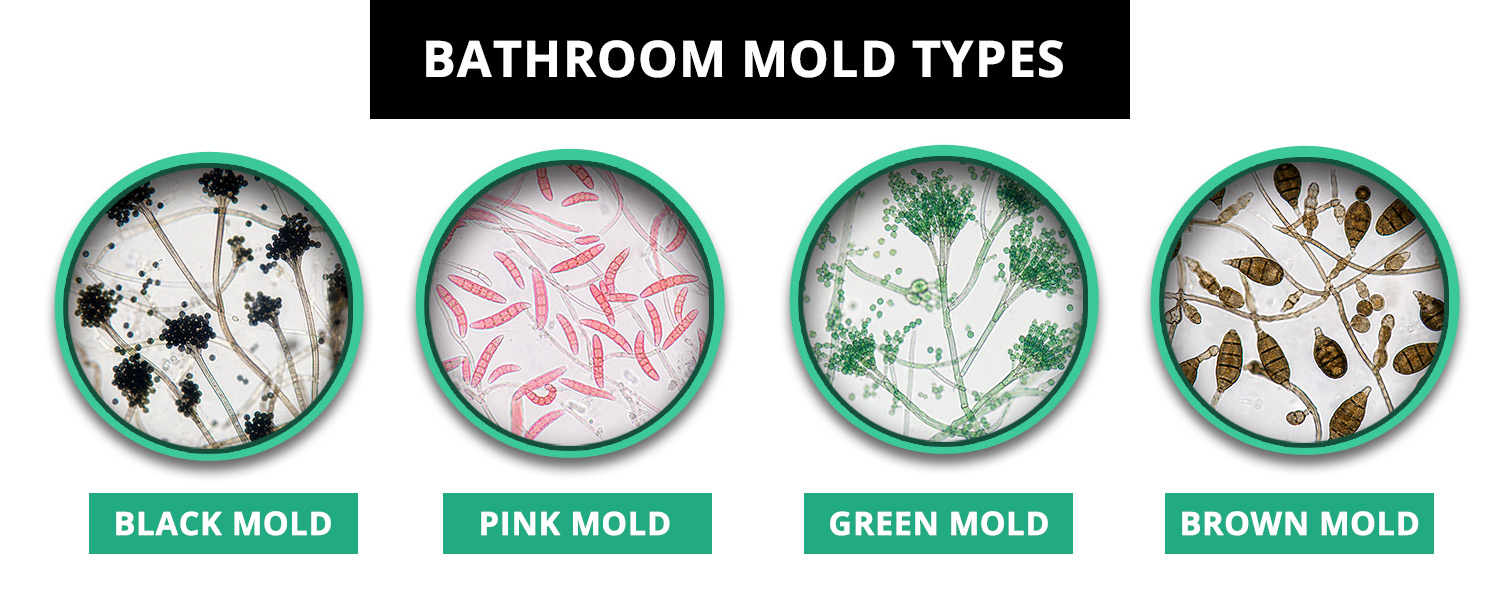
Different types of bathroom mold look different, grow in different spots, and carry very different health risks. Some are mostly a nuisance. Others are genuinely concerning, especially if you have young children, pets, or anyone in the home with allergies or a weakened immune system.
In this guide, we break down the most common types of bathroom mold by color, texture, and the surfaces where they show up. We also cover what causes each type, so you can understand why it keeps coming back, and what to do about it.
Key Takeaways
Here is a quick reference of the most common bathroom mold types, what they look like, and the health risks each one carries. We cover all of these in detail below, but this table is a good place to start if you are trying to identify something fast.
Bathroom Mold Types Summary Table
| Mold Type | Color & Texture | Where It Grows | Health Risk Level |
|---|---|---|---|
| Stachybotrys chartarum Common Name: Black mold | Dark green to black Slimy, wet | Grout lines, caulk, drywall behind tile | High: produces mycotoxins; serious risk for children and immunocompromised individuals |
| Serratia marcescens* Common Name: Pink mold | Pink to orange-pink Slimy film | Shower floor, drain area, tile grout | Moderate: urinary tract and respiratory infections, especially in immunocompromised individuals |
| Aspergillus / Penicillium Common Name: Green mold | Blue-green to dark green Powdery to velvety | Grout corners, under fixtures, low-airflow surfaces | Moderate: allergic reactions, asthma flare-ups; Aspergillosis risk for immunocompromised individuals |
| Alternaria Common Name: Brown mold | Tan to dark brown Fuzzy, hair-like | Shower curtains, grout lines, damp caulk | Low to moderate: allergic rhinitis, asthma, skin reactions |
| Cladosporium Common Name: Olive-brown mold | Olive to dark brown Dry, powdery clusters | Grout, painted surfaces, window frames | Low to moderate: allergic reactions, respiratory irritation |
*Serratia marcescens, commonly called pink mold, is technically a bacterium, not a fungus. It responds differently to cleaning products than true mold does.
What Does Bathroom Mold Look Like?
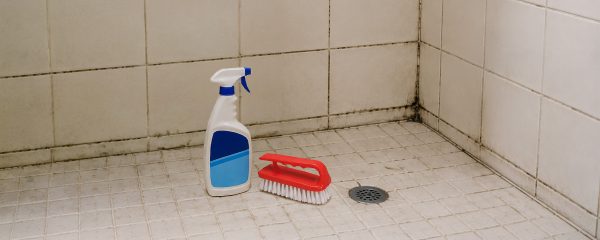
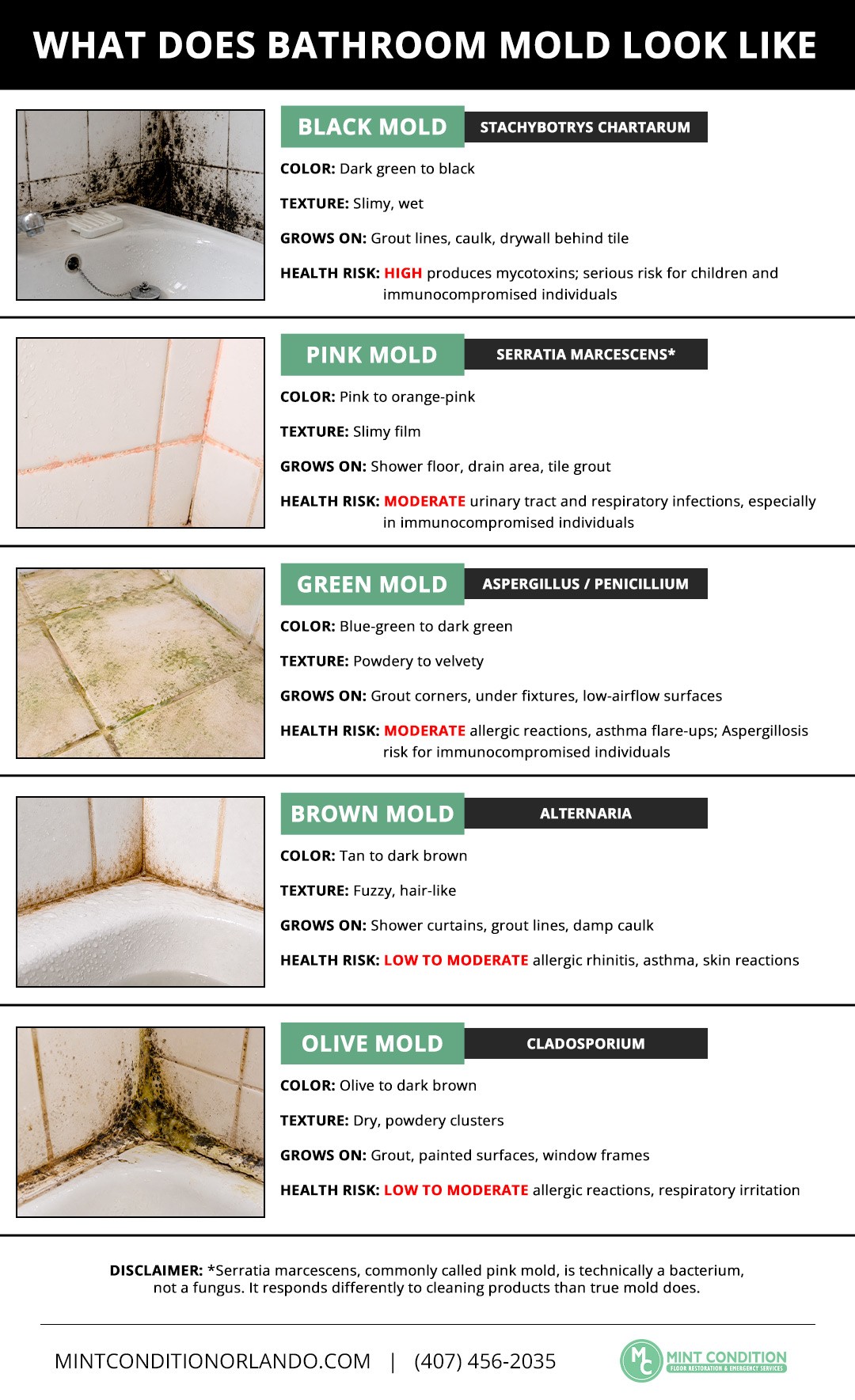
Bathroom mold typically shows up as slimy, fuzzy, or powdery patches in colors ranging from black and dark green to brown, pink, and orange. It usually starts in grout lines, caulk seams, and corners where moisture collects, often as small dark spots that spread into larger, irregular patches over time.
Most homeowners picture mold as black. But bathroom mold comes in more colors than you might expect, and that color is usually your first clue about what you are dealing with. Dark green or black patches in the grout or on caulk tend to be on the more serious end of the spectrum. Pink or orange films near the drain point indicate bacterial growth. Fuzzy brown or gray patches on shower curtains or grout lines are usually allergenic types that are less toxic but still worth addressing.
Texture tells you almost as much as color. Slimy or wet-looking patches signal active moisture and can point to more invasive growth. Dry, powdery patches are typically surface-level and have not yet penetrated deep into grout or caulk. Fuzzy or hair-like growth usually means the mold has had enough time to develop visible filaments, which means it has been there a while.
Bathroom Mold Appearance Overview
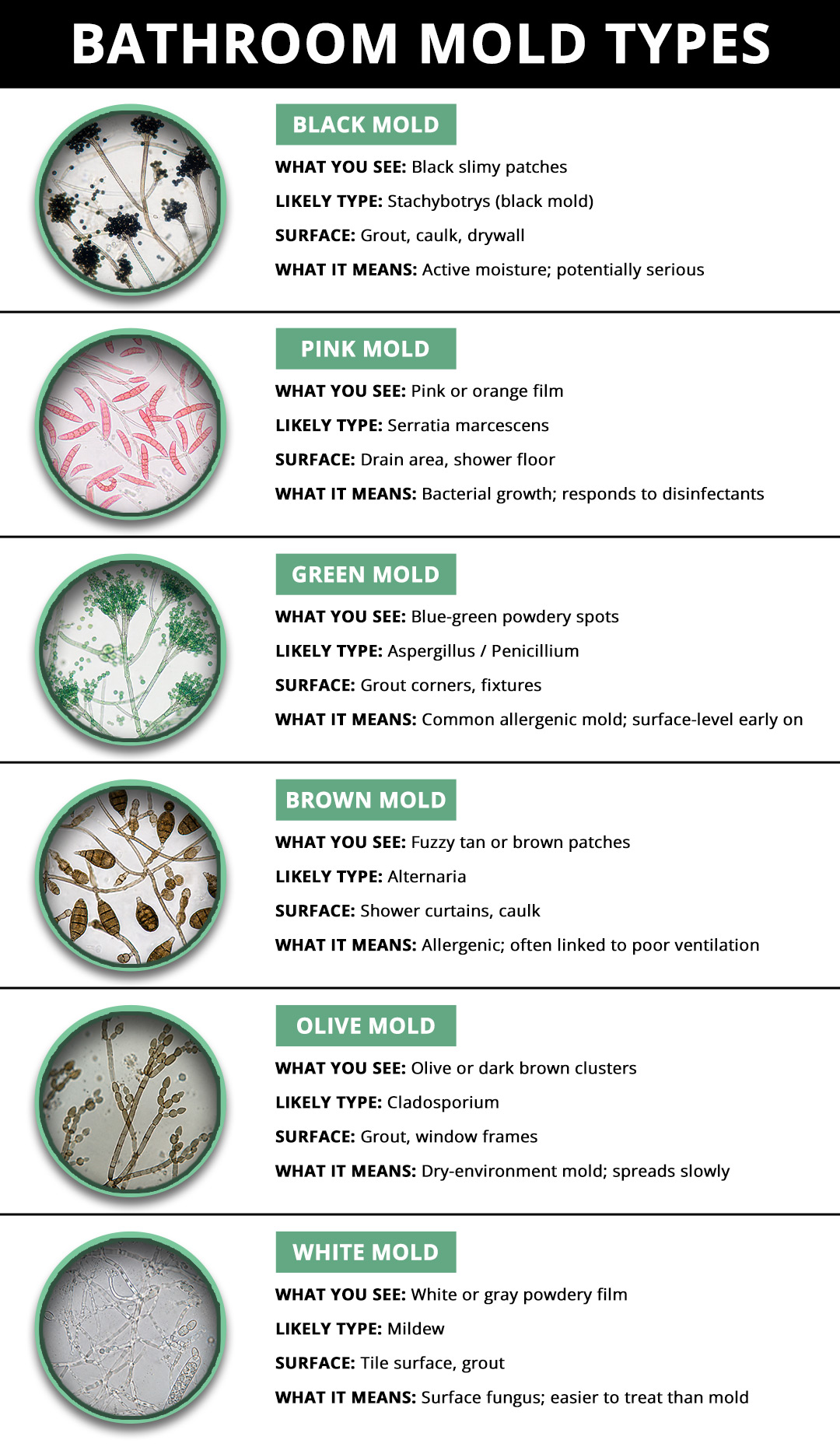
| What You See | Likely Type | Surface | What It Means |
|---|---|---|---|
| Black slimy patches | Stachybotrys (black mold) | Grout, caulk, drywall | Active moisture; potentially serious |
| Pink or orange film | Serratia marcescens | Drain area, shower floor | Bacterial growth; responds to disinfectants |
| Blue-green powdery spots | Aspergillus / Penicillium | Grout corners, fixtures | Common allergenic mold; surface-level early on |
| Fuzzy tan or brown patches | Alternaria | Shower curtains, caulk | Allergenic; often linked to poor ventilation |
| Olive or dark brown clusters | Cladosporium | Grout, window frames | Dry-environment mold; spreads slowly |
| White or gray powdery film | Mildew | Tile surface, grout | Surface fungus; easier to treat than mold |
Mint Condition Pro Tip: One of the first things our technicians check during a bathroom assessment is the caulk bead where the tile meets the tub or shower floor. Homeowners scrub the tile and the grout, but that caulk line is where moisture gets trapped the longest and where mold establishes itself deepest. If the caulk looks discolored, feels soft, or has started to pull away from the surface, the problem is usually further along than what you can see from the outside.
Mold does not usually start in the middle of a tile. It starts in the low-airflow, high-moisture zones: grout lines, the caulk bead around your tub, corners where two walls meet, underneath shampoo bottles and soap dishes sitting directly on the tile, and along the base of the shower door track.
Before assuming the worst, it helps to rule out a couple of common look-alikes. Soap scum is white or gray with a uniform chalky texture, and it wipes off with a damp cloth. Hard water stains appear as white or rust-colored mineral deposits around fixtures. Mold has color variation, irregular edges, and it resists simple wiping.
One thing a lot of people overlook: a persistent musty smell. If your bathroom smells damp or earthy even right after you clean it, that is often a sign of mold you cannot see yet. Peeling or bubbling caulk is another clue that moisture has worked its way underneath the surface.
That said, not everything that looks like mold is mold. Mildew is a surface fungus that typically appears white or gray and powdery, and it is generally easier to treat.
Types of Bathroom Mold
Not all bathroom mold is the same, and color is usually your first clue about what you are dealing with.
Bathroom mold appears in four main colors: black or dark green (Stachybotrys or Aspergillus), pink or orange-pink (Serratia marcescens, a bacterium, not a fungus), blue-green to dark green (Aspergillus or Penicillium), and tan to dark brown (Alternaria or Cladosporium). Each color points to a different organism, a different cause, and a different level of health risk.
- Black or dark green mold: Stachybotrys chartarum or dark Aspergillus strains. Slimy or furry texture. The most serious type in terms of health risk.
- Pink or orange-pink mold: Serratia marcescens. A bacterium, not a fungus. Slimy film, most often near the drain and shower floor.
- Blue-green to dark green mold: Aspergillus or Penicillium. Powdery or velvety texture. Common in grout corners and low-airflow surfaces.
- Tan to dark brown mold: Alternaria or Cladosporium. Fuzzy or powdery clusters. Frequently found on shower curtains and aging grout.
Each type behaves differently, responds to different treatments, and carries a different level of risk. Here is a closer look at each one.
Black Bathroom Mold
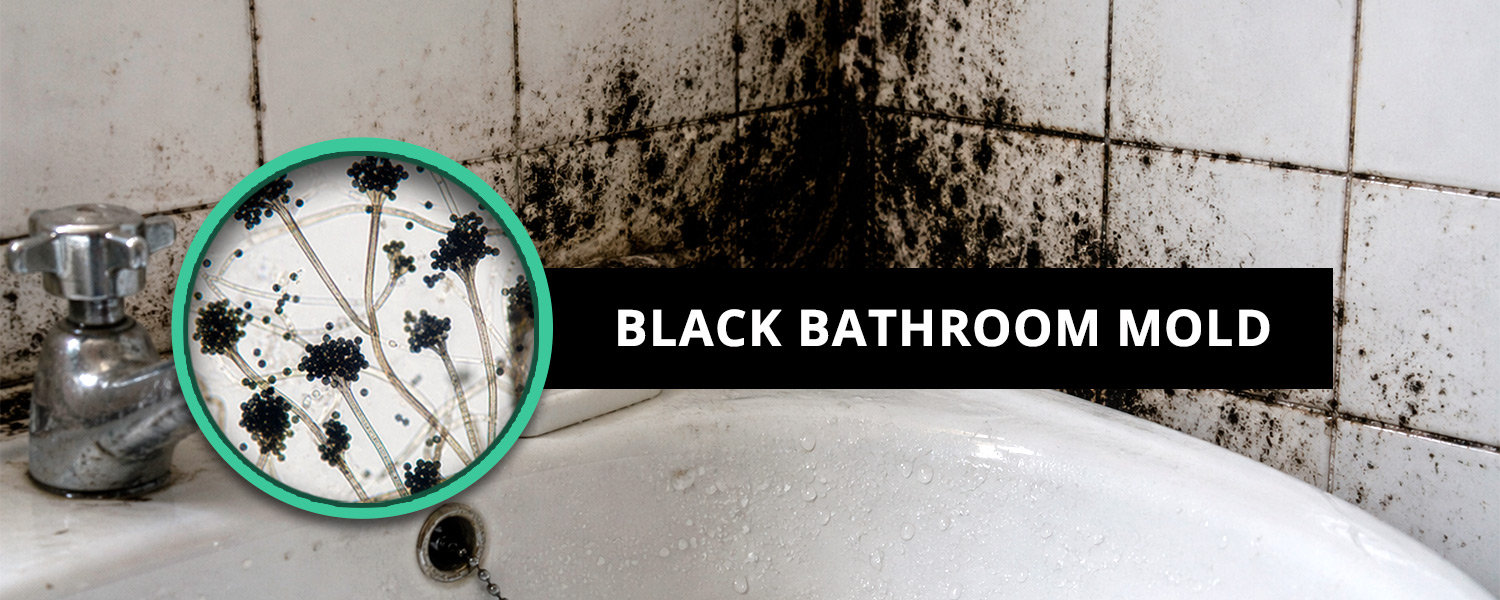
Black mold is the type most people are thinking of when they get worried. It typically appears as dark green to black patches with a slimy or wet surface texture. You will usually find it in grout lines, along caulk seams, and in corners where moisture sits for long periods without drying out.
The most concerning species is Stachybotrys chartarum, which produces mycotoxins and is associated with respiratory symptoms, headaches, and more serious health effects in children and people with weakened immune systems. That said, not every black or dark patch in your bathroom is Stachybotrys. Dark Aspergillus strains look similar and can also cause health problems, but they are generally less severe.
What makes black mold particularly stubborn is the heat and humidity. For example, here in Central Florida, black mold is very common. Stachybotrys thrives on moisture-saturated materials like drywall and grout, and once it gets behind tile or into the wall, surface cleaning will not reach it.
If you are seeing dark, slimy patches that keep coming back even after you clean them, do not ignore it.
To learn more about black mold, whether it is actually
harmful, and how to remove it, read our complete guide to Black Mold in the Bathroom: What It Looks Like, Where It Grows, and How to Remove It.
Pink Bathroom Mold
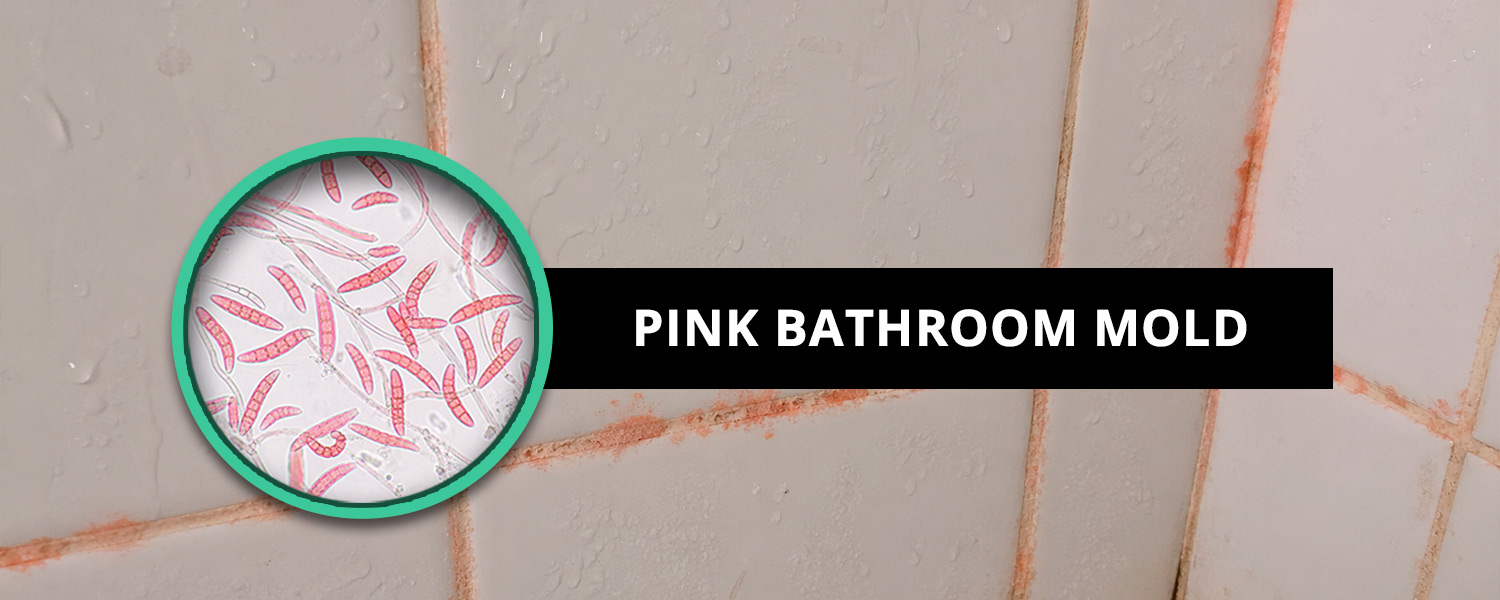
That pink or orange-pink film around your drain, toilet, along the grout, or on the shower floor is one of the most common bathroom complaints we hear about. It looks like mold, it feels like mold, but it is actually a bacterium called Serratia marcescens.
This distinction matters because bacteria and fungi respond to different treatments. Standard mold removers may reduce the visible growth temporarily, but they often do not eliminate the bacterial colony completely, which is why pink mold keeps coming back even after you clean it.
Serratia marcescens thrives in warm, wet environments and feeds on soap residue, shampoo buildup, and fatty deposits left on surfaces. It spreads quickly in bathrooms because the conditions here are essentially ideal: warmth, humidity, and surfaces that stay damp for long stretches.
The health risk is generally low for healthy adults, but it can cause urinary tract and respiratory infections in immunocompromised individuals, the elderly, and young children.
For a full breakdown of what causes pink mold, whether it is actually harmful, and how to get rid of it for good, read our complete guide to Pink Mold in the Shower.
Green Bathroom Mold
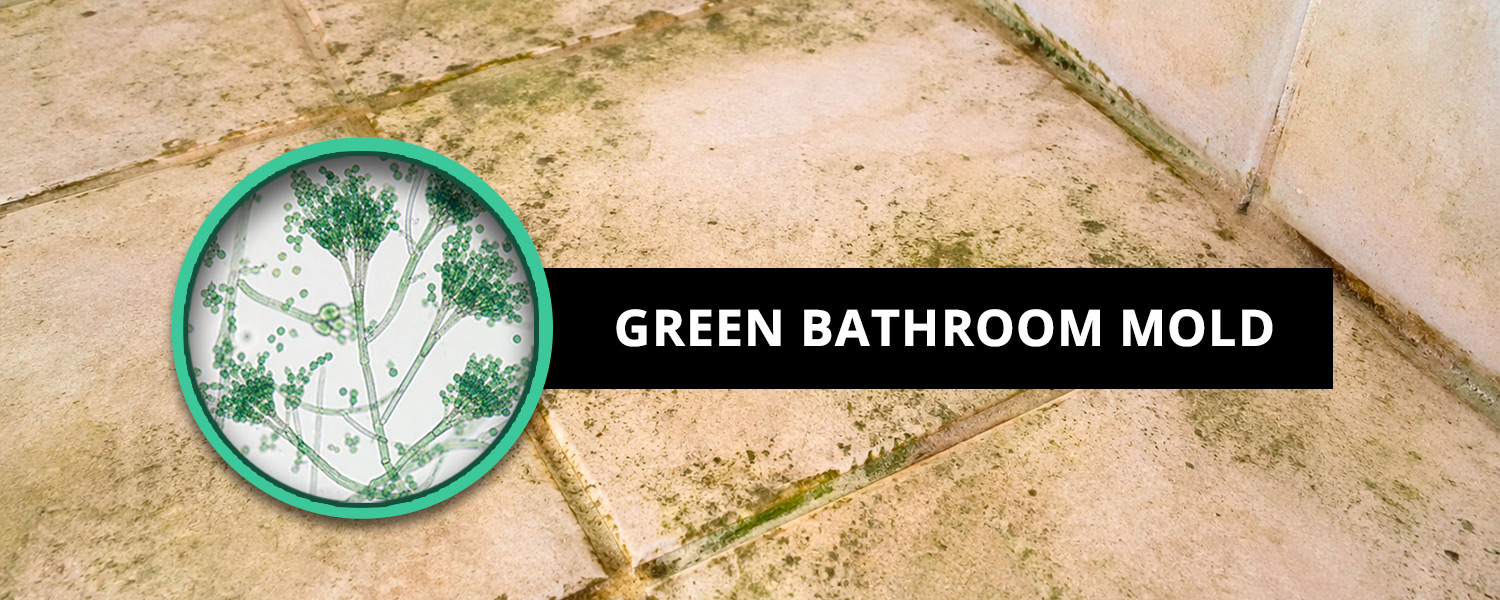
Green mold in the bathroom usually points to Aspergillus or Penicillium, two of the most common indoor mold genera. It typically appears as blue-green to dark green patches with a powdery or velvety texture, and it tends to grow in grout corners, under fixtures, and along surfaces that do not get much airflow.
Unlike the slimy appearance of black mold or the filmy look of pink mold, green mold often has a dry, almost dusty look in its early stages. That can make it easy to dismiss as dirt or residue, especially in darker grout. Do not let the appearance fool you. Aspergillus and Penicillium are allergenic molds that can trigger respiratory irritation, asthma flare-ups, and in people with compromised immune systems, a more serious condition called Aspergillosis.
Green mold is also a common finding in bathrooms with poor ventilation. If your exhaust fan is weak, undersized, or vented improperly, green mold is often one of the first types to show up.
For a full breakdown of what green mold looks like, whether it is dangerous, where it grows, and how to get rid of it, read our complete guide to green mold.
Brown Bathroom Mold
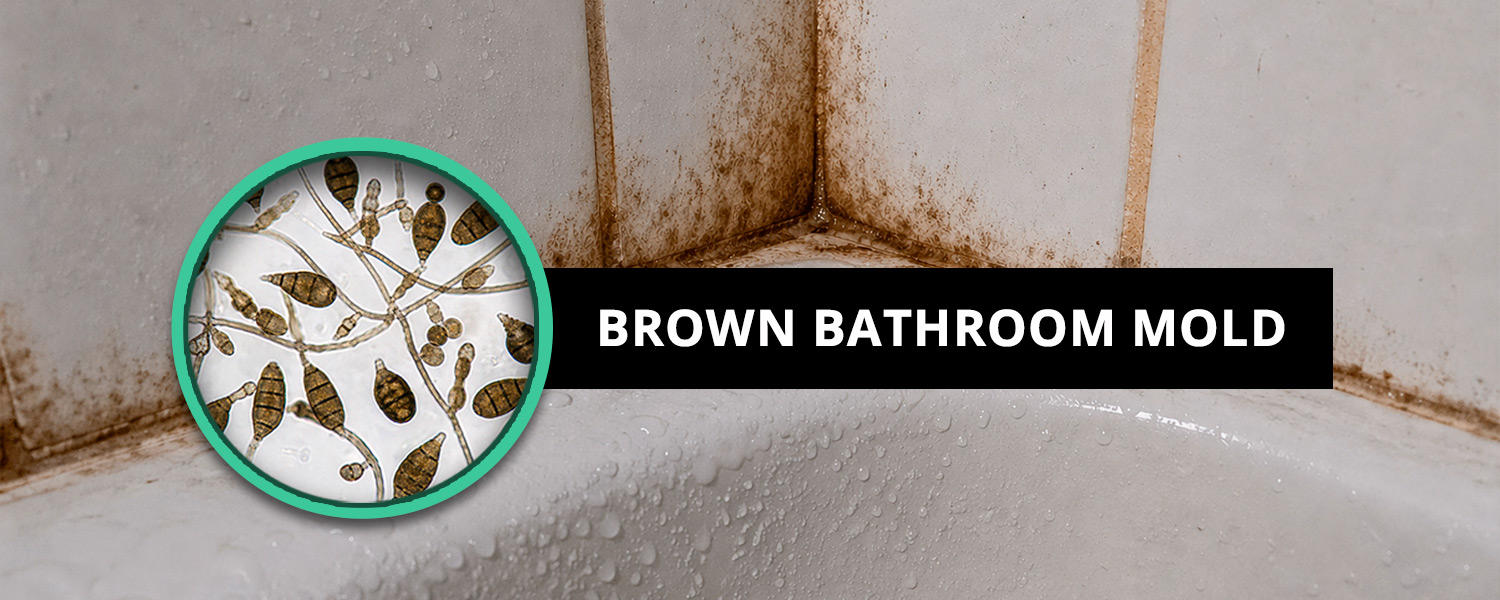
Brown mold in the bathroom is often overlooked because it blends in with aging grout, soap buildup, and general discoloration. But if you are seeing fuzzy, hair-like growth in a tan-to-dark-brown color on your shower curtain, grout lines, or damp caulk, you are most likely looking at Alternaria or Cladosporium.
Alternaria tends to appear as fuzzy brown patches and is strongly associated with water damage and high humidity. It is one of the most common allergenic molds found indoors and is a known trigger for asthma. Cladosporium shows up as olive to dark brown powdery clusters and tends to colonize painted surfaces, grout, and window frames in bathrooms that stay damp.
Neither type is as immediately alarming as black mold, but both can cause persistent allergic reactions and respiratory irritation, particularly in sensitive individuals. Brown mold also tends to signal an ongoing moisture problem rather than a one-time spill, so finding it often means the conditions in your bathroom need to change, not just the mold itself.
For a full breakdown of what brown mold looks like, where it hides, and how to handle it safely, read our complete guide to Brown Mold in the Bathroom.
How to Tell Different Bathroom Mold Types Apart
Color gets you close, but texture, location, and growth pattern together give you the full picture. Here is a side-by-side comparison of the most common bathroom mold types to help you identify what you are seeing.
| Type | Color & Texture | Common Location | Likely Cause |
|---|---|---|---|
| Stachybotrys chartarum | Dark green to black Slimy, wet | Grout lines, caulk, drywall behind tile | Chronic moisture, water damage, poor ventilation |
| Serratia marcescens | Pink to orange-pink Slimy, filmy | Shower floor, drain, tile grout | Soap residue, warm standing water, high humidity |
| Aspergillus / Penicillium | Blue-green to dark green Powdery to velvety | Grout corners, under fixtures | Poor airflow, damp surfaces, infrequent cleaning |
| Alternaria | Tan to dark brown Fuzzy, hair-like | Shower curtains, damp caulk | Water damage, persistent humidity, inadequate drying |
| Cladosporium | Olive to dark brown Dry, powdery clusters | Grout, painted surfaces, window frames | Damp-prone areas, low air circulation |
| Mildew | White to gray Flat, powdery | Tile surface, grout | Surface moisture, infrequent ventilation |
A few practical rules to keep in mind when you are trying to make a call:
Slimy means active moisture. If the growth has a wet or shiny surface, moisture is still present and the problem is likely ongoing. Dry or powdery patches are usually earlier-stage and more surface-level.
Location narrows it down fast. Pink film near the drain is almost always Serratia marcescens. Black slime along caulk or grout in a poorly ventilated shower corner is more likely Stachybotrys. Fuzzy brown growth on the shower curtain points to Alternaria.
Smell is a real signal. A musty or earthy odor that comes back quickly after cleaning usually means mold has penetrated below the surface, whether into grout, caulk, or the substrate behind the tile.
When color alone is not enough, the safest move is to have a professional assess it. Our IICRC-certified technicians at Mint Condition see every type of bathroom mold regularly and can tell you exactly what you are dealing with and what it will take to fix it properly.
What Causes Mold In Bathroom?
Mold grows in bathrooms because the environment provides everything it needs: moisture, warmth, organic material, and a surface to anchor to. In most cases, the root cause is not one factor but a combination of poor ventilation, surfaces that stay wet too long, and residue that builds up between cleanings.
Here is a closer look at what causes mold in the shower specifically, since that is where most bathroom mold begins.
What Causes Mold in the Shower?
The shower is the most mold-prone spot in any bathroom because of one simple combination: constant moisture, warmth, and organic residue. Together, those three conditions create a near-perfect environment for mold to grow. The most common triggers include:
Lingering Water
Moisture is the main driver. Per IICRC standards, mold can begin developing on a damp surface within 24 to 48 hours of moisture exposure. Most bathrooms stay damp far longer than that. A bathroom exhaust fan that runs for five minutes after a shower is not enough to fully dry the walls and grout. Surfaces can stay damp for hours, and mold does not wait around.
Shower curtains and bath mats are two surfaces homeowners often overlook here. Both trap moisture, dry slowly, and accumulate organic residue. A curtain that bunches against the wall after use and stays damp for hours is one of the most overlooked mold surfaces in the bathroom.
Excess Humidity
Lingering water on surfaces is one problem. Ambient humidity is another. Even after visible water dries, the air in a poorly ventilated bathroom can hold enough moisture to keep grout, caulk, and drywall in a near-constantly damp state. In Central Florida, where outdoor humidity regularly runs between 70 and 90 percent, that baseline is already elevated before you factor in a hot shower.
Poor Airflow
Poor ventilation is the reason excess humidity has nowhere to go. An exhaust fan that is undersized, vented into the attic instead of outside, or simply not used long enough after a shower leaves humid air sitting in the bathroom. That stagnant air keeps surfaces wet, accelerates condensation on cooler walls and mirrors, and creates ideal conditions for mold to colonize grout, caulk, and wall surfaces.
Warmth
Warmth accelerates the process. Mold grows most aggressively between 60 and 80 degrees Fahrenheit, which overlaps almost exactly with typical indoor temperatures. Bathrooms that hold heat after a shower stay in that range longer, giving mold a comfortable window to colonize new surfaces. In Central Florida, where indoor and outdoor temperatures stay elevated year-round, that window barely closes between seasons.
Soap and Body Residue
Soap scum, shampoo residue, body oils, and skin cells accumulate on surfaces between cleanings and act as a food source for mold and bacterial growth. This is one of the reasons mold keeps coming back even when homeowners clean regularly: if residue is not fully rinsed away, the nutrients are still there.
Dirty Grout Lines
Grout is porous and absorbs moisture rather than shedding it. It draws in water and holds it below the surface, which means the conditions mold needs can persist even after the tile surface looks dry. Grout that has not been professionally cleaned in a while also accumulates residue deep in the pores, giving mold both the moisture and the food source it needs in one place.
Leaks Around Sinks, Tubs, or Shower Edges
This is one of the most common causes of mold that homeowners do not catch until it is already a significant problem. A slow leak behind a faucet, a failing caulk seal along the tub edge, or a cracked grout line that lets water behind the tile can keep a wall or subfloor wet for weeks without being visible from the surface.
By the time you see mold appearing on the tile or caulk, the moisture source behind it has often been active for a while. If mold keeps returning in the same spot after cleaning, a hidden leak is one of the first things to rule out.
Mold on Shower Tiles and Grout: What to Look For
Mold on shower tile and grout looks different depending on how long it has been there and how far it has spread. Knowing the difference between surface mold and deeper growth tells you a lot about how serious the situation is and what kind of cleaning will actually fix it.
Shower tile mold typically shows up first along grout lines rather than on the tile surface itself. Glazed ceramic and porcelain tile are non-porous, meaning they resist moisture absorption and are generally not where mold takes hold. Grout is a different story entirely. Most standard cement-based grout is porous and absorbs moisture with every shower, creating an environment where mold can establish itself below the visible surface long before it becomes obvious.
Mint Condition Pro Tip: Here is a quick field test our technicians use to check whether grout mold is surface-level or has penetrated deeper. Clean the affected grout line as thoroughly as you can and let it dry completely, at least 24 hours. If the grout returns to its original color, the mold was surface-level. If it dries to a darker shade than the surrounding grout even after a thorough cleaning, that discoloration is mold that has worked its way into the grout matrix. At that point, surface cleaning alone is not going to resolve it. The grout itself needs professional extraction or restoration.
What Does Mold On A Shower Curtain Look Like?
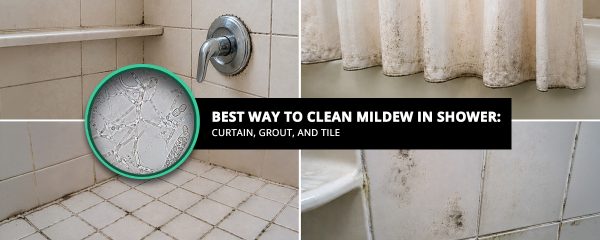
Mold on a shower curtain typically appears as dark spots or irregular patches in black, gray, or pink, most often along the bottom edge and folds where water collects longest. Pink or orange-pink film signals Serratia marcescens, a bacterium, not a fungus. Dark spots indicate fungal mold. Both tend to develop fastest on curtains that stay bunched against the wall after use and never fully dry out between showers.
If your shower curtain has visible mold growth, replacement is usually more cost-effective than cleaning, especially for fabric curtains where mold can penetrate the fibers. Plastic or vinyl curtains can often be cleaned with a diluted bleach or white vinegar solution, but if the spots keep returning, the curtain is the problem.
What Does Mold In Bathtub Look Like?
Mold in a bathtub typically appears as dark spots or discolored patches along the caulk line where the tub meets the wall, around the drain, and in grout lines on tiled tub surrounds. Colors range from black and dark green to pink and brown depending on the type. The caulk seam is usually the first place it shows up because it stays wet the longest and is the most porous surface in the tub area.
One thing to watch for in older tubs: if the caulk has started to pull away from the wall or feels soft when you press it, moisture has likely been working its way behind it for a while. What you see on the surface is often just a fraction of what has built up underneath.
For cleaning methods specific to tub tile and grout, our guide on [How to Clean Mold Off Shower Tile and Grout] walks through each approach and what it can realistically tackle.
Mold, Mildew, and Pink Biofilm: What’s the Difference?
These three show up in the same bathroom spaces but they are not the same thing, and they do not respond to the same treatments. Mold is a fungus that penetrates surfaces and poses real health risks if left unaddressed. Mildew is also a fungus but stays on the surface, typically appearing as a flat white or gray powdery film, and is generally easier to treat with standard cleaners. Pink biofilm is neither: it is a bacterium called Serratia marcescens that feeds on soap residue and thrives in warm, wet environments.
Getting the identification right matters because using the wrong treatment can reduce visible growth temporarily without actually eliminating the problem.
When to Call a Professional Tile and Grout Cleaner
Most surface mold on tile can be handled at home with the right products and a bit of elbow grease. But there are clear signals that tell you when DIY cleaning is not getting to the actual source of the problem.
Here are three situations where professional help makes more sense than another round of scrubbing.
1. Mold Comes Back Within Two Weeks of Cleaning
This is the most reliable signal that the problem is deeper than the surface. If mold is returning that quickly, the source has not been addressed. That could be moisture trapped in the grout, a slow leak behind the wall, or growth that has already penetrated below the surface. Cleaning what you can see will not fix what you cannot.
2. Grout Stays Discolored After Scrubbing
When grout looks dark or stained even after a thorough cleaning, that discoloration is often mold embedded below the surface rather than residue sitting on top. Standard cleaning products work at the surface level. They cannot reach mold that has worked its way into the grout matrix. If the grout is not returning to its original color after cleaning, it is telling you something.
3. A Musty Smell Persists After the Bathroom Looks Clean
Smell is often the most honest indicator of hidden mold. If the bathroom still has that earthy, damp odor after you have cleaned every visible surface, mold is likely growing somewhere you cannot see: behind caulk, beneath a failing tile seal, or inside the grout itself. A clean-looking bathroom that still smells musty is not actually clean.
Grout is porous enough that mold can colonize it at a depth that standard brushes and household sprays simply do not reach. Per IICRC standards, proper mold remediation in porous building materials requires more than surface treatment. IICRC-certified technicians use professional-grade extraction and treatment methods that go beyond surface cleaning to address mold at the source.
At Mint Condition, our tile and grout restoration process is designed specifically for situations where surface cleaning has stopped being enough. If your shower mold keeps coming back despite your best efforts, that is the conversation we are here to have.
Types of Bathroom Mold FAQs
Whether you call it bathroom mold or bathroom mould, the types and causes are the same. Below you can find the questions we hear most often from homeowners who have just discovered something growing in their bathroom and are trying to figure out what to do next.
Bathroom Mold Types: What It Looks Like and What Causes It
What are the types of mold in the shower?
Shower mold appears as slimy, fuzzy, or powdery patches in colors ranging from black and dark green to brown, pink, and orange. It typically starts as small irregular spots along grout lines, caulk seams, and corners before spreading into larger patches. Color, texture, and location together tell you what type you are dealing with and how serious it is.
Here is a quick reference by color:
- Black or dark green: Slimy or fuzzy patches on grout, caulk, and silicone seals. Can be Stachybotrys, Aspergillus, or Alternaria.
- Pink or orange-pink: Slimy flat film near drains, shower floors, and grout. Serratia marcescens bacterium, not a fungus.
- Blue-green to dark green: Powdery or velvety texture in corners and along grout lines. Most commonly Aspergillus or Penicillium.
- Tan to dark brown: Fuzzy or powdery clusters on grout, shower curtains, and caulk. Typically Alternaria or Cladosporium.
What kind of mold is common in bathrooms?
The most common types of bathroom mold are Stachybotrys chartarum (black mold), Alternaria (brown and fuzzy), Aspergillus and Penicillium (green and powdery), and Serratia marcescens (pink, though this one is technically a bacterium, not a fungus). Each thrives in the warm, damp conditions that bathrooms provide year-round.
Of these, Alternaria and Aspergillus are the ones most homeowners encounter first. They grow quickly on grout and caulk, they are allergenic rather than highly toxic, and they tend to appear before more serious types get a foothold. Stachybotrys is less common on tile surfaces and more associated with prolonged water damage behind walls.
What does toxic mold look like in a bathroom?
Toxic black mold (Stachybotrys chartarum) typically appears as dark greenish-black patches with a slimy or furry texture. It often carries a distinct smell, something close to rot, wet soil, or decay, that other bathroom molds do not typically produce at the same intensity.
On tile and grout, true Stachybotrys is actually less common than most people think. It needs cellulose-rich materials like drywall or wood that stay chronically wet to colonize. If you are seeing dark patches on your shower grout, the more likely culprit is a darker strain of Aspergillus or Alternaria, both of which can look nearly black. If there is a persistent odor alongside the visible growth, or if the affected area is near a wall cavity where a leak could have occurred, that is when it is worth having a professional assess whether the growth has reached the building materials behind your tile.
Can mold in the bathroom make you sick?
Yes, and the risk level depends on the mold type, the duration of exposure, and the health of the people in the household. Allergenic types like Alternaria, Aspergillus, and Penicillium can cause nasal congestion, skin irritation, eye irritation, and asthma flare-ups with regular exposure in an enclosed bathroom. Serratia marcescens, the bacterium behind pink mold, is linked to urinary tract and respiratory infections, particularly in children and immunocompromised individuals. Stachybotrys produces mycotoxins that can cause more serious symptoms, including persistent headaches, fatigue, and respiratory illness.
Bathrooms are small, enclosed spaces with limited fresh air exchange. That means any mold present is in close contact with the people using the room every day, which is one of the reasons addressing bathroom mold promptly matters more than most homeowners realize.
How do I know if I have mold or mildew in my shower?
Mildew is a surface fungus that typically appears white, gray, or light yellow and has a flat, powdery texture. It sits on top of surfaces and is generally easier to clean than mold. Mold tends to be darker, with more color variation including black, green, brown, and pink, and often has a raised, fuzzy, or slimy texture that signals deeper growth.
The smell test helps too. Mold usually produces a stronger, more persistent musty or earthy odor than mildew does.
Conclusion
By now you have a solid picture of what is growing in your bathroom. The color and texture you see are your first clues. The location tells you more. And the cause, whether it is humidity, poor ventilation, soap residue buildup, or a hidden moisture problem, is what determines whether cleaning will actually fix it or just delay it.
If you have identified the type of mold you have, take action. And if you want to keep it from returning, daily habits and maintenance routines make the biggest difference.
Still seeing mold come back in your shower grout no matter how many times you clean it? That is usually the sign that the problem has moved past what surface cleaning can fix.Let Mint Condition handle it. Our IICRC-certified technicians specialize in professional tile and grout cleaning that goes beyond surface scrubbing to address mold at the source, using eco-friendly, family and pet-safe methods. Serving Orlando and Central Florida, we are here to get your bathroom back to clean and keep it that way.
Call us at (407) 456-2035 or fill out a contact form today for your free estimate.
References
- IICRC S520 Standard for Professional Mold Remediation: https://www.iicrc.org/page/IICRCStandards
- U.S. Environmental Protection Agency, Mold and Health: https://www.epa.gov/mold/mold-and-health
- Centers for Disease Control and Prevention, Basic Facts About Mold and Dampness: https://www.cdc.gov/mold/faqs.htm
- CDC, Serratia marcescens: https://www.cdc.gov/hai/organisms/serratia-marcescens.html
- American Academy of Allergy, Asthma and Immunology, Mold Allergy: https://www.aaaai.org/tools-for-the-public/conditions-library/allergies/mold-allergy
- CDC, Aspergillosis: https://www.cdc.gov/fungal/diseases/aspergillosis/index.html