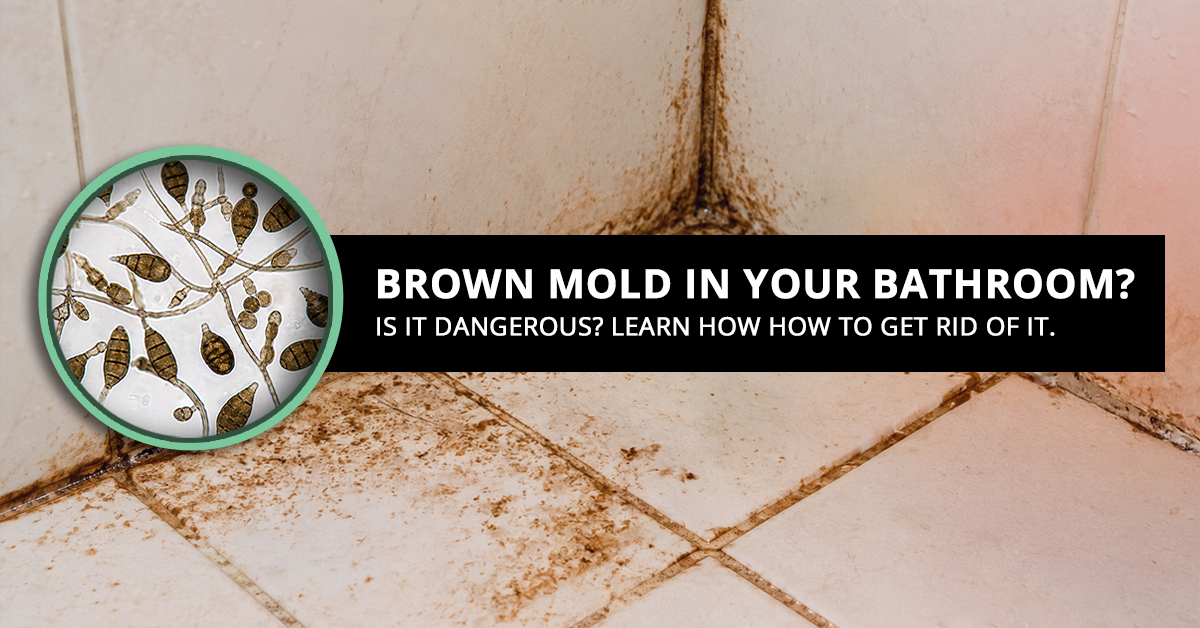
You noticed something brown in your bathroom. Maybe it is a fuzzy patch creeping along the grout, a dark cluster on the ceiling near the vent, or a dingy discoloration spreading along the base of your shower curtain. Now you are wondering: is that actually mold, is it dangerous, and what do you do about it?
Those are exactly the right questions to ask. Brown mold is one of the most common types found in bathrooms, and it is also one of the most overlooked because it blends in with soap buildup, aging grout, and general bathroom discoloration. But not all brown growth is the same, and knowing what you are dealing with changes how you respond.
This guide walks you through how to identify brown mold, where it tends to grow, what causes it, and when to handle it yourself versus when to call in a professional.
Key Takeaways
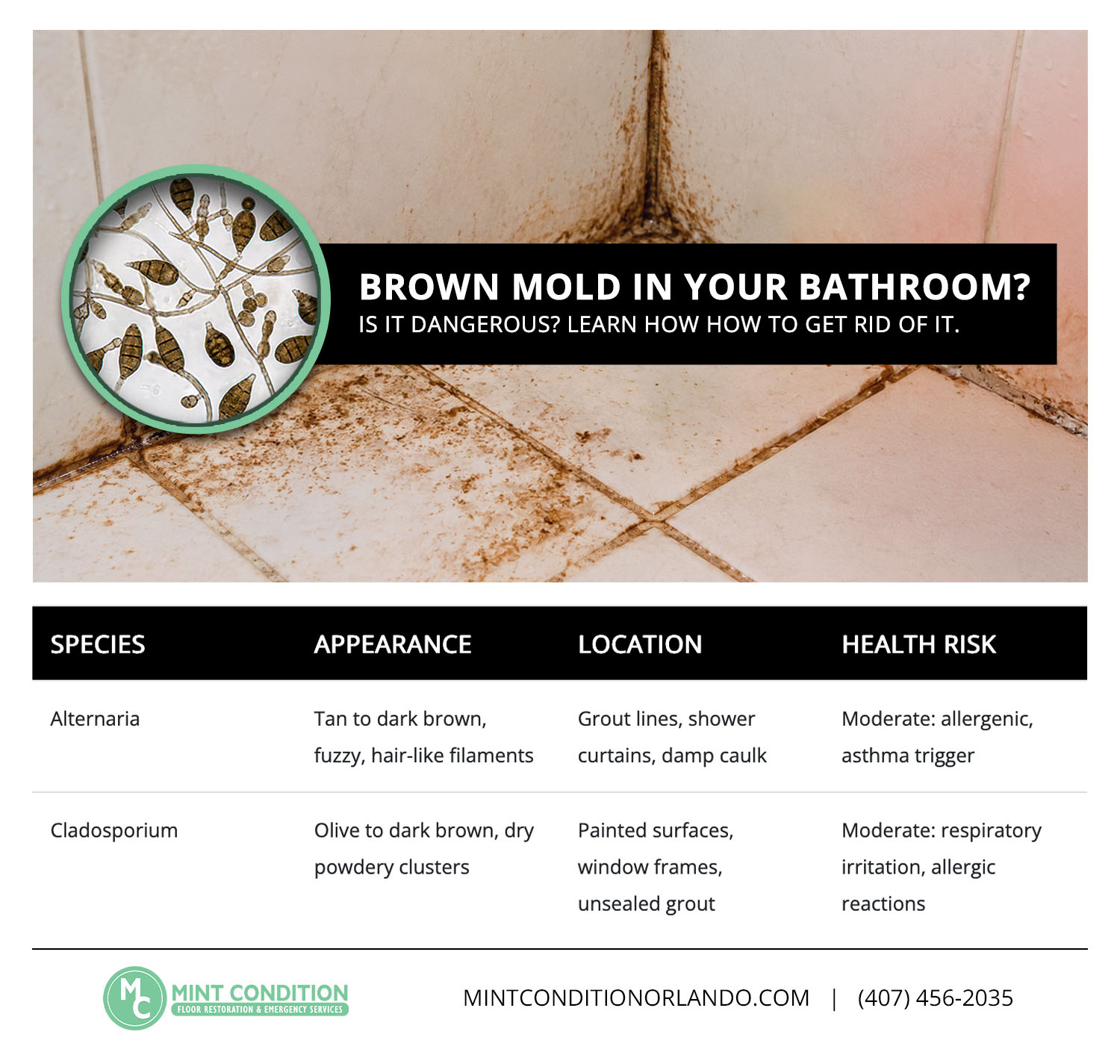
If you are trying to make a fast identification, here is a quick reference of the most common brown bathroom mold types, where they show up, and what they mean for your health.
Brown Mold Summary Table
| Species | Appearance | Common Bathroom Location | Health Risk |
|---|---|---|---|
| Alternaria | Tan to dark brown, fuzzy, hair-like filaments | Grout lines, shower curtains, damp caulk | Moderate: allergenic, asthma trigger |
| Cladosporium | Olive to dark brown, dry powdery clusters | Painted surfaces, window frames, unsealed grout | Moderate: respiratory irritation, allergic reactions |
Brown Mold
Brown mold is a common, often slimy or fuzzy fungus that ranges from light tan to dark brown and indicates significant moisture issues or water damage. It thrives on organic materials like wood, drywall, and carpets, often appearing in damp areas like basements, bathrooms, and kitchens
Brown mold in the bathroom is most commonly Alternaria or Cladosporium, both of which are classified as allergenic molds. Let’s take a look at what brown mold looks like, the health risks it may pose, and how it differs from black mold. For a full breakdown of bathroom mold types by color and species, our guide on Types of Bathroom Mold covers each one in detail.
What Does Brown Mold Look Like?
Brown mold typically appears as tan, caramel, or dark brown spots or patches with a fuzzy, powdery, or hair-like texture. It tends to grow in clusters along grout lines, caulk seams, and damp surfaces, and it spreads gradually rather than in dramatic patches, which is why it often goes unnoticed until it is already well established.
Most people spot it first on the shower curtain or along the grout at the base of the shower. But the appearance can vary quite a bit depending on the species, and that variation matters.
The two most common types of brown mold found in bathrooms are Alternaria and Cladosporium, and they look noticeably different from each other.
Alternaria is tan to dark brown with soft, fuzzy, almost hair-like filaments. Think of it as a patch of dark fuzz spreading slowly along a grout line or creeping up from the base of a shower curtain. It has a softer, almost organic look to it, and it tends to show up on surfaces that stay damp and accumulate residue between cleanings.
Cladosporium looks different. Its clusters are drier, darker, and more powdery, almost like a dusting of dark olive or brown powder on the surface. You will often find it on painted bathroom walls near the shower, on window frames, and on grout that has not been sealed in a while. It does not have the fuzzy texture of Alternaria. Instead, it looks more like a dry, spreading stain.
Both species grow steadily rather than aggressively, which means they can become well established before most homeowners notice them.
One thing we see consistently when working with homeowners in Central Florida is that brown mold is almost always further along than it first appears. It grows steadily rather than aggressively, which means by the time a patch catches your eye, it has usually been established for weeks. The fuzzy or powdery texture you can see on the surface is often just the front edge of a colony that has already worked its way into the grout beneath it.
Is Brown Mold Dangerous?
Brown mold is not automatically toxic, but it is not harmless either. The most common types found in bathrooms, Alternaria and Cladosporium, are allergenic molds that can cause respiratory irritation, nasal congestion, skin reactions, and asthma flare-ups with regular exposure. Health risk increases with the duration of exposure and the sensitivity of the people in the household.
According to the American Academy of Allergy, Asthma and Immunology, Alternaria is one of the most common environmental triggers of allergic asthma, particularly in children. In a bathroom, where the space is small and ventilation is limited, daily exposure to Alternaria or Cladosporium spores can contribute to chronic nasal congestion, skin irritation, and persistent respiratory symptoms.
Higher-risk groups include children, the elderly, and anyone with asthma, seasonal allergies, or a compromised immune system. For healthy adults, short-term exposure to a small patch of surface mold is unlikely to cause serious harm. But leaving it unaddressed in a bathroom you use every day is a different situation entirely.
In summary, brown mold is worth taking seriously, even if it is not the most dangerous type you could find.
What we usually see here in Central Florida is that many households dealing with the most persistent brown mold problems share one common factor: poor ventilation. The exhaust fan is either undersized for the bathroom, clogged with dust, or vented into the attic instead of directly outside. Remember that mold is a symptom, and the ventilation problem is what keeps feeding it. We can go and clean it, but treating one without addressing the other is exactly why it comes back in the same spot every time.
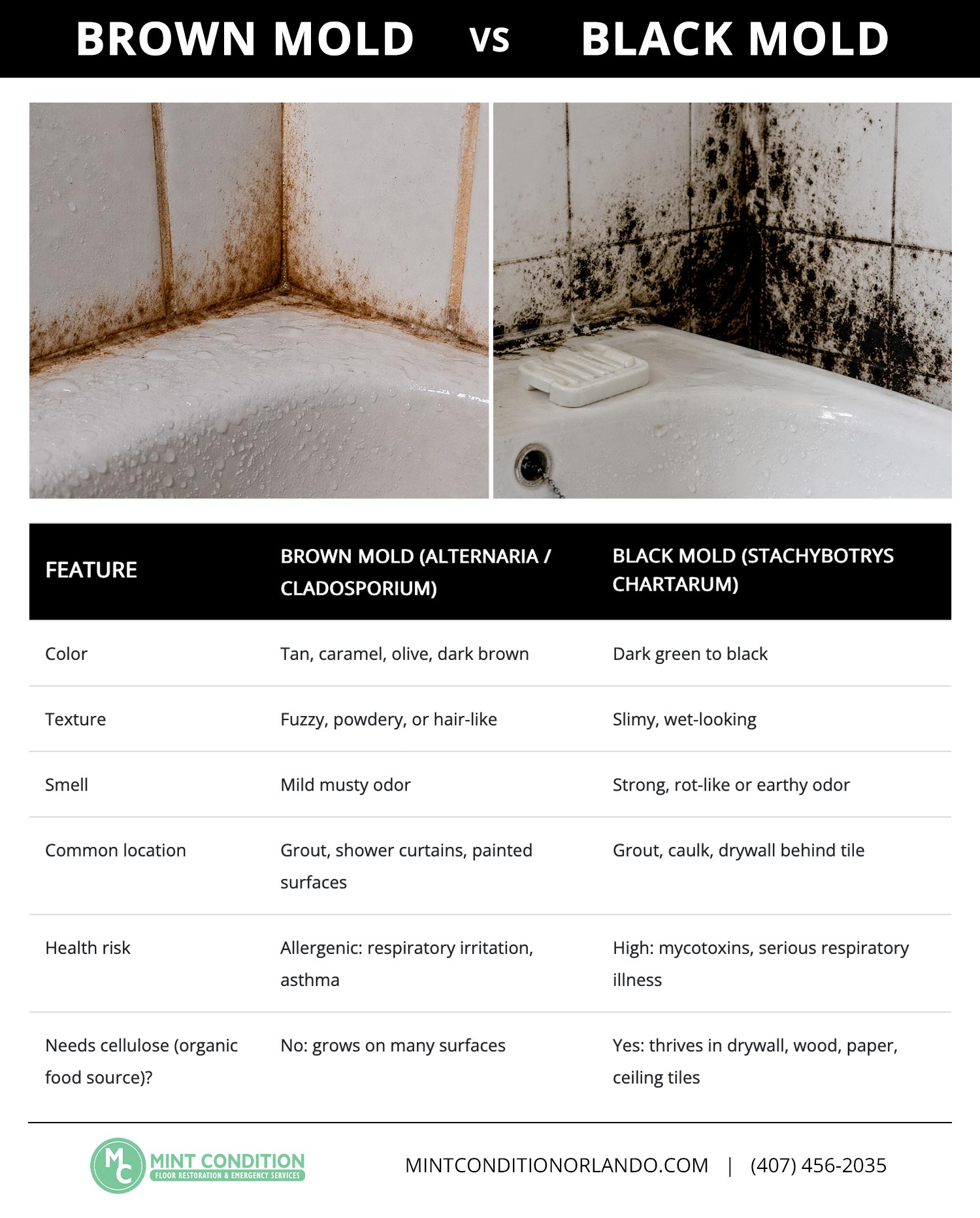
Brown Mold vs Black Mold: What Is the Difference?
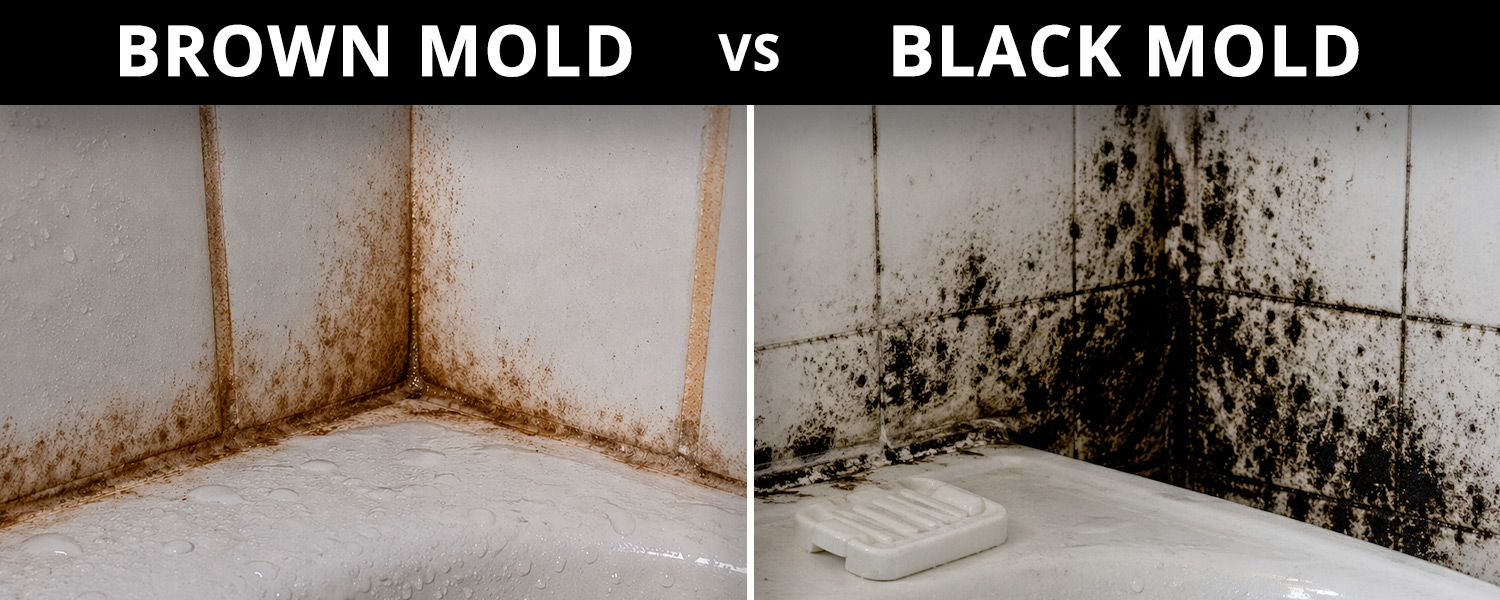
Brown mold (Alternaria or Cladosporium) is typically tan to dark brown with a fuzzy or powdery texture and causes allergic reactions. Black mold (Stachybotrys chartarum) is dark green to black with a slimy, wet surface and produces mycotoxins linked to serious respiratory illness. Both grow in damp bathrooms, but black mold poses a significantly higher health risk.
Here is the clearest way to tell them apart:
| Feature | Brown Mold (Alternaria / Cladosporium) | Black Mold (Stachybotrys chartarum) |
|---|---|---|
| Color | Tan, caramel, olive, dark brown | Dark green to black |
| Texture | Fuzzy, powdery, or hair-like | Slimy, wet-looking |
| Smell | Mild musty odor | Strong, rot-like or earthy odor |
| Common location | Grout, shower curtains, painted surfaces | Grout, caulk, drywall behind tile |
| Health risk | Allergenic: respiratory irritation, asthma | High: mycotoxins, serious respiratory illness |
| Needs cellulose (organic food source)? | No: grows on many surfaces | Yes: thrives in drywall, wood, paper, ceiling tiles |
The key visual difference is texture. Brown mold tends to be dry, fuzzy, or powdery. Black mold is almost always slimy or wet-looking. If the patch in your bathroom is dark and has a slick, shiny surface, especially near a wall cavity or behind caulk, that warrants a closer look.
Learn more about black mold identification, health risks, and how to remove it in our guide to
Black Mold in the Bathroom: What It Looks Like, Where It Grows, and How to Remove It.
Where Does Brown Mold Grow in the Bathroom?
Brown mold most commonly grows on bathroom ceilings, grout lines, caulk seams, shower curtains, and baseboards, anywhere moisture collects and airflow is limited. It follows a predictable path: any surface that stays damp for extended periods or accumulates organic residue between cleanings is a candidate.
The shower and tub area get the most attention, but brown mold shows up in spots homeowners rarely check until the growth is already noticeable. Here is a breakdown of the most common locations and what to look for in each one.
Brown Mold on Bathroom Ceiling
The ceiling is one of the first places brown mold establishes itself, and one of the last places homeowners think to look.
Here is why it happens. Every hot shower sends a cloud of warm, humid air rising toward the ceiling. If your exhaust fan is undersized, poorly positioned, or not run long enough after a shower, that humid air has nowhere to go. It condenses on the ceiling surface, and over time, that repeated moisture cycle creates exactly the conditions brown mold needs.
The first sign is usually a faint discoloration near the exhaust vent or along the corners where the ceiling meets the wall. Those corners get the least airflow and the most condensation. The growth often starts as small, scattered dark spots that look like dirt or water staining. By the time it develops a visible fuzzy or powdery texture, it has usually been there for a while.
One thing worth checking: if your exhaust fan vents into the attic instead of directly outside, humid air is being dumped into an enclosed space rather than expelled from the home. That is a setup for ongoing moisture problems well beyond the bathroom ceiling.
One of the simplest field checks that Mint Condition technicians share with homeowners during a service call is to hold a single sheet of toilet paper up to the exhaust vent while the fan is running. If the paper does not stay pulled against the vent on its own, the fan is not generating enough suction to do its job. A fan that runs but is clogged with dust or debris is barely moving air at all, and in our experience, that is the situation in more bathrooms than you would expect.
Brown Mold on Bathroom Baseboards
Bathroom baseboards are easy to overlook because they sit at the bottom of your field of vision, but they are some of the most vulnerable surfaces in the bathroom for brown mold growth.
Baseboards sit directly against the floor and are often made of wood or MDF, both of which absorb moisture readily. Shower splashback, bath mat saturation, and general humidity that settles as it cools all contribute to keeping that lower zone damp for extended periods. Brown mold on baseboards typically appears as dark fuzzy or powdery patches along the lower edge, especially in corners where the baseboard meets the floor and airflow is minimal.
If the paint on your baseboard is bubbling, peeling, or feels soft when you press it, moisture has likely been working into the material underneath. What you can see on the surface is often only part of what has established itself inside the wood or behind it.
Brown Mold on Bathroom Walls and Grout
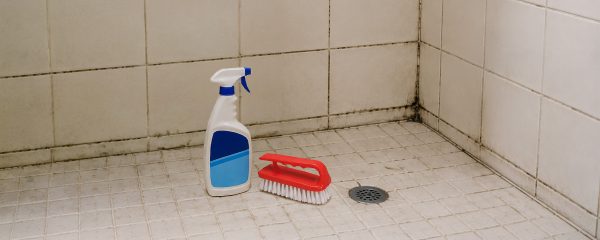
Bathroom walls and grout lines are the most common location for brown mold, and grout is where it tends to dig in deepest.
Glazed tile is non-porous and does not absorb moisture, so mold rarely takes hold on the tile face itself. Grout is a different situation entirely. Standard cement-based grout is porous and draws in water with every shower. That moisture does not just sit on the surface; it gets pulled into the grout matrix, where it stays long after the tile surface looks dry.
Brown mold in the shower, particularly Alternaria, thrives in exactly this environment. Add the soap scum, shampoo residue, and body oils that accumulate in grout lines between cleanings, and you have a food source sitting right alongside a moisture source. That combination is hard to beat.
On bathroom walls outside the shower, Cladosporium is the more common finding. It tends to show up on painted drywall surfaces near the shower, especially in bathrooms where humidity lingers after the shower is off. Look for dry, powdery dark clusters near the upper corners of the wall and around any fixtures where water splashes regularly.
If the grout in your shower has turned noticeably darker over time, or if brown patches keep returning in the same spots after cleaning, that is a sign the mold has worked its way below the surface. At that point, household cleaners are not reaching the source.
Brown Mold on Bathroom Floor
Bathroom floors take the same moisture punishment as baseboards but across a much larger surface area.
Grout lines on the bathroom floor are the primary target, for the same reasons as shower grout: they are porous, they absorb moisture with every splash, and they accumulate organic residue between cleanings. The highest-risk zones are near the toilet base, under a bath mat that does not dry fully between uses, and along the edge where the floor meets the tub surround. These are the spots that stay damp the longest and get the least airflow.
Pro tip: Check grout lines on the bathroom floor regularly. Brown mold on bathroom floors tends to blend in with general discoloration and grout aging, which is exactly why it goes unnoticed until it has spread well beyond its starting point.
What Causes Brown Mold in the Bathroom?
Brown mold does not appear out of nowhere. It grows when a specific set of conditions come together, and in most bathrooms, those conditions exist every single day.
High Humidity
Bathrooms cycle through spikes of high humidity with every shower or bath. Per IICRC standards, mold can begin developing on a damp surface within 24 to 48 hours of moisture exposure. In homes where the bathroom humidity does not return to normal levels between uses, that window never fully closes.
Poor Ventilation
An exhaust fan that is too small, improperly vented, or simply not used long enough after a shower leaves humid air sitting in the bathroom. Stagnant, humid air keeps surfaces damp, accelerates condensation on walls and ceilings, and creates ideal conditions for brown mold to colonize grout, caulk, and painted surfaces.
Lingering Moisture on Surfaces
Surfaces that stay wet, grout lines, caulk seams, the base of shower curtains, and bath mats that do not dry fully between uses, provide the sustained moisture brown mold needs to establish and spread. This is different from high ambient humidity. Even in a well-ventilated bathroom, surfaces that trap water for hours at a time remain vulnerable.
Soap and Organic Residue
Soap scum, shampoo buildup, body oils, and skin cells accumulate on bathroom surfaces between cleanings and act as a food source for both Alternaria and Cladosporium. This is one of the main reasons brown mold keeps coming back in the shower, even when homeowners clean regularly. If the residue is not fully removed, the nutrient source remains.
How to Get Rid of Brown Mold
⚠️Disclaimer: Use these cleaning methods occasionally and at your own risk. Always follow the manufacturer’s cleaning instructions. Materials vary and may react differently to certain products, which could cause damage or discoloration. Test on a small hidden area first before applying any product to a visible surface. For stubborn mold or growth that keeps coming back, contact a certified professional.
The right approach to getting rid of brown mold depends on where it is growing and how far it has spread. Surface mold on tile or a shower curtain is a different situation from mold that has worked its way into grout or is recurring in the same spot no matter how many times you clean it.
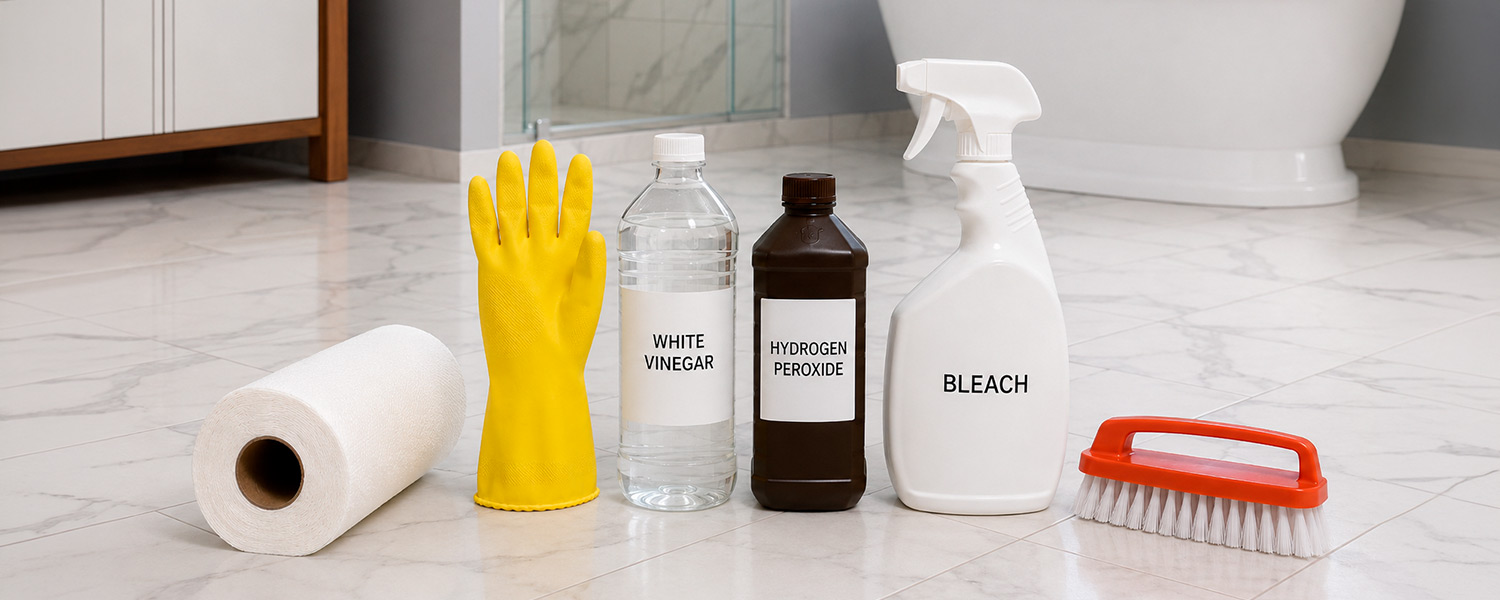
For surface-level growth on non-porous materials like glazed tile, glass, or plastic shower fixtures, a DIY approach can absolutely work. Below are the two most effective options.
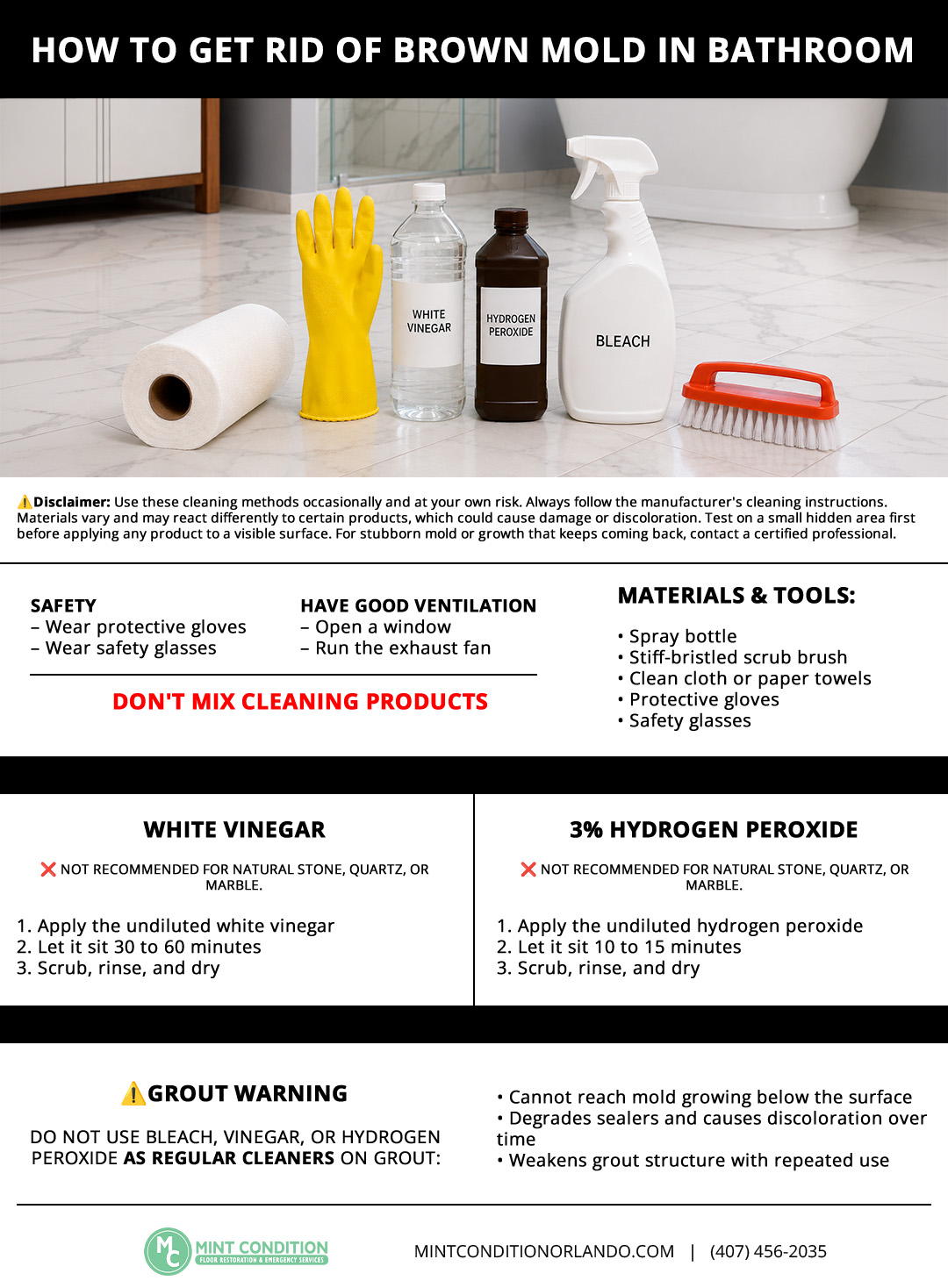
Important safety note: No matter which option you use:
- Wear gloves
- Open a window
- Run your exhaust fan
Good ventilation matters. And please, don’t mix cleaning products. Some combinations can produce fumes that are genuinely dangerous in a small enclosed space like a bathroom.
How to Get Rid of Brown Mold with White Vinegar
⚠️ Not recommended for natural stone, quartz, or marble. Vinegar’s acidity can permanently etch and dull these surfaces.
Disclaimer: Use these cleaning methods at your own risk. Always follow the manufacturer’s cleaning instructions. Materials vary and may react differently to certain products, which could cause damage or discoloration. Test on a hidden area first. For stubborn mold or growth that keeps coming back, contact a certified professional.
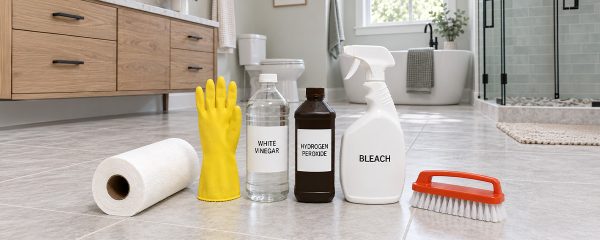
Materials, Tools, and Supplies You’ll Need
- Undiluted plain white vinegar
- Spray bottle
- Stiff-bristled scrub brush
- Clean cloth or paper towels
- Protective gloves
- Safety glasses
Step 1: Apply the vinegar directly
Pour undiluted white vinegar into a spray bottle and apply it generously to the affected area. Do not dilute it. The full acidity is what makes it effective against mold at the surface level.
Step 2: Let it sit
Leave the vinegar on the surface for at least 30 to 60 minutes without wiping or rinsing. This dwell time is what allows the acidity to penetrate and disrupt the mold’s cellular structure. Skipping this step is the most common reason the treatment does not work.
Step 3: Scrub, rinse, and dry
Scrub the area firmly with a stiff-bristled brush, then rinse thoroughly with clean water. Dry the surface completely with a clean cloth. Leaving the surface wet after cleaning defeats the purpose.
Pro tip: The vinegar smell dissipates within a few hours once the surface dries. If the odor bothers you, open a window and run the exhaust fan while you work. Do not try to mask it with another cleaning product, and never mix vinegar with bleach. That combination produces toxic chlorine gas.
How to Get Rid of Brown Mold with Hydrogen Peroxide
⚠️ Not recommended for natural stone, marble, or colored grout. May cause discoloration with repeated use.
Disclaimer: Use these cleaning methods occasionally and at your own risk. Always follow the manufacturer’s cleaning instructions. Materials vary and may react differently to certain products, which could cause damage or discoloration. Test on a small hidden area first before applying any product to a visible surface. For stubborn mold or growth that keeps coming back, contact a certified professional.
For non-porous surfaces, a hydrogen peroxide solution works really well for removing brown mold.
Materials, Tools, and Supplies You’ll Need
- 3% hydrogen peroxide solution (standard drugstore concentration)
- Spray bottle
- Stiff-bristled scrub brush
- Clean cloth or paper towels
- Protective gloves
- Safety glasses
Step 1: Apply the hydrogen peroxide
Pour the 3% hydrogen peroxide solution into a spray bottle and apply it directly to the affected area. The standard concentration available at any drugstore is exactly what you need. No mixing or diluting required.
Step 2: Let it sit
Leave it on the surface for 10 to 15 minutes. Hydrogen peroxide works by releasing oxygen that breaks down the mold’s structure. The dwell time is what makes it effective, so do not rush this step.
Step 3: Scrub, rinse, and dry
Scrub firmly with a stiff-bristled brush, then rinse thoroughly with clean water. Dry the surface completely with a clean cloth immediately after rinsing. Leaving moisture behind after cleaning creates the exact conditions that allowed mold to grow in the first place.
Pro tip: Hydrogen peroxide is most effective on non-porous surfaces like glazed tile, tubs, and fixtures. On grout, it can reduce surface discoloration but may not fully reach mold that has penetrated below the surface. If the grout stays dark after treatment and drying, the mold has gone deeper than hydrogen peroxide can reach.
⚠️ Warning: Do Not Use These Products as Regular Cleaners on Grout
Bleach, vinegar, and hydrogen peroxide are acceptable for occasional mold treatment on grout surfaces. Used repeatedly as regular cleaners, all three cause damage:
- Bleach: Cannot penetrate porous grout fully. Repeated use degrades the grout binder and lightens staining without eliminating the mold colony below the surface.
- Vinegar: The acidity gradually breaks down the calcium carbonate binder in cement grout, making it more porous over time and creating better conditions for mold to return.
- Hydrogen peroxide: Minimal substrate damage with occasional use, but like bleach and vinegar, it does not penetrate the grout matrix to reach embedded mold.
For recurring mold in grout, surface cleaners are not the solution. Professional tile and grout cleaning reaches what household products cannot.
When DIY Is Not Enough To Remove Brown Mold
There are three clear signals that surface cleaning is not going to resolve the problem on its own.
1. Mold returns within two weeks of cleaning.
If brown mold is back in the same spot within two weeks of a thorough cleaning, the source has not been addressed. The mold has established itself below the surface, inside the grout matrix, behind caulk, or both, and surface-level treatment is only removing what is visible.
2. Grout stays dark after scrubbing.
If grout does not return to its original color after a thorough cleaning and full drying, that residual discoloration is mold that has penetrated the grout itself. At that point, household cleaners are not reaching the problem.
3. A musty smell persists after cleaning.
If your bathroom still smells earthy or damp after you have cleaned every visible surface, mold is almost certainly present somewhere you cannot see. Behind caulk, beneath a failing tile seal, or inside the grout are the most common locations.
Grout is porous enough that mold can colonize it at a depth that standard brushes and sprays simply do not reach. Per IICRC standards, effective mold remediation in porous building materials requires more than surface treatment. Professional tile and grout cleaning uses extraction and treatment methods that go beyond what household products can do.
If your brown mold keeps coming back despite your best efforts, that is the conversation Mint Condition’s IICRC-certified technicians are here to have. Our professional tile and grout cleaning service is designed specifically for situations where surface cleaning has stopped being enough, using eco-friendly, family and pet safe methods.
Brown Mold FAQs
These are the questions homeowners ask most often once they have identified brown mold in their bathroom and are trying to figure out their next move.
What does brown mold mean?
Brown mold in the bathroom is not just a cosmetic problem. It is a moisture signal. When brown mold appears on grout, ceilings, or shower curtains, it means a surface in your bathroom has been staying damp long enough, typically 24 to 48 hours or more, to support fungal growth. The most common culprits are poor ventilation, lingering moisture on surfaces, and organic residue buildup that gives mold a food source.
Brown Mold on Baseboard
Brown mold on baseboards typically appears as dark fuzzy or powdery patches along the lower edge, especially in corners where the baseboard meets the floor. It forms when moisture from shower splashback, bath mat saturation, or settling humidity keeps the baseboard material damp long enough for mold to establish. Because most bathroom baseboards are wood or engineered wood (MDF), both of which absorb moisture readily, what is visible on the surface is often only part of what has developed inside the material behind it.
Brown Mold on Ceiling
Brown mold on a ceiling typically appears as dark fuzzy or powdery spots near vents or in ceiling corners where two walls meet. It usually indicates a moisture issue, such as poor ventilation, or a leak in plumbing or the roof. Brown ceiling mold is almost always a ventilation problem before it is a mold problem, because insufficient airflow allows humidity to remain high and encourages growth. Brown mold near a vent may cause health issues, such as respiratory problems or headaches.
Is brown mold normal in bathrooms?
Unfortunately, yes. Brown mold is one of the most common types found in residential bathrooms across the country. The combination of warmth, humidity, limited airflow, and organic residue that most bathrooms provide makes them ideal environments for Alternaria and Cladosporium, the two species most commonly behind brown bathroom mold. Finding it does not mean something is wrong with your home specifically. It means the conditions in your bathroom are giving mold what it needs to grow, and those conditions can be changed.
How fast does brown mold grow?
Faster than most people expect. According to the CDC, mold can begin developing on a damp surface within 24 to 48 hours of moisture exposure and can begin colonizing a surface within 1 to 12 days. Brown mold species like Alternaria and Cladosporium tend to grow steadily rather than explosively, which is actually part of what makes them easy to miss. By the time a patch is visible enough to notice, it has often been established for weeks.
What kills brown mold naturally?
Undiluted white vinegar is the most effective natural option for surface-level brown mold.
- Spray it directly onto the affected area
- Let it sit for 30 to 60 minutes
- After 30 minutes scrub, rinse, and dry
Hydrogen peroxide at 3 percent concentration is another reliable option, particularly on tile and grout surfaces. Both work by disrupting the mold at a cellular level without leaving behind harsh chemical residue. For mold embedded in grout or recurring after repeated cleaning, natural treatments alone are unlikely to fully resolve the problem.
Can you get sick from brown mold?
Yes, you can. But how much it affects you depends on the type of mold, how long you’ve been around it, and who’s living in your home.
Alternaria and Cladosporium are both allergenic molds. They’re not the same as black mold, and they don’t produce mycotoxins, but that doesn’t mean they’re harmless. Spend enough time in a bathroom where these molds are growing, and you might start noticing nasal congestion, sneezing, itchy or watery eyes, skin irritation, or more frequent asthma flare-ups.
The American Academy of Allergy, Asthma and Immunology actually lists Alternaria as one of the most common environmental triggers for allergic asthma, especially in kids. That’s not a small thing.
Now, if you’re a healthy adult with no respiratory issues, a tiny patch of surface mold probably isn’t going to send you to the ER. But here’s the thing: your bathroom isn’t a space you visit once a week. You’re in there every single day, often in a small, enclosed, steamy environment. That adds up. And if anyone in your home has allergies, asthma, or a compromised immune system, the risk goes up significantly. It’s just not worth ignoring.
How do I know if it is brown mold or a stain?
Brown mold has irregular edges, a fuzzy or powdery texture, resists wiping, and produces a faint musty odor. Hard water stains are white to rust-colored with a crusty mineral texture. Rust stains are orange to reddish-brown near metal fixtures. Soap scum is gray or white and wipes off easily. If the discoloration returns within 24 hours of cleaning, it is mold, not a stain.
Does brown mold spread?
Yes, and it spreads faster when the conditions that caused it in the first place are still present. Brown mold reproduces by releasing spores into the air. Those spores settle on nearby surfaces and begin new colonies wherever moisture and organic material are available. Per CDC guidance, mold can begin developing on a new surface within 24 to 48 hours of spore contact if moisture is present.
In a bathroom where humidity stays elevated, ventilation is limited, and surfaces stay damp between uses, brown mold does not just stay in one spot. It expands along grout lines, migrates from the shower curtain to the wall, and can move from one bathroom surface to another steadily over time.
How do I clean brown mold in my bathroom?
For surface-level brown mold on tile, start with undiluted white vinegar or a 3 percent hydrogen peroxide solution. Apply directly, let it sit for 30 to 60 minutes, scrub with a stiff brush, and rinse thoroughly. Wear gloves and keep the bathroom ventilated while you work.
Avoid bleach on grout. It lightens the visible staining but cannot penetrate porous grout deeply enough to eliminate mold at the source, which is why the problem returns.
If the mold is in grout lines, keeps coming back after cleaning, or covers an area larger than 10 square feet, the EPA’s general guideline for when professional assessment is recommended, surface cleaning alone is unlikely to resolve it.
Conclusion
Brown mold in the bathroom is common, but common does not mean harmless and it definitely does not mean permanent.
Now you know what it looks like, where it tends to grow, what causes it, and how to tell whether it is something you can handle yourself or a sign that the problem has gone deeper than the surface. That puts you in a much better position than most homeowners who find it, scrub it, and wonder why it keeps coming back.
If the brown mold in your bathroom is recurring, embedded in grout, or covering a significant area, surface cleaning is not going to get you there. That is where professional tile and grout restoration makes the difference.
Still seeing brown mold come back no matter how many times you clean it? That is the clearest sign the problem has moved past what a scrub brush can fix.Mint Condition’s IICRC-certified technicians specialize in professional tile and grout cleaning that goes beyond surface treatment to address mold at the source, using eco-friendly, family and pet-safe methods. We serve homeowners across Orlando and Central Florida, and we are ready to help you get your bathroom back to clean and keep it that way.
Call us at (407) 456-2035 or fill out a contact form today for your free estimate.
References
- IICRC S520 Standard for Professional Mold Remediation: https://www.iicrc.org/page/IICRCStandards
- U.S. Environmental Protection Agency, Mold and Health: https://www.epa.gov/mold/mold-and-health
- Centers for Disease Control and Prevention, Basic Facts About Mold and Dampness: https://www.cdc.gov/mold/faqs.htm
- American Academy of Allergy, Asthma and Immunology, Mold Allergy: https://www.aaaai.org/tools-for-the-public/conditions-library/allergies/mold-allergy
- CDC, Mold Growth Timeline: https://www.cdc.gov/mold/faqs.htm