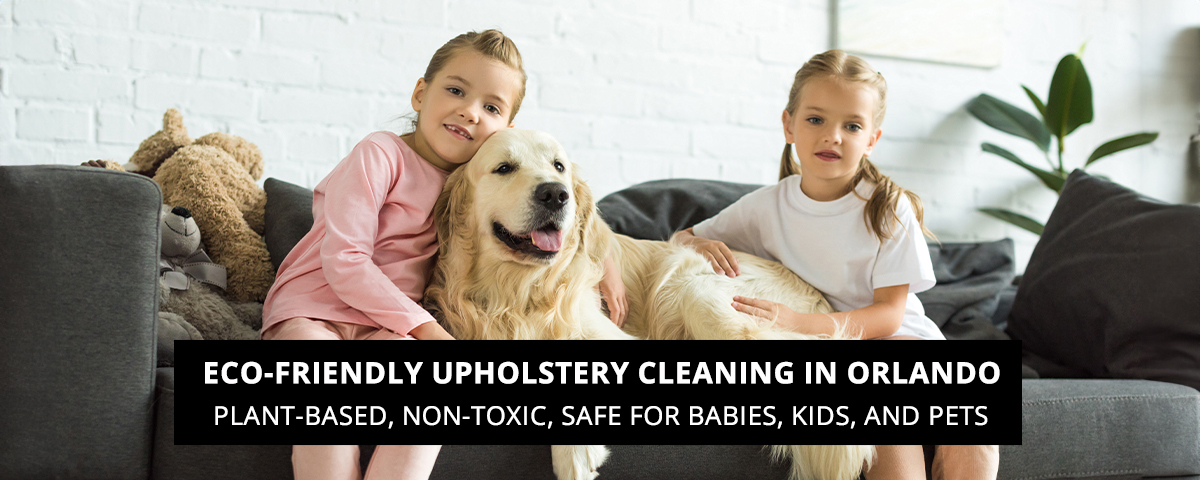
Mint Condition offers eco-friendly upholstery cleaning in Orlando using non-toxic, plant-based, enzyme-based, and oxygen-based products that are safe for babies, kids, and pets. Our IICRC-certified technicians serve homes throughout Orlando, Orange County, and Seminole County, with eco-friendly upholstery cleaning methods and drying practices suited to Central Florida’s humid climate and matched to your fabric type.
If you’re looking for the best eco-friendly upholstery cleaning options, this article explains eco-friendly processes, products, and what to expect. Looking for more eco-friendly cleaning options for your home? Read our guide on eco-friendly carpet cleaning and eco-friendly tile and floor cleaning options for homeowners in Orlando and Central Florida.
Key Takeaways
Here’s what Orlando homeowners should know before booking eco-friendly upholstery cleaning.
- Mint Condition offers eco-friendly upholstery cleaning in Orlando, using green products including plant-based, enzyme, and oxygen-based cleaners.
- Before cleaning, first check the upholstery code tag. “W” means water-based cleaners, “S” means water-free solvents, “WS” means either, and “X” means vacuum only. The code tells us the cleaning medium, not whether a product is eco-friendly, and the manufacturer’s instructions can add limits.
- Match the cleaner to the soil type: enzymes for food, sweat, and pet accidents when the enzyme matches the soil; oxygen-based cleaners for some organic stains and odors; plant-based cleaners for routine soil.
- “Plant-based” and “natural” don’t guarantee gentleness, so pretest every product on a hidden area first.
- Eco-friendly products don’t raise mildew risk in Florida; moisture does. Choose low-moisture methods that use less water and dry faster, which helps protect cushion foam.
- Mint Condition offers free estimates, IICRC-certified technicians, and a 100% satisfaction guarantee for 10 business days after every upholstery cleaning.
Eco-Friendly Upholstery Cleaning Options in Orlando Summary
For upholstery, eco-friendly cleaning comes down to three things: what the product is made of, whether it’s fully rinsed out or left in the fabric, and how much water the method needs in the first place. Plant-based and enzyme cleaners break down naturally instead of leaving synthetic residue behind. Some methods extract the solution completely, while others use little to no water at all. Since fabric holds onto whatever’s applied to it far longer than a hard floor would, these choices matter more here than they might elsewhere in your home.
These are the options Mint Condition offers, matched to your fabric type and what’s actually on it.
| Option | What It Does | Best For | Eco-Friendly Benefit |
|---|---|---|---|
| Plant-based cleaners | Surfactants, often plant-derived, loosen everyday soil and body oils so they can be removed | Routine cleaning and oily buildup on arms and headrests | Can use plant-derived ingredients, depending on the formulation |
| Enzyme cleaners | Each enzyme targets a specific type of organic soil, such as proteins or starches | Food spills, sweat, and pet accidents, when the enzyme matches the soil | Targets specific organic soils efficiently, rather than masking it with synthetic fragrance |
| Oxygen-based cleaners | Oxygen-releasing ingredients help break down some organic stains and odor-causing compounds | Some organic stains and odors, after a colorfastness pretest | Breaks down into water and oxygen rather than leaving synthetic residue behind, depending on the formulation |
| Low-moisture cleaning | Cleans with a minimal amount of water-based solution, an approach some companies call “semi-dry” | Fabrics that tolerate water but benefit from faster drying | Uses less water and typically dries faster than wetter cleaning methods |
| Hot water extraction with plant-based cleaners | Rinses solution and soil out with hot water and strong suction | Durable, heavily soiled fabrics | Rinses and extracts cleaning solution and soil, helping minimize residue in the fabric |
Please note: Some upholstery fabrics cannot be safely cleaned with water and may require solvent-based cleaning. Always choose the cleaning method based on the manufacturer’s care code and the fabric’s construction.
Are There Eco-Friendly Upholstery Cleaning Options in Orlando?
Yes. Mint Condition offers Orlando homeowners several eco-friendly upholstery cleaning options, including plant-based and enzyme-based cleaners, oxygen-based treatments, low-moisture cleaning, and hot water extraction with plant-based solutions. The right method depends on your fabric’s cleaning code and the type of soil, stain, or odor being treated.
Some fabrics cannot be safely cleaned with water and may require solvent-based cleaning instead.
We start every job with a pre-inspection, so the approach matches what your furniture can actually handle.
The Eco-Friendly Upholstery Products Available in Orlando
Plant-Based Cleaners
Plant-based cleaners rely on surfactants, soap-like molecules often derived from plants such as coconut or corn. You’ll also see citrus extracts and essential oils on the ingredient list. Surfactants grab oily soil so it can be lifted out of the fabric instead of smearing around in it.
These are our go-to products for routine upholstery cleaning. They help with general soil, body oils on armrests and headrests, and the light film that builds up on a couch that gets used all the time.
One thing to keep in mind: “plant-based” describes where ingredients come from, not how gentle they are on your fabric or skin. Some plant-based cleaners contain citrus-derived ingredients or natural fragrances that can still irritate sensitive individuals. For example, oxidized d-limonene, a common citrus ingredient, can act as a skin sensitizer, and the American Lung Association notes that both natural and synthetic fragrances can affect sensitive people.
If someone in your household has allergies, sensitive skin, asthma, or fragrance sensitivities, let us know when you schedule so we can take that into account when selecting a cleaning product.
Enzyme Cleaners
Enzymes break down specific types of organic soil so they can be removed more easily. Different enzymes target different messes:
- Protease: proteins such as blood, egg, and dairy
- Amylase: starches such as rice, potato, and baby food
- Lipase: fats and oils such as cooking oil and body oils
Because many stains contain a mix of protein, starch, and fat, enzyme cleaners often use a blend. That’s why identifying the stain during pre-inspection matters.
Enzymes also need moisture and dwell time to work before extraction. Mint Condition uses enzyme pre-conditioning when appropriate, including targeted treatment for pet accidents.
However, there’s one thing to keep in mind: protein-targeting enzymes can damage protein-based fibers such as wool and silk, so they are not suitable for every fabric.
Oxygen-Based Cleaners
Oxygen-based cleaners use ingredients like hydrogen peroxide or sodium percarbonate that release oxygen into the fabric. That oxygen breaks apart the part of a stain that carries its color, which is why these products work well on organic stains such as coffee, tea, wine, and the yellowing left by sweat.
They can also help with some odors by breaking down certain odor-causing compounds rather than simply masking the smell.
Low-Moisture Cleaning
Low-moisture cleaning uses a small amount of water-based solution, then removes it with absorbent pads or light extraction. Because less water is used, upholstery usually dries faster.
It works well for water-safe fabrics, lighter soil, and furniture that needs to be back in use quickly. For heavier buildup or contamination that has soaked deeper into the cushions, a more thorough cleaning method may be needed.
Our technicians inspect the fabric, construction, and soil level first, then choose the least moisture needed to clean the piece effectively.
Hot Water Extraction With Plant-Based Cleaners
Hot water extraction uses a plant-based cleaning solution to loosen soil, followed by a hot water rinse and strong suction to remove dirt, cleaning solution, and moisture from the fabric. Thorough extraction helps minimize residue and reduce faster resoiling.
This method works well for durable upholstery with heavier soil, body oils, spills, and built-up grime. Because it uses more water than low-moisture cleaning, proper extraction and fast drying are especially important in Orlando and Central Florida’s humid climate.
Our technicians inspect the fabric, construction, soil level, and drying conditions first to determine whether hot water extraction is the right choice.
Dry Solvent Cleaning
Dry solvent cleaning uses a water-free solvent and is typically used for S-code, delicate, vintage, or moisture-sensitive upholstery. On these fabrics, water can cause rings, color changes, texture changes, or shrinkage.
It is not the most eco-friendly method, but when a fabric requires solvent cleaning, using the correct method is better than forcing a water-based process that could damage the upholstery and lead to unnecessary cleaning, repair, or replacement.
Before cleaning, we check the care tag, fabric type, and condition. S means solvent cleaning, while X means vacuuming or other dry methods only.

How Mint Condition Makes Upholstery Cleaning More Eco-Friendly
Eco-friendly upholstery cleaning is not just about replacing a regular cleaner with a plant-based product. It also means choosing the right product and method for the fabric, using only what the furniture needs, and avoiding unnecessary treatments. Here is how we approach that during a professional cleaning.
We Inspect Before Applying Anything
Before a cleaning product touches the upholstery, we check the fabric, condition, cleaning code when available, and problem areas. This helps us choose products and methods the material can safely handle instead of using the same solution on every piece of furniture.
We Remove Dry Soil First
Vacuuming removes loose dust, hair, crumbs, and other dry debris without adding water or cleaning solution. Taking this material out first means the cleaning products used afterward can focus on the soil that is actually attached to the fibers.
We Use Targeted Cleaning Products
We match the product to the soil. Plant-based cleaners can handle general soil and body oils, while the right enzyme may be used for specific organic stains or residues.
We Give the Cleaner Time to Work
When appropriate, the cleaning solution is allowed to dwell so it has time to loosen oils and embedded soil. Giving the product enough time to work can help us clean effectively without using more product than necessary or relying on excessive agitation.
We Use Strong Extraction for Less Residue
On fabrics suitable for hot water extraction, the cleaning solution and loosened soil are rinsed and pulled back out with strong extraction.
This step matters because eco-friendly cleaning is not only about what goes into the fabric. It is also about removing as much soil, cleaning solution, and moisture as practical when the cleaning is finished.
We Treat Difficult Spots Individually
A stubborn stain does not automatically mean the entire sofa needs a stronger cleaner. We can treat problem spots individually with a product selected for that particular stain and fabric.
This targeted approach keeps specialty products limited to the areas where they are actually needed.
We Help the Upholstery Dry Quickly
After cleaning, high-velocity air movers can be used to move air across the upholstery and speed up evaporation. Faster drying reduces the amount of time moisture remains in the fabric and cushions, which is especially useful in Central Florida’s humid climate.
The result is a cleaning process built around using the right product, in the right amount, with the right method for the furniture in front of us.
Choosing the Right Eco-Friendly Upholstery Option for Your Orlando Home
Eco-friendly upholstery cleaning is about more than choosing a “green” product. The right option depends on your fabric, the type of soil or stain, and your household’s priorities. Use the guide below to compare the best fit for your needs.
Still deciding whether professional cleaning is right for your furniture? Read our guide on hiring a professional to clean your couch.
If you’re unsure which option is right for your furniture or have questions, contact us by texting/calling (407) 456-2035 or filling out a contact form, and we’ll help you choose the safest, most effective approach.
Homes With Babies and Young Children
For furniture used by babies and young kids, lean towards the gentlest effective option the fabric allows: plant-based cleaning with hot water extraction when the fabric is water-safe, or low-moisture cleaning when it isn’t. Enzymes and oxygen-based cleaners only come out for a specific spot that actually needs them, not the whole piece.
Homes With Pets
Plant-based cleaners handle general soil and body oils. Enzyme cleaners step in when there’s organic residue or odor to target, and hot water extraction rinses everything back out when the fabric allows it. A stubborn discoloration may call for a tested, targeted oxygen treatment.
Households With Allergies, Fragrance or Product Sensitivities
When fragrance or product sensitivity is a concern, we favor a plant-based solution paired with hot water extraction so the solution gets rinsed out rather than left behind. If the fabric doesn’t need a deep rinse, low-moisture cleaning is worth considering too, since it uses less solution overall.
Quick Decision Guide
Different households have different concerns about what is used on their furniture. Here is how Mint Condition may adjust the cleaning approach based on those priorities.
| Household or Priority | Recommended Approach | Why |
|---|---|---|
| Babies and toddlers | Plant-based cleaner with hot water extraction, when the fabric allows it | Combines a family-friendly cleaning product with rinsing and extraction to remove loosened soil and cleaning solution |
| Homes with pets | Plant-based cleaning with targeted enzyme treatment when needed | Keeps specialty treatments focused on the specific areas that require them instead of applying stronger products throughout the piece |
| Sensitive skin, allergies, or fragrance concerns | Fragrance-free or lower-odor products when appropriate, with extraction on water-safe fabrics | Reduces unnecessary fragrance exposure and helps remove cleaning solution from upholstery after cleaning |
| Eco-conscious households focused on water use | Low-moisture cleaning, when the fabric and soil level allow it | Uses less water than a full hot water extraction and leaves less moisture to remove during drying |
| Eco-conscious households that still need a deeper clean | Hot water extraction with plant-based cleaners | Allows for deeper cleaning while using plant-based products and extracting the cleaning solution after it has done its job |
The right option still depends on your specific furniture. We weigh household priorities against the fabric, cleaning code, and condition before choosing anything.
Not sure which row fits your furniture? Estimates are free, and every job starts with an inspection, not a guess.
Request a free estimate by texting/calling (407) 456-2035 or filling out a contact form.
Eco-Friendly Upholstery Cleaning in Orlando FAQ’s
Here are the questions Orlando and Central Florida homeowners ask most about eco-friendly upholstery cleaning.
Is eco-friendly upholstery cleaning as effective as traditional cleaning?
For most everyday soil, yes. Cleaning power on upholstery comes largely from matching the product to the soil, letting it dwell, and extracting thoroughly. Harsh chemistry isn’t what makes the difference. Heavily contaminated or long-neglected pieces may still need more than one treatment.
When can my baby nap on the couch after eco-friendly upholstery cleaning?
Your baby can use the couch once the upholstery and cushion foam are fully dry. Keep in mind that foam can hold moisture longer than the outer fabric, which is why Mint Condition uses high-velocity air movers to help speed up drying after cleaning. Our technicians will provide detailed instructions after cleaning and answer any questions you may have.
Can eco-friendly cleaning remove sunscreen and body oil buildup?
Usually, yes. Plant-based cleaners loosen oily buildup from sunscreen and body oils, and hot water extraction rinses it back out on water-safe upholstery. Older or heavier buildup may need extra dwell time, and discoloration from long-term wear won’t always fully reverse.
Will eco-friendly upholstery cleaning products irritate sensitive skin?
Usually not, but it depends on the product and the person. Plant-based doesn’t automatically mean irritation-free: some ingredients and fragrances bother sensitive skin. We factor in known sensitivities, use unscented products when appropriate, and rinse the solution back out on water-safe fabric rather than leaving it behind.
Can enzyme treatments remove pet urine from cushion foam?
They can help, but only if the urine itself is reached and removed. Enzyme treatment paired with extraction targets the source rather than masking it. Urine that has saturated the foam or reached the frame may need repeat treatment, and badly contaminated foam sometimes has to be replaced.
Does eco-friendly upholstery cleaning cost more than regular upholstery cleaning?
Not necessarily; it depends on how many pieces you have, how large they are, the fabric, the soil level, and add-ons like pet treatment or a fabric protector. The product is only one part of the job.
At Mint Condition, we tailor eco-friendly cleaning to your upholstery needs. We match the fabric, the soil, and your household’s priorities to the right method, then using only as much product and water as the job actually needs.
Looking for the same approach for your floors? See our guide to eco-friendly carpet cleaning in Orlando.
Get a Free Eco-Friendly Upholstery Cleaning Estimate in Orlando
Mint Condition cleans upholstery, drapes, and fine fabrics in homes across Orlando, Orange County, and Seminole County. Every job is performed by an IICRC-certified technician, starts with a pre-inspection, and is backed by our satisfaction guarantee for 10 business days.
Locally owned, with hundreds of five-star reviews, and voted Gold Winner for Best Carpet and Flooring Cleaner in the Orlando Sentinel’s 2025 Central Florida Favorites.
Request a free estimate by texting/calling (407) 456-2035 or filling out a contact form.
REQUEST A FREE ESTIMATE (407) 456-2035
Serving Orlando and Central Florida
Mint Condition cleans upholstery throughout Orange and Seminole Counties, including Winter Park, Maitland, Windermere, Dr. Phillips, Bay Hill, Lake Nona, Horizon West, Winter Garden, Hunters Creek, Gotha, Oviedo, Winter Springs, Altamonte Springs, Longwood, Lake Mary, Heathrow, and Sanford. Outside those areas? Contact us by texting/calling (407) 456-2035. We often travel further for the right project.
References
- Federal Trade Commission. Green Guides, 16 CFR Part 260. https://www.ftc.gov/legal-library/browse/rules/green-guides
- American Lung Association. Choose Safer Cleaning Products. https://www.lung.org/clean-air/indoor-air/indoor-air-pollutants/cleaning-supplies-household-chem
- U.S. Environmental Protection Agency. A Brief Guide to Mold, Moisture and Your Home. https://www.epa.gov/mold/brief-guide-mold-moisture-and-your-home
- Cortez, J., Bonner, P.L.R., & Griffin, M. Transglutaminase treatment of wool fabrics leads to resistance to detergent damage. Aston University. https://research.aston.ac.uk/en/publications/transglutaminase-treatment-of-wool-fabrics-leads-to-resistance-to/