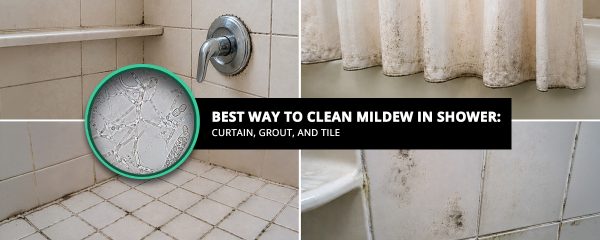
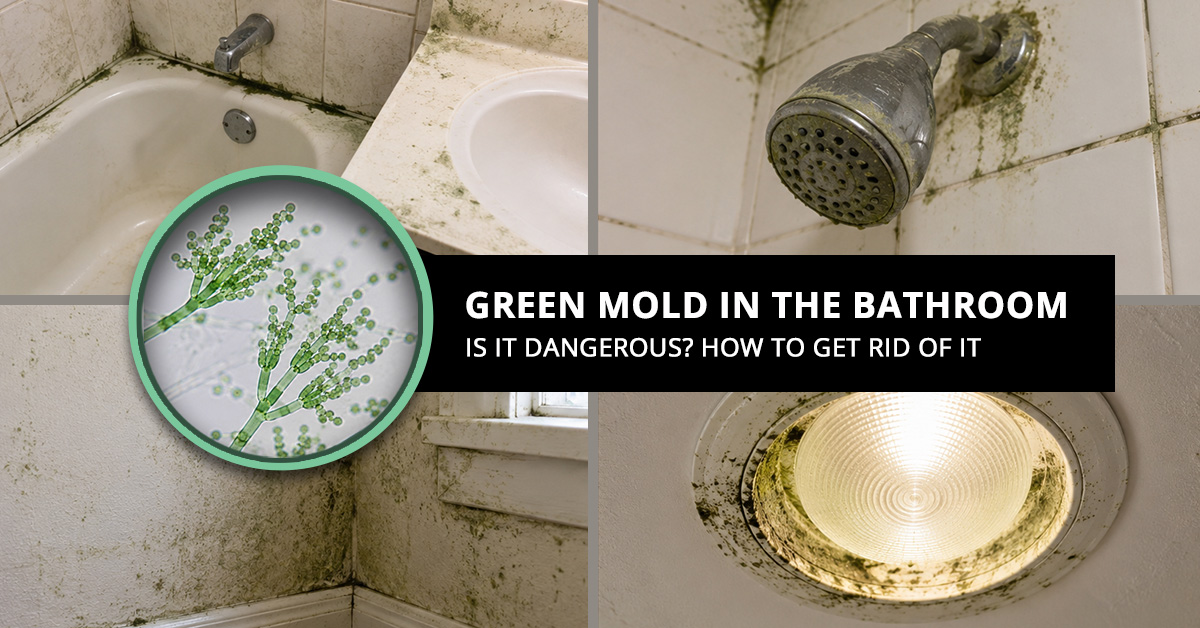
Green mold in the bathroom is most commonly Aspergillus, Penicillium, or Cladosporium, three allergenic fungal species that thrive in warm, humid, poorly ventilated spaces. It appears as fuzzy, powdery, or velvety patches ranging from bright lime green to deep olive or blue-green, most often in grout lines, corners, and on painted surfaces near the shower.
Green mold is one of the most misunderstood types people encounter. It shows up in multiple shades and covers more than one species. That matters because the color alone does not tell you how serious it is, what caused it, or what it will take to get rid of it.
If you’ve been scrubbing the same green patch off your grout and it keeps coming back, you’re not doing anything wrong. You’re just treating the surface without addressing what’s underneath. That’s what this guide is for.
We’ll walk you through what green mold actually is, which species show up most often in bathrooms, where they grow, what causes them, and how to tell when a household cleaner is enough versus when the problem has gone deeper than the surface can reach.
Key Takeaways
- Green mold in the bathroom is most commonly Aspergillus, Penicillium, or Cladosporium, all three are allergenic molds that thrive in warm, humid, poorly ventilated spaces.
- Green mold is a true fungus, unlike pink mold which is a bacterium. This distinction matters because they respond to different treatments.
- Color alone does not tell you how serious it is. Texture, location, and how long it has been there matter more.
- Green mold is not the same as black mold. Green mold is allergenic. Black mold (Stachybotrys) is toxigenic and produces mycotoxins.
- Bleach, vinegar, and hydrogen peroxide can reduce surface growth but none of them fully penetrate porous grout to reach mold below the surface.
- If green mold keeps returning in the same spot after cleaning, the mold has gone deeper than the surface and professional tile and grout cleaning is the next step.
- Prevention comes down to three things: reducing moisture, improving ventilation, and removing organic residue that feeds mold growth.
Summary: Green Mold in Bathroom
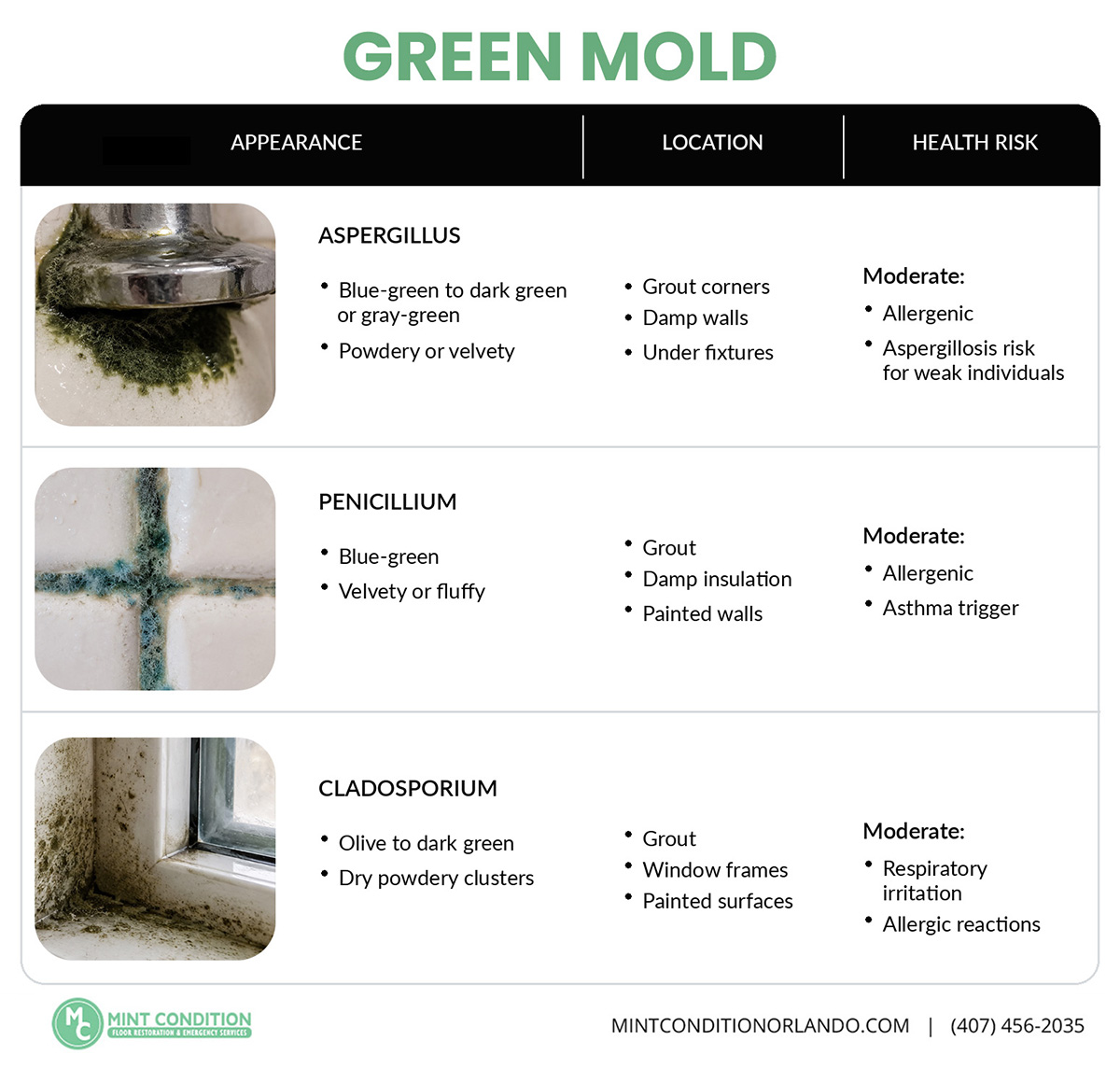
If you are trying to make a fast identification, here is a quick reference of the most common green bathroom mold types, where they show up, and what they mean for your health, before we go deeper into each one.
| Species | Appearance | Location | Health Risk |
|---|---|---|---|
| Aspergillus | Blue-green to dark green or gray-green, powdery or velvety | Grout corners, damp walls, under fixtures | Moderate: allergenic; Aspergillosis risk for immunocompromised individuals |
| Penicillium | Blue-green, velvety or fluffy | Grout, damp insulation, painted walls | Moderate: allergenic, asthma trigger |
| Cladosporium | Olive to dark green, dry powdery clusters | Grout, window frames, painted surfaces | Moderate: respiratory irritation, allergic reactions |
Green Mold
Green mold is a general term for several fungal species, most commonly Aspergillus, Penicillium, and Cladosporium, that appear as fuzzy, powdery, or velvety patches in shades ranging from bright lime green to deep olive and blue-green. All three are allergenic molds that thrive in warm, humid, poorly ventilated bathrooms and grow readily on grout, caulk, and painted surfaces.
Not everything that looks green in your bathroom is the same organism, and that difference changes how you identify it, how serious it is, and what you need to do about it. Here is a closer look at what green mold actually is and what it looks like in a bathroom setting.
What Does Green Mold Look Like?
Green mold typically appears as fuzzy, powdery, or velvety patches ranging from light lime green to dark olive or blue-green. It grows in irregular clusters along grout lines, in corners, and on damp surfaces, and it tends to spread gradually rather than in dramatic patches, which is why it often goes unnoticed until it is already well established.
Mold doesn’t always show up in one obvious color or texture. It can look different depending on the species and the surface it’s growing on.
Aspergillus usually has a powdery or soft, velvety look, and its color can range from yellow-green to deep green. Some species, including Aspergillus fumigatus, can look gray-green or even blue-gray. That’s important because gray-green patches in bathroom grout or on damp walls are easy to brush off as simple discoloration when they may actually be mold.
Penicillium often has that blue-green, dusty look with a velvety texture. Cladosporium, on the other hand, tends to look darker and drier. It may show up as olive or dark green patches that look more like old staining than active mold growth.
And that’s where things get tricky. Early green mold can look a lot like:
- Algae
- Hard water stains
- Basic discoloration (especially on darker grout)
So how can you recognize it? The big giveaways are uneven edges, a fuzzy or powdery surface, and that musty smell that keeps coming back even after you clean.
Mold Green Color
Green mold color ranges from light, bright lime green in early growth stages to deep olive, blue-green, or nearly black as the colony matures. The color shift happens as the mold produces more spores over time. A patch that started out as a faint blue-green dusting can darken significantly over weeks, which is one of the reasons green mold is sometimes mistaken for black mold in older bathrooms.
The shade also varies by species and surface. On white or light-colored grout, green mold is usually much easier to spot. That green shade stands out, so you may catch it early before it spreads too much. But on darker grout or painted surfaces, it can be a little sneakier. Olive green and dark green patches can blend right in and look like regular discoloration, old grout, or surface wear.
If you notice a dark patch on your grout, don’t assume it’s just old grout or normal wear.
Take a closer look, especially if the spot feels slightly fuzzy or powdery and comes with a musty smell that doesn’t go away after cleaning. Those are signs that something may be growing there, not just staining the surface.
Is Green Mold Dangerous?
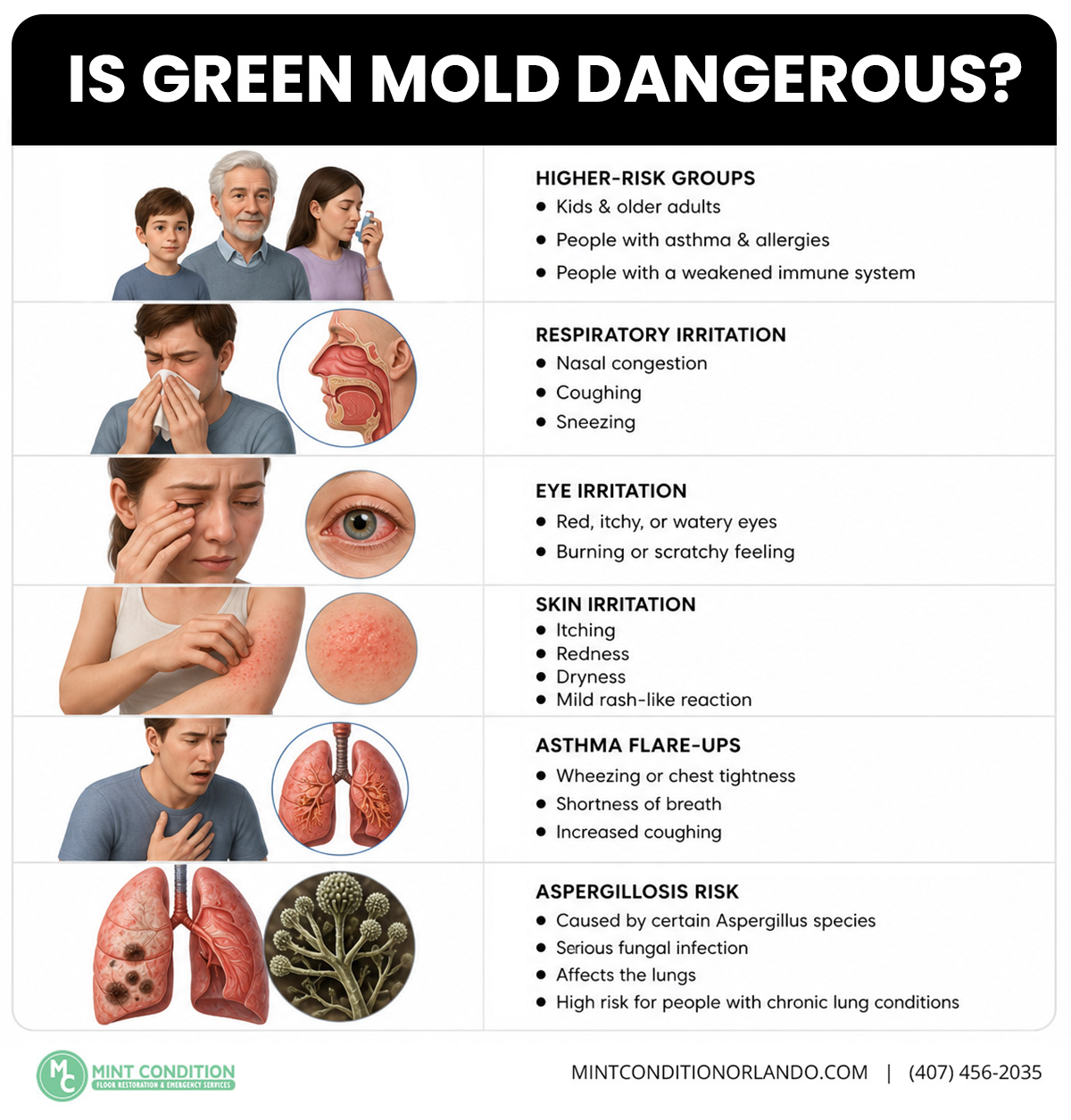
Green mold is not automatically toxic, but it is not harmless either. Aspergillus, Penicillium, and Cladosporium, the most common bathroom species, are allergenic molds that can cause nasal congestion, skin irritation, eye irritation, and asthma flare-ups with regular exposure. Certain Aspergillus species can also cause Aspergillosis, a serious lung infection, in immunocompromised individuals.
The most common bathroom species are classified as allergenic rather than toxigenic, meaning they don’t all produce mycotoxins the way Stachybotrys (black mold) does. But potent allergens in an enclosed space you use every day are not something to dismiss. According to the American Academy of Allergy, Asthma and Immunology, Aspergillus and Penicillium are among the most common environmental triggers of allergic asthma, making daily bathroom exposure a meaningful concern for sensitive individuals.
There is one important exception. Certain Aspergillus species can cause a condition called Aspergillosis in people with weakened immune systems. Per the CDC, Aspergillosis is a fungal infection that primarily affects the lungs and can become serious in immunocompromised individuals, including those undergoing chemotherapy, organ transplant recipients, and people with chronic lung disease.
Higher-risk groups include:
- Kids
- Older adults
- People with asthma, seasonal allergies
- People with a weakened immune system
For healthy adults, a little short-term exposure to a small patch of surface mold usually isn’t going to cause major problems.
But here’s the thing, you use your bathroom every single day. So if mold is hanging around and it keeps coming back after you clean it, it’s better not to ignore it. Even if the surface looks minor, it’s better to deal with it early, before it spreads or causes musty odors and irritation.
Green Mold vs Black Mold
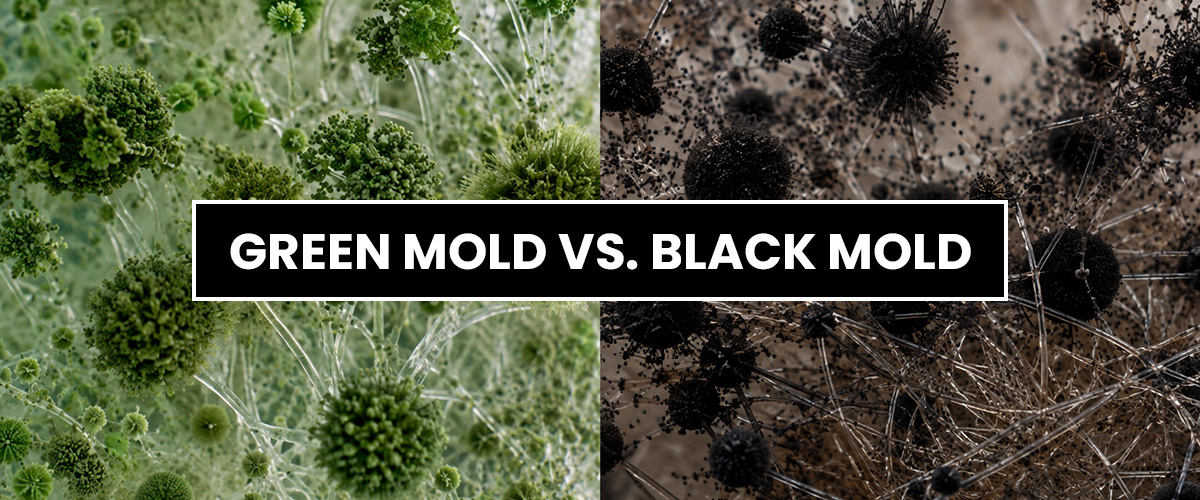
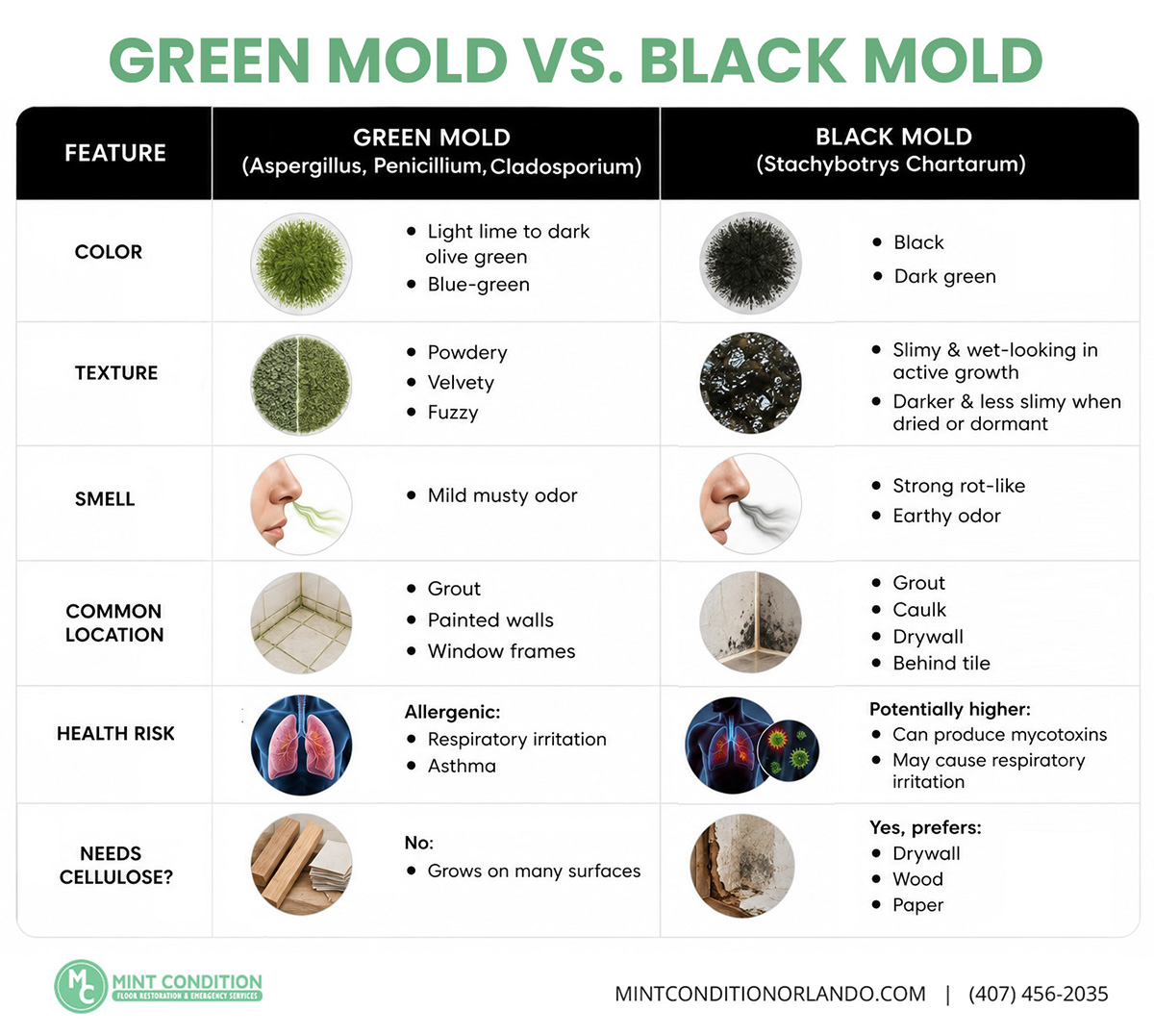
Green mold and black mold are not the same organism and do not carry the same health risk. Green mold, primarily Aspergillus, Penicillium, and Cladosporium, is allergenic and more common on bathroom tile and grout. Black mold, most commonly Stachybotrys chartarum, is toxigenic, produces mycotoxins, and is less common on tile surfaces but more serious when present.
Allergenic molds cause respiratory irritation, asthma flare-ups, and skin reactions with regular exposure. Toxigenic molds like Stachybotrys produce mycotoxins linked to more serious health effects including chronic fatigue, persistent headaches, and severe respiratory illness. Treating both the same way underestimates one and overreacts to the other.
Is Green Mold the Same as Black Mold?
No. Green mold and black mold are different organisms with different appearances, different growth requirements, and different health risk profiles.
| Feature | Green Mold (Aspergillus, Penicillium, Cladosporium) | Black Mold (Stachybotrys Chartarum) |
|---|---|---|
| Color | Light lime to dark olive green, blue-green | Dark green to black |
| Texture | Powdery, velvety, or fuzzy | Slimy and wet-looking in active growth; can appear darker and less slimy when dried or dormant |
| Smell | Mild musty odor | Strong rot-like or earthy odor |
| Common location | Grout, painted walls, window frames | Grout, caulk, drywall behind tile |
| Health risk | Allergenic: respiratory irritation, asthma | “Potentially higher: can produce mycotoxins; may cause respiratory irritation, especially with prolonged exposure. |
| Needs cellulose? | No: grows on many surfaces | Yes: prefers drywall, wood, paper |
The key visual difference is texture. Green mold tends to be dry, powdery, or fuzzy. Black mold in active growth is characteristically slimy and wet-looking. In dried or dormant conditions it can appear darker and less slimy, but if you are seeing a dark slimy patch in your bathroom, professional inspection may be needed to rule out Stachybotrys or hidden moisture damage.
For a full breakdown of black mold identification, health risks, and when to call a professional, read our complete guide toBlack Mold in the Bathroom: What It Looks Like, Where It Grows, and How to Remove It.
Green Mold in Bathroom
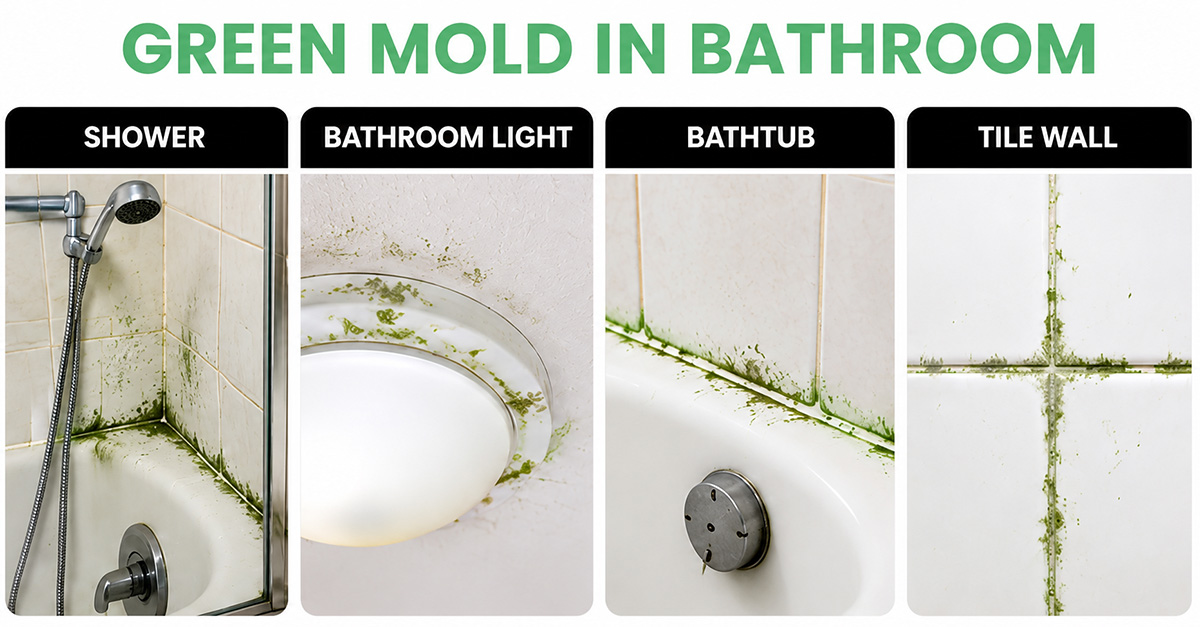
Green mold in the bathroom most commonly grows in bathroom grout lines, caulk seams, ceiling corners near the exhaust vent, painted wall surfaces near the shower, light fixtures, and tub surrounds, anywhere moisture persists, and airflow is limited. It follows a predictable pattern: damp surface plus organic residue plus poor ventilation equals green mold.
Any surface that stays damp for extended periods or sits in a poorly ventilated corner is a candidate. Now add in soap scum, shampoo residue, and skin cells that build up in those grout lines between cleanings, and mold basically gets the perfect setup. It has moisture on one side and a food source on the other. Not exactly what you want happening in your bathroom.
On bathroom walls outside the shower, Cladosporium is the most common finding. It tends to colonize painted drywall surfaces near the shower, particularly in upper corners where condensation settles and airflow is minimal.
One thing Mint Condition’s tile and grout cleaning technicians notice consistently: when green mold appears on bathroom walls near the shower, the grout lines in that same area are almost always affected too, and usually more deeply than the surface suggests. The wall is where you see it first. The grout is where it has already settled in.
Here is a closer look at the most common locations where green mold grows in the bathroom and what to look for in each one.
What Causes Green Mold in the Bathroom?
Green mold does not appear randomly. It grows when a specific set of conditions come together, and in most bathrooms, those conditions exist every single day.
High Humidity
Every hot shower sends a spike of warm, humid air through the bathroom. Per IICRC standards, mold can begin developing on a damp surface within 24 to 48 hours of moisture exposure. In bathrooms where humidity does not return to normal levels between uses, that window never fully closes.
Poor Ventilation
Poor ventilation is the number one reason mold shows up in bathrooms. If your exhaust fan is too small, clogged with dust, or only runs for a minute or two after a shower, all that humid air just sits there.
And when humid air has nowhere to go, bathroom surfaces stay damp longer. You’ll see more condensation on the walls, ceiling, grout, caulk, and painted areas. That creates the perfect environment for mold types like Aspergillus, Penicillium, and Cladosporium to settle in and start spreading.
Basically, if your bathroom feels steamy long after your shower is over, mold is probably loving it.
Lingering Moisture on Surfaces
Grout lines, caulk seams, the base of the tub surround, and any surface that stays wet for hours after a shower provide the sustained moisture green mold needs. This is different from ambient humidity. Even in a well-ventilated bathroom, surfaces that trap water are still vulnerable.
Soap and Organic Residue
Soap scum, shampoo buildup, body oils, and skin cells can pile up on bathroom surfaces between cleanings. And unfortunately, mold loves that stuff. It gives mold types like Aspergillus, Penicillium, and Cladosporium something to feed on while all that bathroom moisture helps them settle in.
That’s why regular cleaning matters. Removing residue from grout, caulk, tile, and shower walls is one of the best ways to slow down green mold growth. But cleaning alone won’t solve the problem if the bathroom stays damp all the time. You still have to deal with the moisture issue, too.
Green Mold on Bathroom Light
Green mold on a bathroom light fixture typically appears as a faint green or olive discoloration on the plastic casing, metal trim, or surrounding ceiling drywall. It forms when heat from the fixture combines with humid air from hot showers, creating a condensation cycle on the surface that gives mold spores exactly what they need to establish a colony.
It is one of the spots that gets missed most often during routine cleaning, and by the time it is visible, it has usually been growing for a while.
What you will typically see first is a faint green or olive discoloration on the plastic casing, along the ceiling edge where the fixture meets the drywall, or on the metal trim around the light. It often looks like dust or general discoloration at first glance.
Important safety note: Before cleaning any mold near a light fixture, turn off the light at the wall switch and turn off the breaker for that circuit. Never apply any liquid cleaner to an energized fixture.
How to Get Rid of Green Mold on Bathroom Light
⚠️ IMPORTANT: Always turn off the light at the wall switch and turn off the breaker for that circuit before cleaning. Never apply any liquid cleaner to an energized fixture. If mold has spread into the wiring, fixture housing, or ceiling drywall beyond the surface, contact a licensed electrician before attempting any cleaning.
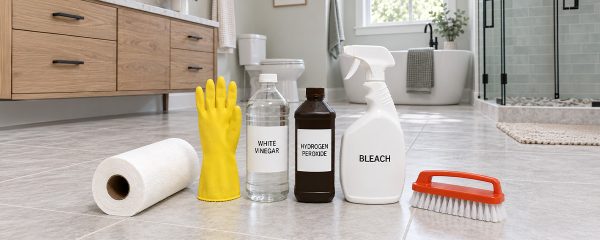
⚠️Disclaimer: Use these cleaning methods occasionally and at your own risk. Always follow the manufacturer’s cleaning instructions. Materials vary and may react differently to certain products, which could cause damage or discoloration. Test on a small hidden area first before applying any product to a visible surface. For stubborn mold or growth that keeps coming back, contact a certified professional. Never mix cleaning products. Mixing bleach with vinegar or hydrogen peroxide produces toxic chlorine gas.
Materials, Tools, and Supplies You’ll Need
- 3% hydrogen peroxide or undiluted plain white vinegar
- Spray bottle
- Soft cloth or microfiber cloth
- Old toothbrush for trim and casing edges
- Clean dry cloth
- Protective gloves
- Safety glasses
- Stepladder if needed for safe reach
Step 1: Cut power to the fixture
Turn off the light at the wall switch and turn off the breaker for that circuit at your electrical panel. Confirm the fixture is fully de-energized before touching it or applying any cleaner. This step is not optional.
Step 2: Apply your chosen cleaner
Spray 3% hydrogen peroxide or undiluted white vinegar onto a soft cloth rather than spraying directly onto the fixture. Applying liquid directly risks it entering the housing or wiring even when power is off. Wipe the plastic casing, metal trim, and the surrounding ceiling drywall with the dampened cloth, paying particular attention to the edges where the fixture meets the ceiling.
Step 3: Scrub, wipe, and dry
Use an old toothbrush to work into the trim edges and casing joints where mold tends to establish most deeply. Wipe all surfaces with a clean damp cloth to remove loosened mold and cleaner residue. Dry every surface completely with a dry cloth immediately after. Leaving any moisture on or near the fixture after cleaning creates the conditions for mold to reestablish quickly.
⚠️ Important: Use only one cleaning product at a time. Never mix bleach with vinegar, hydrogen peroxide, or any other cleaner. Mixing bleach with vinegar or hydrogen peroxide produces toxic chlorine gas or peracetic acid, both of which are harmful when inhaled.
Pro tip: Green mold on a bathroom light fixture is almost always a ventilation symptom, not just a cleaning problem. The fixture generates heat that combines with shower humidity to create a condensation cycle on the casing and surrounding ceiling. Cleaning removes what’s visible. Running the exhaust fan during every shower and for at least 20 minutes after is what interrupts the condensation cycle and stops mold from reestablishing on the same spot.
Green Mold in Tub
Green mold in a bathtub most commonly appears along the caulk line where the tub meets the wall, around the drain, and in grout lines on tiled tub surrounds. These are the surfaces that stay wet the longest after a bath or shower and receive the least airflow once the bathroom door is closed.
Aspergillus and Cladosporium are commonly found in damp tub areas. Both thrive on the soap scum, body oil residue, and mineral deposits that accumulate in caulk seams and grout lines between cleanings. What you will typically see is a fuzzy or powdery olive to dark green growth spreading along the caulk bead or into the grout lines at the tub base.
One thing worth checking in older tubs: if the caulk has started to pull away from the wall or feels soft when you press it, moisture has likely been working its way behind it. What you can see on the surface is often only part of what has established itself underneath.
How to Remove Green Mold from Bathroom Tub
⚠️ Not recommended for acrylic or fiberglass tubs using abrasive scrubbers. Use a soft-bristled brush only to avoid scratching the surface.
⚠️Disclaimer: Use these cleaning methods occasionally and at your own risk. Always follow the manufacturer’s cleaning instructions. Materials vary and may react differently to certain products, which could cause damage or discoloration. Test on a small hidden area first before applying any product to a visible surface. For stubborn mold or growth that keeps coming back, contact a certified professional.
Materials, Tools, and Supplies You’ll Need
- Undiluted plain white vinegar or 3% hydrogen peroxide
- Spray bottle
- Soft-bristled scrub brush
- Old toothbrush for grout lines and caulk seams
- Clean cloth or paper towels
- Protective gloves
- Safety glasses
⚠️ Important: Do not combine vinegar and hydrogen peroxide in the same container or apply them to the same surface at the same time. Together they form peracetic acid, which can irritate or burn the skin, eyes, nose, throat, and lungs. Choose one product and complete the full cleaning process before using any other cleaner. Never mix cleaning products.
Step 1: Apply your chosen cleaner
Spray undiluted white vinegar or 3% hydrogen peroxide directly onto the affected areas of the tub, paying particular attention to the caulk line where the tub meets the wall, the drain area, and any grout lines on a tiled tub surround. Apply generously and make sure the product reaches into the caulk seam, not just the tile surface above it.
Step 2: Let it sit
Allow the cleaner to dwell for at least 30 minutes for vinegar or 10 to 15 minutes for hydrogen peroxide. For the caulk line specifically, press a folded paper towel soaked in your chosen cleaner against the seam during the dwell time. This keeps the product in direct contact with the surface rather than running off.
Step 3: Scrub, rinse, and dry
Scrub the tub surfaces with a soft-bristled brush and use an old toothbrush to work into grout lines and the caulk seam. Rinse thoroughly with clean water and dry all surfaces completely with a clean cloth. Pay particular attention to the caulk line and drain area, both of which tend to stay wet the longest and are the first places green mold reestablishes itself.
Pro tip: If the caulk in your tub has started to pull away from the wall, feels soft when pressed, or shows discoloration that does not respond to cleaning, the mold has likely worked its way behind the caulk. Recaulking without addressing what is underneath will not solve the problem. At that point the old caulk needs to be fully removed, the surface behind it cleaned and dried completely, and new mold-resistant caulk applied.
⚠️ Warning: Do Not Use These Products as Regular Cleaners on Grout
Bleach, vinegar, and hydrogen peroxide are acceptable for occasional mold treatment on grout surfaces. Used repeatedly as regular cleaners, all three cause damage:
- Bleach: Cannot penetrate porous grout fully. Repeated use degrades the grout binder and lightens staining without eliminating the mold colony below the surface.
- Vinegar: The acidity gradually breaks down the calcium carbonate binder in cement grout, making it more porous over time and creating better conditions for mold to return.
- Hydrogen peroxide: Minimal substrate damage with occasional use, but like bleach and vinegar, it does not penetrate the grout matrix to reach embedded mold.
Remove Green Mold
Before reaching for a cleaning product, two things matter: what surface you are cleaning and how far the mold has spread. Surface-level green mold on glazed tile, tub surrounds, and fixtures can often be handled at home. Mold embedded in grout, recurring in the same spot, or covering a large area is a different situation entirely.
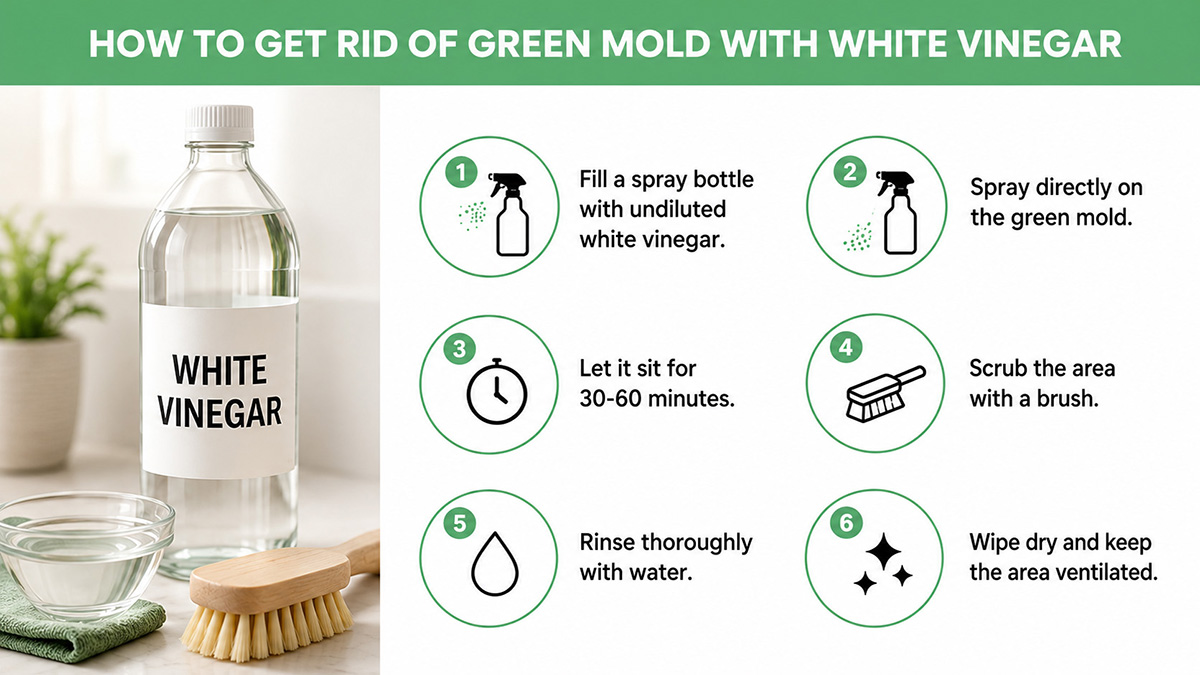
How to Get Rid of Green Mold with White Vinegar
⚠️ Not recommended for natural stone, quartz, or marble. Vinegar’s acidity can permanently etch and dull these surfaces.
⚠️Disclaimer: Use these cleaning methods occasionally and at your own risk. Always follow the manufacturer’s cleaning instructions. Materials vary and may react differently to certain products, which could cause damage or discoloration. Test on a small hidden area first before applying any product to a visible surface. For stubborn mold or growth that keeps coming back, contact a certified professional.
Materials, Tools, and Supplies You’ll Need
- Undiluted plain white vinegar
- Spray bottle
- Stiff-bristled scrub brush
- Clean cloth or paper towels
- Protective gloves
- Safety glasses
Step 1: Apply the vinegar directly
Pour undiluted white vinegar into a spray bottle and apply it generously to the affected area. Do not dilute it. The full acidity is what makes it effective against mold at the surface level.
Step 2: Let it sit
Leave the vinegar on the surface for at least 30 to 60 minutes without wiping or rinsing. This dwell time is what allows the acidity to penetrate and disrupt the mold’s cellular structure. Skipping this step is the most common reason the treatment does not work.
Step 3: Scrub, rinse, and dry
Scrub the area firmly with a stiff-bristled brush, then rinse thoroughly with clean water. Dry the surface completely with a clean cloth immediately after rinsing. Leaving moisture behind after cleaning creates the exact conditions that allowed mold to grow in the first place.
Pro tip: Think of vinegar as the prep, not the solution. It loosens the organic residue and buildup that green mold feeds on, which makes your cleaning more effective overall. But it is not a mold killer, and using it alone is not guaranteed to fully eliminate the problem. For non-porous surfaces like glazed tile and fixtures, following up with a bathroom cleaner after scrubbing gives you a more complete result than vinegar alone.
Grout is where it gets more complicated. Vinegar can reduce what you see on the surface, but it cannot reach mold that has worked its way into the grout matrix below. And repeated use as a regular cleaner gradually breaks down the calcium carbonate binder in cement grout, making it more porous and ironically creating better conditions for mold to come back.
If green mold keeps returning in the same spot after vinegar treatment, the surface is not where the problem lives anymore.
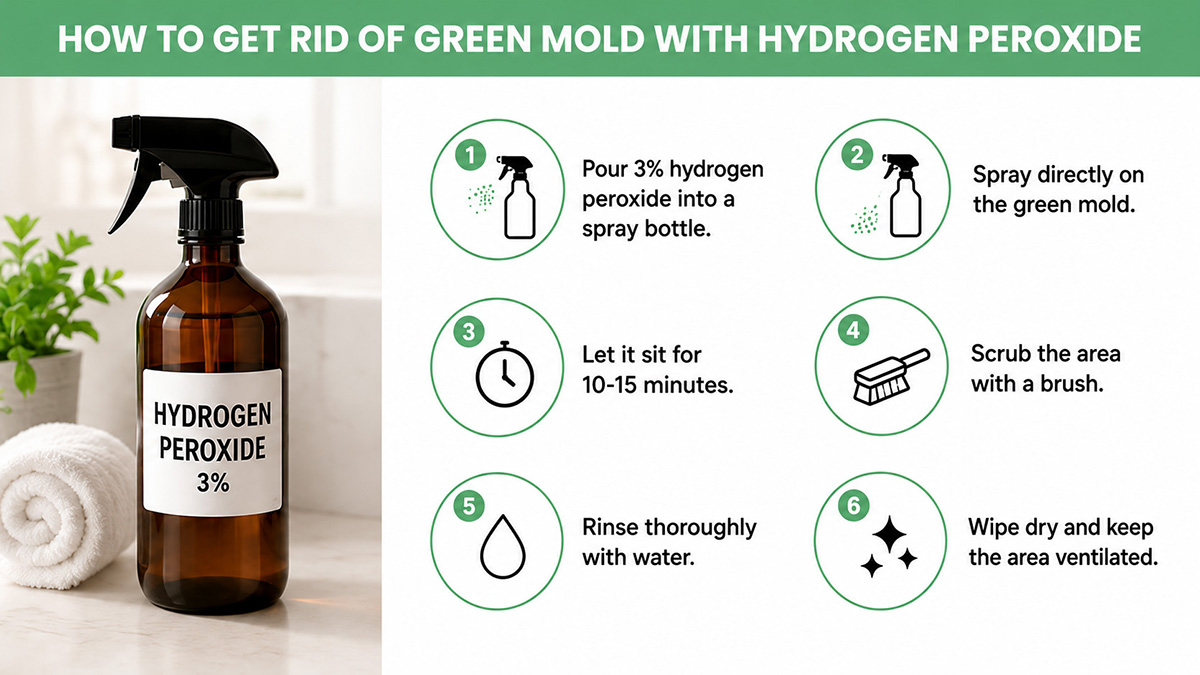
How to Get Rid of Green Mold with Hydrogen Peroxide
⚠️ Not recommended for natural stone, marble, or colored grout. May cause discoloration with repeated use.
⚠️Disclaimer: Use these cleaning methods occasionally and at your own risk. Always follow the manufacturer’s cleaning instructions. Materials vary and may react differently to certain products, which could cause damage or discoloration. Test on a small hidden area first before applying any product to a visible surface. For stubborn mold or growth that keeps coming back, contact a certified professional.
Materials, Tools, and Supplies You’ll Need
- 3% hydrogen peroxide solution (standard drugstore concentration)
- Spray bottle
- Stiff-bristled scrub brush
- Clean cloth or paper towels
- Protective gloves
- Safety glasses
Step 1: Apply the hydrogen peroxide
Pour the 3% hydrogen peroxide solution into a spray bottle and apply it directly to the affected area. The standard concentration available at any drugstore is exactly what you need. No mixing or diluting required.
Step 2: Let it sit
Leave it on the surface for 10 to 15 minutes. Hydrogen peroxide works by releasing oxygen that breaks down the mold’s structure. The dwell time is what makes it effective, so do not rush this step.
Step 3: Scrub, rinse, and dry
Scrub firmly with a stiff-bristled brush, then rinse thoroughly with clean water. Dry the surface completely with a clean cloth immediately after rinsing. Leaving moisture behind after cleaning defeats the purpose entirely.
Pro tip: Hydrogen peroxide works best on non-porous bathroom surfaces, like glazed tile, tubs, and fixtures. On those surfaces, it can help reduce visible mold and brighten the area.
Grout is a little trickier. Since grout is porous, hydrogen peroxide may lighten surface discoloration, but it usually won’t reach mold that has settled deeper inside the grout.
If the grout still looks dark after treatment and full drying, that’s your clue. The mold may be deeper than hydrogen peroxide can reach, which means you’re probably dealing with more than a simple surface stain.
When DIY Green Mold Cleaning Is Not Enough
Surface cleaning works for green mold that is caught early on non-porous surfaces. There are three clear signals that tell you when it is time to go beyond DIY.
Green mold returns within two weeks of cleaning
If it is back in the same spot that quickly, the source has not been addressed. The mold has established itself below the surface, inside the grout matrix, or behind caulk, and surface treatment is only removing what is visible.
Grout stays dark after scrubbing
If grout does not return to its original color after a thorough cleaning and full drying, that residual discoloration is mold that has penetrated the grout itself. Household cleaners are not reaching the problem.
A musty smell persists after cleaning
If your bathroom still smells earthy, damp, or musty after you’ve cleaned every visible surface, there’s a good chance mold is hiding somewhere you can’t see.
Common hiding spots include behind old caulk, under a failing tile seal, or deep inside the grout. So even if the tile looks clean on the surface, that smell may be your bathroom’s way of saying, “Hey, there’s still something going on here.”
For green mold that keeps returning in grout lines despite repeated cleaning, professional tile and grout cleaning reaches what household products cannot. Mint Condition’s IICRC-certified tile and grout cleaning technicians use professional-grade extraction and treatment methods that go beyond surface cleaning to address mold at the grout level. If green mold in your shower or tub grout keeps coming back, that is exactly the situation our tile and grout cleaning service is designed for.
For significant mold growth, mold covering an area larger than 10 square feet, or suspected mold behind walls or under flooring, contact a certified mold remediation specialist.
Green Mold Frequently Asked Questions
These are the questions people ask most often once they have identified green mold in their bathroom and are trying to decide what to do next.
What Is Green Mold?
Green mold is a general term for several fungal species that appear as green, blue-green, or olive-colored growth in damp, poorly ventilated environments. In bathrooms, the most common species are Aspergillus, Penicillium, and Cladosporium. All three thrive in warm, humid conditions and grow readily on grout, caulk, painted walls, and other bathroom surfaces that stay damp between uses.
Unlike pink mold, which is actually a bacterium called Serratia marcescens, green mold is a true fungus. That distinction matters because fungi and bacteria respond to different treatments. Green mold reproduces by releasing spores into the air, which is how it spreads from one surface to another and how prolonged exposure in an enclosed bathroom becomes a health concern.
Is Green Mold Harmful?
Yes, green mold is harmful to varying degrees depending on the species, duration of exposure, and the health of people in the household. Aspergillus, Penicillium, and Cladosporium are all allergenic molds that can cause nasal congestion, eye irritation, skin reactions, and asthma flare-ups with regular exposure in an enclosed bathroom. For healthy adults the risk is moderate. For children, the elderly, and immunocompromised individuals the risk is significantly higher.
How Serious Is Green Mold?
Green mold is moderately serious for most healthy adults and potentially more serious for sensitive individuals. It is not in the same category as Stachybotrys (black mold) in terms of toxicity, but it is not something to leave unaddressed in a bathroom you use every day. The enclosed space, limited ventilation, and daily exposure make bathroom mold a more significant health concern than the same mold growing outdoors or in a rarely used space.
Is It Safe to Clean Green Mold Yourself?
It is generally safe to clean green mold yourself if the affected area is smaller than 10 square feet, located on a non-porous surface like glazed tile or a tub surround, and you take basic safety precautions. Wear gloves, safety glasses, and a mask rated for mold spores. Ensure the bathroom is well ventilated while you work. If the mold is embedded in grout, covering a large area, or keeps returning after repeated cleaning, DIY treatment is unlikely to fully resolve it and professional tile and grout cleaning is the more effective next step.
Is It Okay to Touch Green Mold?
Touching green mold with bare hands is not recommended. Direct contact can cause skin irritation, allergic reactions, and rashes, particularly in sensitive individuals. More importantly, touching mold without gloves transfers spores to your hands, which can then spread to other surfaces or enter your body through your eyes or mouth. Always wear gloves when cleaning mold, wash hands thoroughly with soap and warm water afterward, and avoid touching your face during the cleaning process.
What Kills Green Mold Naturally?
Undiluted white vinegar is one of the most useful natural options for surface-level green mold. Spray it directly onto the affected area, let it sit for 30 to 60 minutes, then scrub and rinse. A 3% hydrogen peroxide solution is equally effective on non-porous surfaces with a shorter dwell time of 10 to 15 minutes. Both work by disrupting the mold at a cellular level without leaving harsh chemical residue. Neither fully penetrates porous grout to reach mold below the surface, so recurring grout mold requires a different approach.
How Long Does It Take to Get Sick from Green Mold Exposure?
Symptoms from green mold exposure can appear within a few hours for sensitive individuals or those with existing allergies or asthma. For others, symptoms may take days or weeks of consistent exposure to develop. According to the CDC, the speed and severity of the reaction depend on the amount of mold present, the duration of exposure, and individual sensitivity. Common early symptoms include sneezing, nasal congestion, itchy eyes, and skin irritation. Respiratory symptoms like wheezing and shortness of breath typically develop with longer or higher-level exposure.
Can You Live in a House with Green Mold?
Technically yes, but it is not recommended, particularly for extended periods or for households with children, elderly members, or anyone with respiratory conditions or a weakened immune system. Green mold in a bathroom means daily exposure in an enclosed space with limited fresh air exchange. That is a different situation from occasional exposure in a larger, well-ventilated area. The practical answer is: address it as soon as you find it, fix the moisture conditions that caused it, and do not assume it will resolve on its own.
What Happens If I Breathe in Green Mold?
Breathing in green mold spores most commonly causes allergic reactions including sneezing, runny nose, itchy eyes, and skin rashes. In people with asthma, inhaling Aspergillus or Penicillium spores can trigger asthma attacks or worsen existing symptoms. With prolonged or high-level exposure, respiratory irritation, coughing, and chest tightness can develop even in people without pre-existing conditions. Per the CDC, certain Aspergillus species can cause Aspergillosis in immunocompromised individuals, a serious lung infection that requires medical treatment. If you experience persistent respiratory symptoms after finding green mold in your bathroom, consult a healthcare professional.
Is Green Mold Toxic?
Some green mold species can be toxic. Aspergillus strains produce mycotoxins under specific conditions, and per the CDC, Aspergillus can cause Aspergillosis, a serious lung infection, in people with weakened immune systems. Penicillium and Cladosporium are primarily allergenic rather than toxigenic. The color of the mold alone does not determine toxicity. Species, exposure duration, and individual health status all matter more than color.
Does Bleach Get Rid of Green Mold?
Bleach kills surface-level green mold on non-porous surfaces like glazed tile, glass, and metal fixtures. On porous surfaces like grout and caulk, bleach cannot fully penetrate below the surface to reach the mold colony beneath. It lightens the visible staining, which can make the problem appear resolved, but the mold embedded in the grout remains. That is the primary reason green mold keeps returning after bleach treatments. For non-porous surfaces bleach is effective. For grout, white vinegar or hydrogen peroxide used occasionally are better options, though neither fully penetrates grout either.
Conclusion
Green mold in the bathroom is common, but finding it does not mean you are stuck with it.
You now know what it looks like, which species are most likely behind it, where it tends to establish itself, and what actually causes it to keep coming back. Most importantly, you know the difference between a surface problem you can handle yourself and a grout-level problem that requires professional tile and grout cleaning to resolve properly.
If the green mold in your bathroom is caught early on tile or tub surfaces, the vinegar or hydrogen peroxide guides above give you a solid starting point. If it keeps returning in the same grout lines no matter what you use, that is the signal that the problem has gone deeper than any household cleaner can reach.
Still seeing green mold come back in the same grout lines no matter how many times you clean it? That is the clearest sign the problem has moved past what a scrub brush can fix.
Mint Condition’s IICRC-certified tile and grout cleaning technicians specialize in professional tile and grout cleaning that goes beyond surface treatment to address mold at the grout level, using eco-friendly, family- and pet-safe methods. Serving households across Orlando and Central Florida, we are ready to help you get your bathroom back to clean and keep it that way.
Call us at (407) 456-2035 or fill out a contact form today for your free estimate.
References
- IICRC S520 Standard for Professional Mold Remediation: https://www.iicrc.org/page/IICRCStandards
- U.S. Environmental Protection Agency, Mold and Health: https://www.epa.gov/mold/mold-and-health
- Centers for Disease Control and Prevention, Basic Facts About Mold and Dampness: https://www.cdc.gov/mold/faqs.htm
- CDC, Aspergillosis: https://www.cdc.gov/fungal/diseases/aspergillosis/index.html
- American Academy of Allergy, Asthma and Immunology, Mold Allergy: https://www.aaaai.org/tools-for-the-public/conditions-library/allergies/mold-allergy