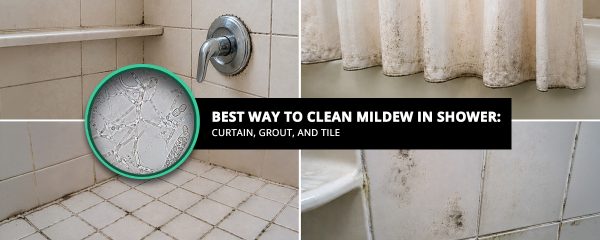
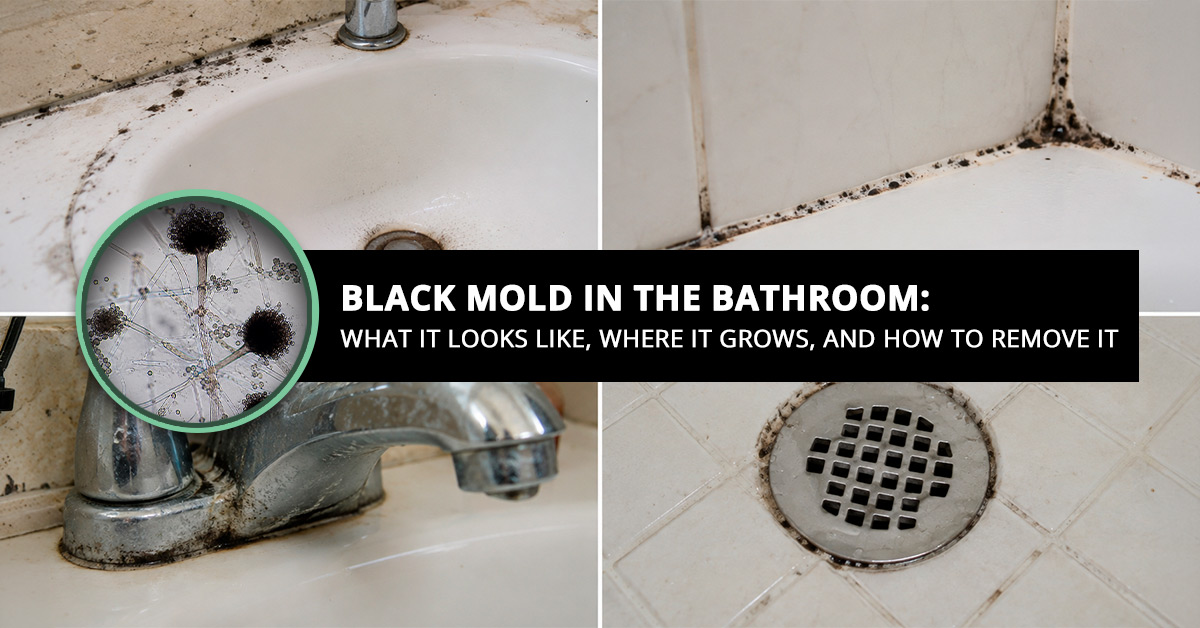
Black mold in a bathroom is dark-colored mold that grows in damp, humid areas such as shower grout, caulk, walls, ceilings, and around fixtures. It can look similar to Stachybotrys chartarum, commonly referred to as “toxic black mold,” but not every dark mold in a bathroom is Stachybotrys. Mold type cannot be reliably identified by color alone.
Being able to identify what mold you are dealing with matters more than most people realize. What you do next, how you clean it, how seriously you take it to prevent it, and when you call a professional, all depend on understanding what black mold actually is and what it is not.
This guide covers what black mold looks like in every part of the bathroom, where it grows, how to identify it, whether it is dangerous, and how to remove it. If you are not sure whether you are dealing with mold or mildew, our guide on Mold vs. Mildew in the Shower helps you tell them apart before you start cleaning.
Key Takeaways
- The term “black mold” most commonly refers to “toxic mold,” Stachybotrys chartarum, but dark bathroom mold can also be a “non-toxic” dark strain of Aspergillus, Alternaria, Chaetomium, or Cladosporium. Visual identification alone cannot confirm which species you are dealing with. Laboratory testing is the only way to know for certain.
- Dark mold slimy patches on shower tile, grout, or caulk are more likely an allergenic dark strain than “toxic” Stachybotrys. Stachybotrys requires sustained moisture on cellulose-rich materials like drywall or wood to establish and is less common on bathroom surfaces like tile.
- Stachybotrys chartarum is the most concerning species. It produces mycotoxins linked to respiratory illness, headaches, and more serious health effects, particularly in children, older adults, and immunocompromised individuals.
- Black mold has a distinct smell. A strong, persistent earthy or rot-like odor that returns quickly after cleaning is one of the most reliable field indicators, often more reliable than appearance alone.
- Bleach kills surface black mold on non-porous surfaces but cannot penetrate porous grout to reach the mold colony below. That is the primary reason black mold keeps returning in the same grout lines after bleach treatment.
- If dark mold returns in the same spot within two weeks of correct cleaning and complete drying, the problem has likely gone below the surface. Professional tile and grout cleaning reaches what household products cannot.
Black Mold in the Bathroom Overview
Most people see dark mold in the bathroom and immediately assume it is toxic black mold. That assumption is understandable but usually inaccurate. Dark bathroom mold is more often an allergenic species than Stachybotrys, and the two require different levels of concern and different responses. The table below shows the key differences so you can assess your situation more accurately before deciding on next steps.
| Attribute | Stachybotrys Chartarum (Toxic Black Mold) | Dark Bathroom Mold (Non-Toxic) |
|---|---|---|
| Common species | Stachybotrys chartarum | Aspergillus, Alternaria, Chaetomium, Cladosporium |
| Appearance | Dark greenish-black to black; slimy or wet-looking in active growth; may appear darker and less slimy when dry | Dark green, olive, brown, or nearly black; powdery, fuzzy, or dry depending on species |
| Smell | Strong persistent musty or earthy odor; intensity varies by material, moisture level, and colony size | Musty or earthy; generally milder, though intensity varies by species and conditions |
| What it needs to grow | Wet cellulose-rich materials: drywall, wood, paper; rarely grows on non-cellulose surfaces like tile or metal | Surface dampness and organic residue on grout, caulk, tile, and bathroom surfaces; does not require cellulose-rich materials |
| Most common bathroom locations | Behind shower walls, under sink cabinet, ceiling drywall near leaks | Grout lines, caulk seams, ceiling corners, drain area, toilet bowl |
| Growth rate | Relatively slow | Generally faster; often colonizes surfaces before Stachybotrys |
| Health risk | Allergenic and irritant reactions including respiratory irritation, nasal congestion, and eye irritation; can produce mycotoxins under certain conditions | Primarily allergenic: respiratory irritation, asthma, nasal congestion, and asthma flare-ups |
| Can you confirm visually? | No | No |
| DIY cleanable? | Surface growth yes; professional assessment first if behind-wall signals are present | Yes for surface growth with correct product and dwell time |
The terms toxic and non-toxic are commonly used but are not official scientific classifications. Non-toxic does not mean harmless. All dark bathroom mold warrants attention regardless of species. Laboratory testing is the only way to confirm which species you are dealing with. For a full comparison of all bathroom mold types, our guide on Types of Bathroom Mold covers every common species in detail.
Black Mold
Black mold is a dark greenish-black fungus and it is most commonly associated with Stachybotrys chartarum (toxic mold). It appears as slimy or wet-looking patches in warm, humid areas and can trigger allergic reactions, asthma flare-ups, and respiratory irritation.
What Does Black Mold Look Like
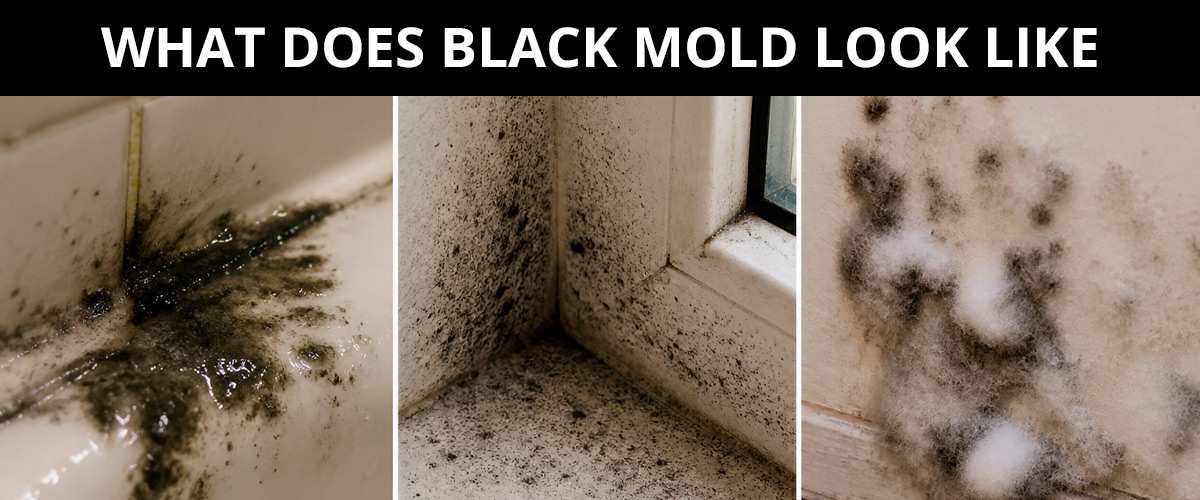
Black mold typically looks like dark green or black patches with a slimy or wet-looking surface texture during active growth. As it dries or becomes dormant, the patches can appear darker and less slimy, sometimes resembling a dark stain rather than active growth. However, dark or black-colored mold growth in a bathroom can come from several different species, including non-toxic dark strains of Aspergillus, Alternaria, Chaetomium, and Cladosporium. Visual appearance alone cannot tell you which species you are dealing with.
Black Mold Growth Patterns
On materials that stay wet for a long time, like drywall, wood, or paper backing, Stachybotrys may show up as dark patches that slowly spread as the moisture problem continues.
In showers, it usually behaves a little differently. On grout and caulk, the growth tends to follow the damp areas instead of spreading out in a perfect circle. You may see it tracking along caulk seams, grout lines, corners, or spots where water sits the longest.
It’s also worth knowing that Stachybotrys usually grows more slowly than molds like Aspergillus or Penicillium, which can settle on wet surfaces much faster. So if Stachybotrys is confirmed through testing, it often points to a moisture problem that has been going on for a while, not just a recent surface stain.
Black Mold Color, Texture and Recurrence
Color is the first thing most people notice, but it is not the most reliable way to identify black mold. Dark green, olive, and nearly black can all describe different mold species depending on age, moisture level, and the surface it is growing on. Texture adds more information, but it also requires getting close enough to observe it carefully, which not everyone is comfortable doing with something they suspect is toxic.
Here is what to look for from a safe distance:
- Slimy or wet-looking patches: in an area that stays that stays persistently wet, it is more consistent with active Stachybotrys growth
- Powdery, dry, or fuzzy patches: more consistent with allergenic dark species like Aspergillus, Alternaria, or Cladosporium
- Cottony or woolly growth: if it has darkened over time to olive-brown or black, it is more consistent with Chaetomium
Recurrence is the most reliable signal of all and requires no close inspection. A dark patch that returns in the same spot within two weeks of correct cleaning and complete drying is almost certainly embedded below the surface regardless of which species it is. That signal tells you more about the seriousness of the situation than color or texture alone.
Still seeing dark mold come back in the same spot no matter how many times you clean it?
Mint Condition’s IICRC-certified tile and grout cleaning technicians use professional-grade methods that go beyond the surface to address mold where it has actually established. Eco-friendly, family and pet safe, and serving Orlando and Central Florida.
Call us at (407) 456-2035 or request your free tile and grout cleaning estimate today.
What Does Black Mold Look Like in a Bathroom
Black mold in a bathroom usually appears as dark green or black patches with a slimy or wet-looking surface, often forming in uneven, blotchy clusters. It commonly grows in grout lines, caulk seams, ceiling corners, areas near plumbing fixtures, and surfaces affected by hidden moisture sources such as slow leaks or failing seals. It thrives in damp areas with limited airflow.
Each of these bathroom areas is covered in detail in the location sections below. If you already know where you are seeing growth, jump directly to the relevant section.
What Does Black Mold Look Like in a Shower
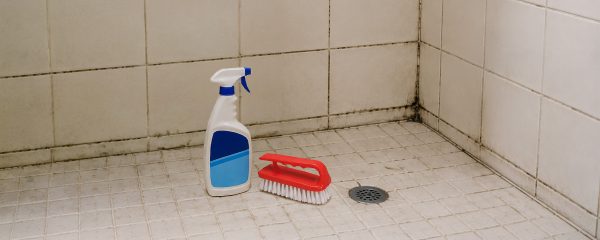
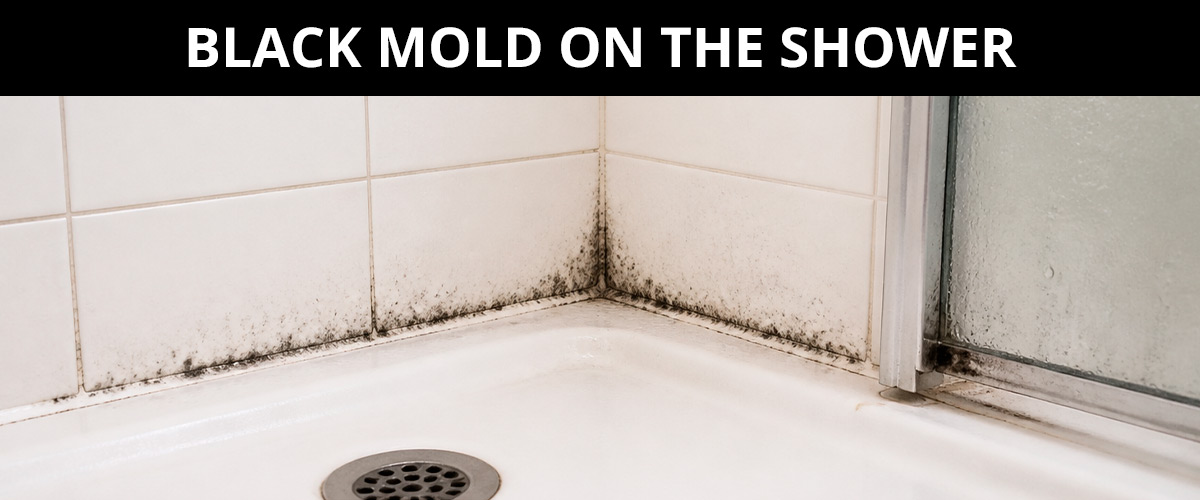
In a shower, black mold most commonly appears as dark greenish-black slimy patches along grout lines at the shower base where water pools longest, along the caulk seam where the shower floor meets the wall, in corners where two walls meet and humidity concentrates, and on the ceiling directly above the shower where steam rises and condenses.
Black mold doesn’t typically start in the middle of a tile or on a dry, open surface. In the shower, it starts where moisture hangs around after every shower, where soap scum and residue collect, and where air doesn’t move well. That’s why it tends to show up in the same trouble spots again and again.
For a full breakdown of how black mold in the shower compares to mildew in appearance and behavior, our guide on Mold vs. Mildew in the Shower covers every identifying characteristic in detail.
How to Tell If It’s Black Mold
The only way to reliably identify if you have a black mold (toxic) or other dark non-toxic mold species is through laboratory testing. Color, texture, smell, and growth pattern can provide clues, but none can confirm that dark bathroom mold is Stachybotrys chartarum or another species.
The combination of multiple signals together is what gives you the most reliable picture before deciding on next steps.
Can You Identify Black Mold by Looking at It
Visual identification alone cannot confirm the presence of black toxic mold, Stachybotrys chartarum. Dark slimy patches on bathroom surfaces can come from several different species, and appearance does not distinguish between them reliably enough to act on. Laboratory testing, either air sampling or surface sampling analyzed by a certified mold inspector, is the only way to confirm which species you are dealing with.
For a full breakdown of how different bathroom mold types compare by color, texture, and location, our guide on Types of Bathroom Mold covers every common species. For a comparison of how black mold differs from mildew specifically, our guide on Mold vs. Mildew in the Shower covers every identifying characteristic in detail.
Identify Black Mold
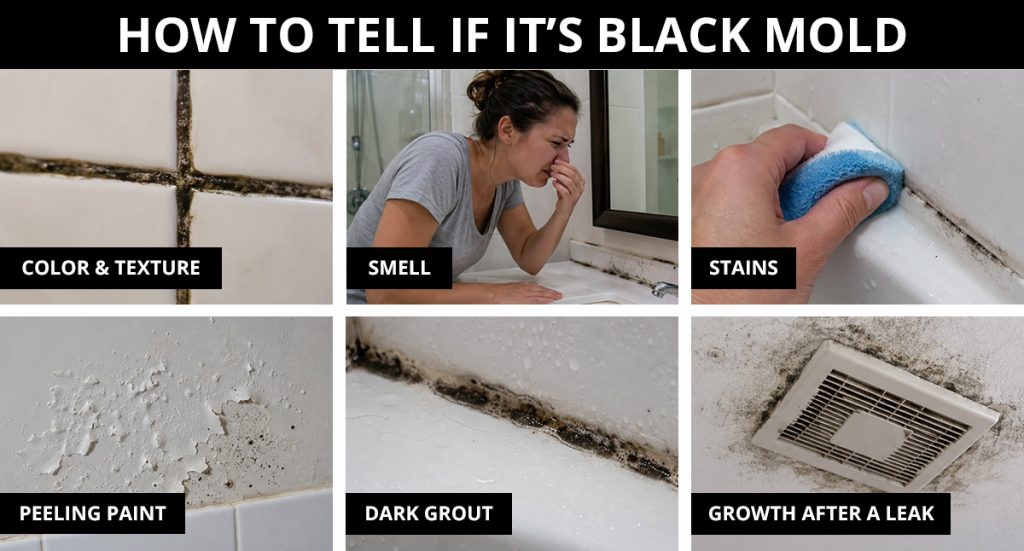
Use these signals together to assess whether what you are seeing is likely black mold and how serious the situation may be. No single signal is definitive on its own. The combination is what matters. Look at where the growth is occurring, how much moisture is present, and how large the affected area is.
- Color and texture together: Active black mold often looks dark greenish-black to black and may have a slimy or wet-looking surface. If the dark patch is dry, fuzzy, or powdery, it may be another allergenic mold species rather than Stachybotrys.
- Smell: A strong musty, earthy smell that comes back quickly after cleaning is a bigger warning sign than color alone. Mildew and early-stage allergenic mold usually smell milder and tend to clear more easily with cleaning and ventilation.
- Stains that won’t clean off: If the dark discoloration is still there after cleaning and fully drying the surface, the growth may have moved below the surface instead of sitting on top of it.
- Bubbling or peeling paint: Paint that bubbles or peels near the growth can mean moisture is coming from behind the wall. That’s a sign the issue may be deeper than surface mold.
- Dark growth following grout lines: Dirt and soap scum usually build up unevenly. Dark discoloration that tracks neatly along grout lines is more likely to be mold than ordinary residue.
- Growth after a leak or plumbing issue: Dark mold showing up weeks after a leak, plumbing repair, or water intrusion is probably not a coincidence. It may point to moisture that stayed trapped long enough for mold to grow.
- Symptoms that improve away from home: This isn’t something you can see, but it’s worth paying attention to. Listen to your body: recurring congestion, headaches, fatigue, or breathing irritation that gets better when you’re away from home and returns when you’re back should be taken seriously, especially if you’re also seeing black mold growth.
Does Black Mold Smell
Yes. Black mold produces a strong, pungent, and persistent musty odor similar to damp soil. The earthy odor is caused by gases released as the mold grows and feeds.
Smell is one of the most reliable early indicators of black mold in a bathroom, often more reliable than visual inspection alone. Here is what to look for and what it tells you.
What Does Black Mold Smell Like
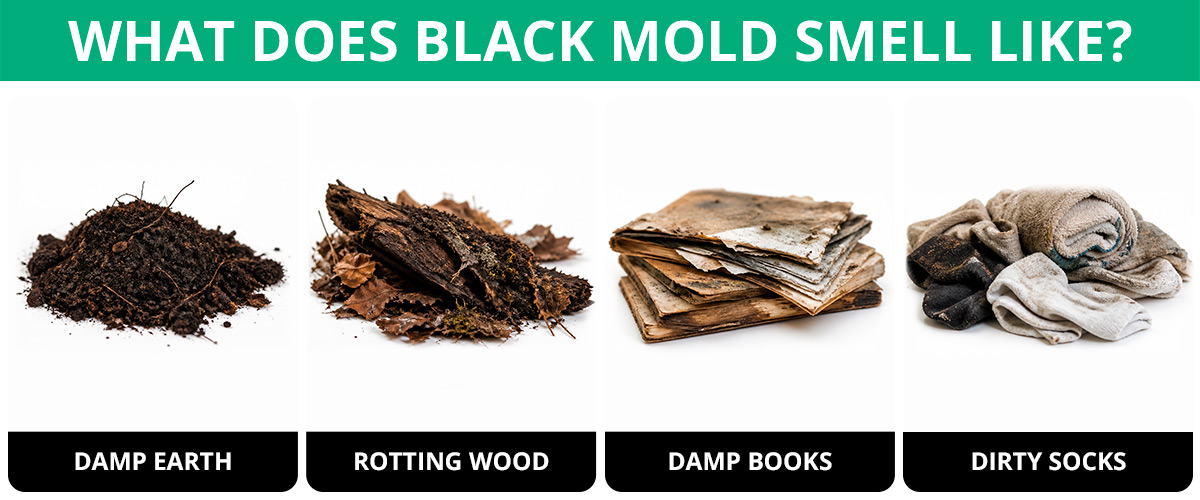
Black mold smells like a heavy earthy mix of damp soil, rotting wood, and wet cardboard
The smell comes from microbial volatile organic compounds, or mVOCs, released as mold grows and metabolizes organic material. Different mold species produce different mVOC profiles, which is why mold smells vary.
The intensity of the black mold smell varies depending on the material it is growing on, moisture level, airflow, and the size of the growth. Smell alone cannot identify which species is present.
People often describe the smell associated with black mold as:
- Damp earth or dirt: Similar to wet soil, a damp forest floor, or the musty smell of a basement after heavy rain.
- Rotting wood or decaying plants: An earthy, slightly sour odor that can resemble wet leaves, rotting wood, or plant material that has been sitting in moisture.
- Wet paper or soggy cardboard: A stale, musty smell similar to damp books, wet cardboard boxes, or old paper stored in a humid area.
- Stale or sweaty fabric: Sometimes compared to dirty socks, wet towels, or clothes left sitting too long in a washing machine.
Pro tip: smell can suggest a moisture or mold problem, but it cannot reliably tell you what species of mold is present or whether it is “toxic.” Mold that returns quickly after cleaning usually points to an unresolved moisture source, not a specific type of mold.
Not sure if what you are smelling is black mold? Here are some differences to keep in mind:
- Mildew and other indoor mold: Often has a lighter, musty smell that may go away once the bathroom dries out and gets better airflow.
- Black mold: May produce a deeper, more persistent odor that people compare to wet soil, rotting leaves, decaying wood, or soggy cardboard. If the smell quickly returns after cleaning, an ongoing moisture problem may still be present. Remember that the smell alone cannot confirm Stachybotrys chartarum.
Signs of Black Mold in the Bathroom
Black mold usually doesn’t show up overnight. It tends to build slowly, and the early signs can be easy to brush off as old grout, normal staining, or bathroom wear. The biggest warning signs are easier to catch once you know what to watch for.
Signs of Black Mold in the Bathroom Summary Table
| Sign | What It Looks Like | What It May Indicate |
|---|---|---|
| Dark discoloration along grout lines | Black or dark greenish staining that tracks consistently along grout lines rather than appearing as random surface buildup | Possible mold growth in or on grout; mold tends to follow moisture patterns while soap scum and residue accumulate more randomly and wipe off more easily |
| Caulk staining that cleaning cannot resolve | Dark discoloration throughout the caulk bead that returns after cleaning and drying | May indicate surface mold, embedded staining, deteriorated caulk, or moisture behind the seal; warrants closer inspection |
| Paint bubbling or peeling near the shower | Blistering or peeling paint on bathroom walls near the shower or ceiling | May result from surface condensation, poor paint adhesion, or moisture behind the wall; worth investigating the moisture source regardless of cause |
| Persistent heavy musty or earthy odor | Strong smell that returns quickly after cleaning and ventilation | May suggest mold present somewhere not visible; odor alone does not confirm mold or identify the species |
| Dark patches on ceiling corners near the exhaust vent | Fuzzy or slimy dark growth in ceiling corners or around the exhaust fan | Likely a ventilation issue allowing humid air to condense on ceiling surfaces; species cannot be confirmed without testing |
| Soft, separated, or heavily stained caulk | Caulk that feels soft when pressed, has pulled away from the surface, or shows staining that cleaning cannot resolve | Suggests the caulk seal may have failed; does not confirm moisture behind the seal but warrants inspection |
| Recurring growth in the same spot | Dark growth returns within two weeks of correct cleaning and complete drying | May indicate embedded mold, poor drying habits, residue buildup, a failed grout sealer, or an ongoing moisture source; the cause needs to be identified before cleaning again |
| Respiratory or allergy symptoms that improve away from home | Persistent nasal congestion, coughing, sneezing, or eye irritation that improves when away and returns at home | May suggest mold or allergen exposure; both Stachybotrys and allergenic dark mold species can cause these symptoms; species cannot be confirmed without testing |
Is All Black Mold the Same
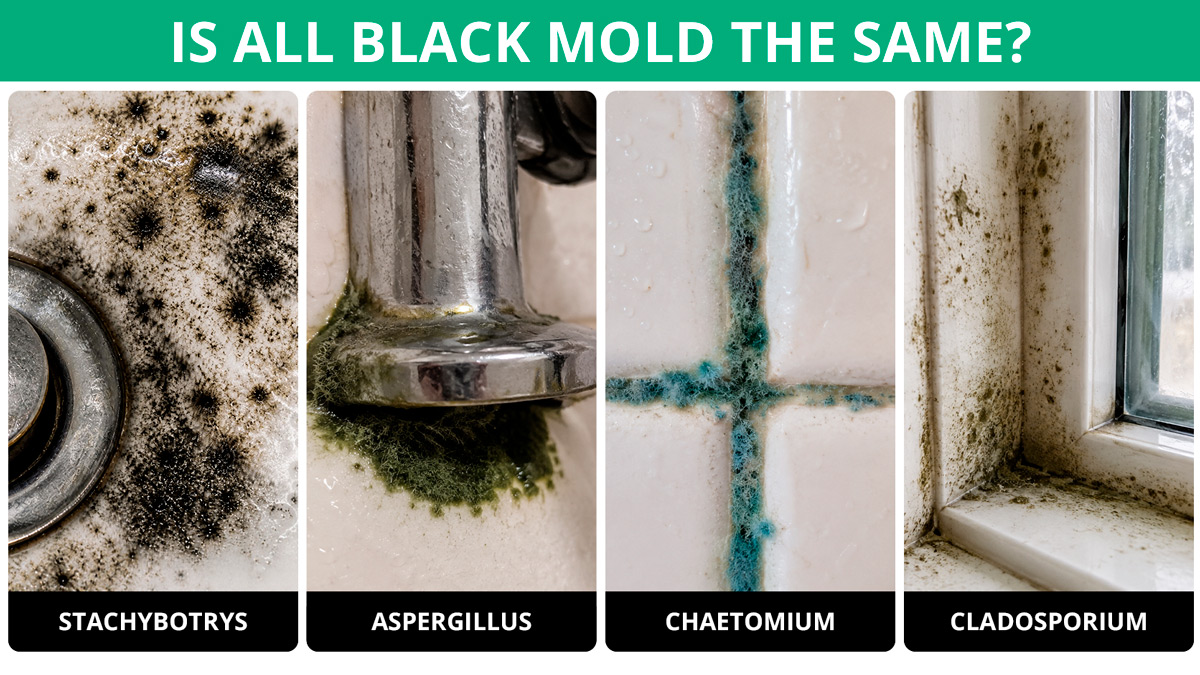
No, all black mold is not the same. While people often use “black mold” to mean toxic mold, many different types of fungi can appear black or very dark. Some may mainly cause allergy or irritation symptoms, while certain species, including Stachybotrys chartarum, can produce substances called mycotoxins under the right conditions.
What Is the Difference Between Black Mold and Other Mold?
The key difference between what is commonly called black mold and other mold types comes down to three things: the species, the conditions it needs to grow, and the health risk it carries.
Stachybotrys chartarum, the species most people mean when they say black mold, is distinctly different from other common bathroom mold types in several important ways:
| Characteristic | Stachybotrys chartarum (Black Toxic Mold) |
Other Dark Species (Allergenic Mold) |
|---|---|---|
| Color | Dark greenish-black to black | Can appear dark green, olive, or nearly black depending on conditions |
| Common name by color | Black mold | Green mold: Aspergillus, Penicillium Brown mold: Alternaria, Cladosporium |
| Texture | Slimy and wet-looking in active growth | Powdery, fuzzy, or dry depending on species |
| Growth surface | Cellulose-rich materials: drywall, wood, paper | Wide range: residue and biofilm on tile and glass, grout, caulk, painted surfaces, and fabric; does not typically penetrate non-porous materials |
| Moisture requirement | Very high water activity; requires sustained wet conditions on cellulose-rich materials | Often able to establish under less extreme moisture conditions than Stachybotrys, though requirements vary by species |
| Growth rate | Relatively slow; often outcompeted initially by faster species | Generally faster; often colonize surfaces before Stachybotrys (toxic mold) |
| Mycotoxin production | Known to be capable of producing mycotoxins (toxic compounds that can affect human health) under certain conditions | Known for causing allergic reactions or irritation, while some species can also produce mycotoxins under certain conditions |
| Health risk level | Moderate to potentially higher with prolonged exposure or vulnerable individuals present; depends on species confirmation, exposure level, and household health status | Low to moderate; primarily allergenic reactions including respiratory irritation, nasal congestion, and asthma symptoms |
For a full breakdown of all bathroom mold types by color and species, our guide on Types of Bathroom Mold covers every common species in detail.
How to Tell Black Mold from Regular Mold?
Several common bathroom mold species can appear dark enough to be mistaken for Stachybotrys chartarum. The three most frequently confused are Aspergillus (Green mold), Chaetomium, and Cladosporium (Brown Mold). Each one has specific characteristics that distinguish it from Stachybotrys, and knowing those differences helps you assess what you are seeing before deciding on next steps.
The sections below cover each one in detail.
Is Aspergillus Black Mold?
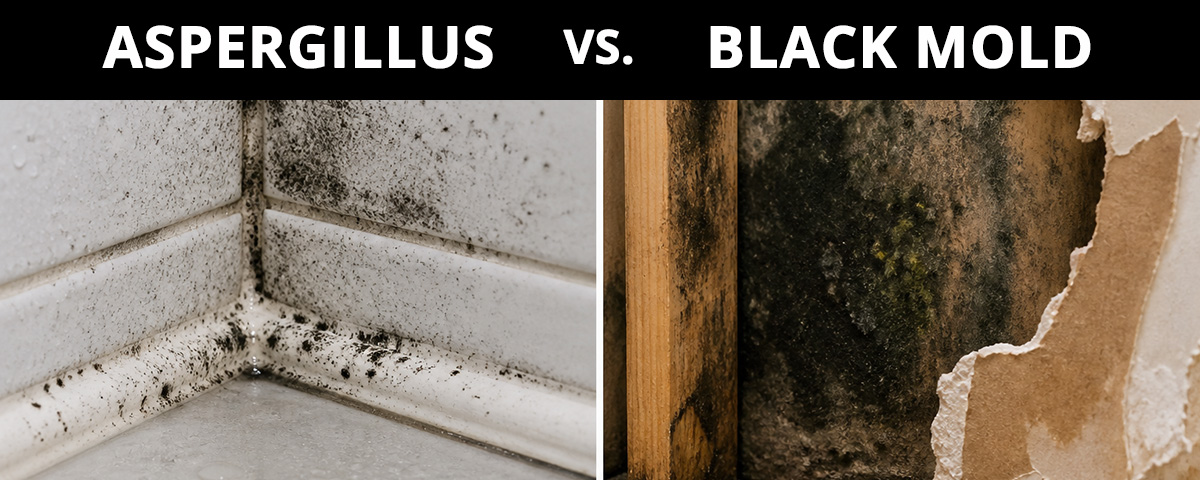
No, Aspergillus is not the same as Stachybotrys chartarum, the mold commonly referred to as “toxic black mold.” However, some Aspergillus species can appear dark green, brown, or nearly black, and certain species can produce mycotoxins under specific conditions. Mold color alone cannot identify the species or determine whether it is producing toxins.
The easiest way to tell them apart is by looking at texture and where the growth is showing up:
- Aspergillus niger usually looks powdery or grainy instead of slimy. It can also grow on common bathroom surfaces like tile, grout, and caulk.
- Stachybotrys is different. It usually needs materials that stay wet for a long time and contain cellulose, like drywall, wood, or paper backing.
Aspergillus is considered an allergenic mold. It can trigger respiratory irritation, asthma symptoms, and, for people with weakened immune systems, a serious infection called Aspergillosis. It may not be “black mold” in the Stachybotrys sense, but dark Aspergillus growth in a bathroom still deserves attention.
Is Chaetomium Black Mold?
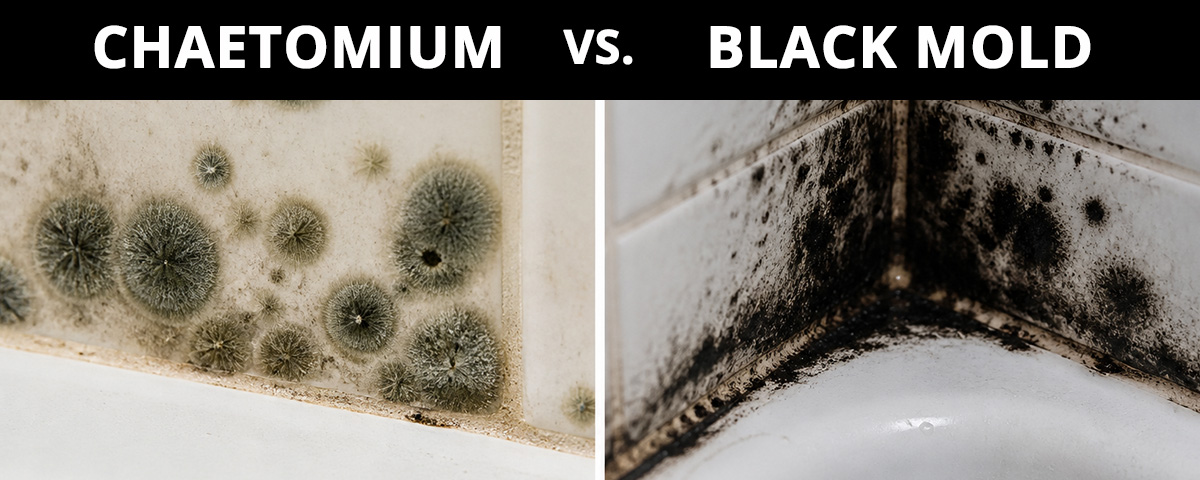
No, Chaetomium is not the same as Stachybotrys chartarum, the mold commonly called “toxic black mold.” However, it can grow in water-damaged bathrooms and may darken from white or gray to olive-brown or black as it matures, which is why the two can be confused.
You’re more likely to find it on materials like drywall and wood, especially in areas that have stayed damp for a while. Those are the same kinds of surfaces Stachybotrys likes, which is why the two can sometimes raise similar concerns.
Some Chaetomium species can produce mycotoxins, so visible growth should be taken seriously. If you see dark, cottony, or woolly-looking growth near wall cavities or on drywall close to the shower, avoid touching, brushing, or disturbing it. Disturbing mold can release spores and fragments into the air. Keep your distance and point it out during a professional mold assessment so the affected area can be properly evaluated.
Cladosporium vs Black Mold
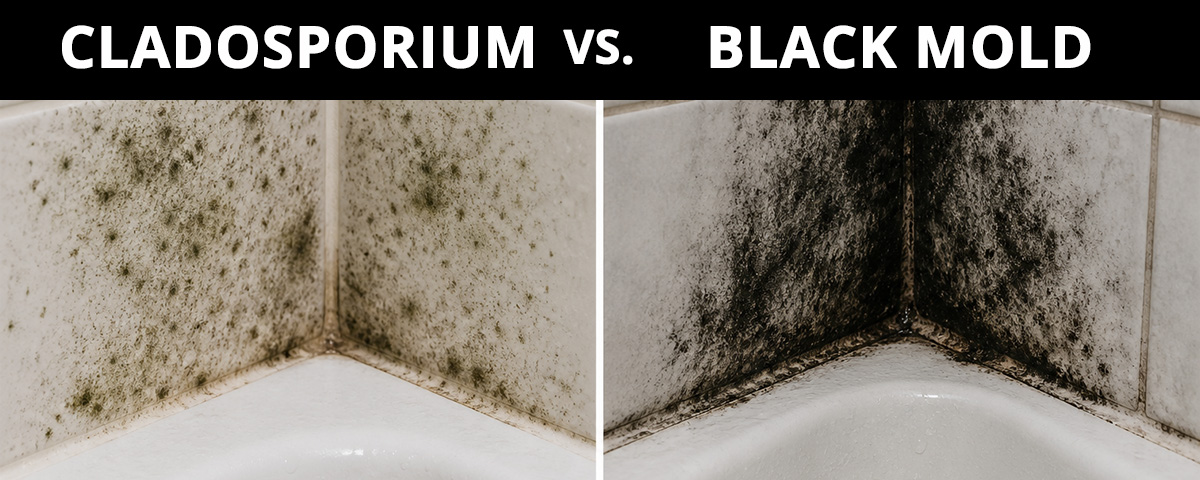
Cladosporium is another dark-colored mold that homeowners often mistake for black toxic mold, but its growth habits are quite different from Stachybotrys. It can grow with less moisture, appears on a wider range of bathroom surfaces, and usually has a drier, more powdery or suede-like texture.
| FEATURE | CLADOSPORIUM | STACHYBOTRYS CHARTARUM |
|---|---|---|
| Typical color | Olive-green, brown, dark brown, or nearly black | Dark greenish-black to black |
| Texture | Often dry, powdery, velvety, or suede-like | Often slimy or wet-looking when actively growing |
| Moisture needs | Can establish at lower moisture levels and tolerate a wider range of damp conditions | Requires prolonged, very wet conditions to establish and grow |
| Where it grows | Can colonize painted surfaces, window frames, grout, wood, fabrics, and other damp materials | Strongly associated with water-damaged, cellulose-rich materials such as drywall, paper backing, fiberboard, and wallpaper |
| Health concern | Better known as an allergenic mold that can trigger allergy symptoms and respiratory irritation | Can produce mycotoxins under certain environmental conditions |
| Can you identify it by sight? | No. Color and texture provide clues but cannot confirm the species | No. Laboratory analysis is needed to reliably identify the species |
Finding dark Cladosporium in your bathroom is a ventilation and moisture signal rather than a toxicity concern, but it should still be addressed promptly.
Black Mold vs. Dust: How Can You Tell the Difference
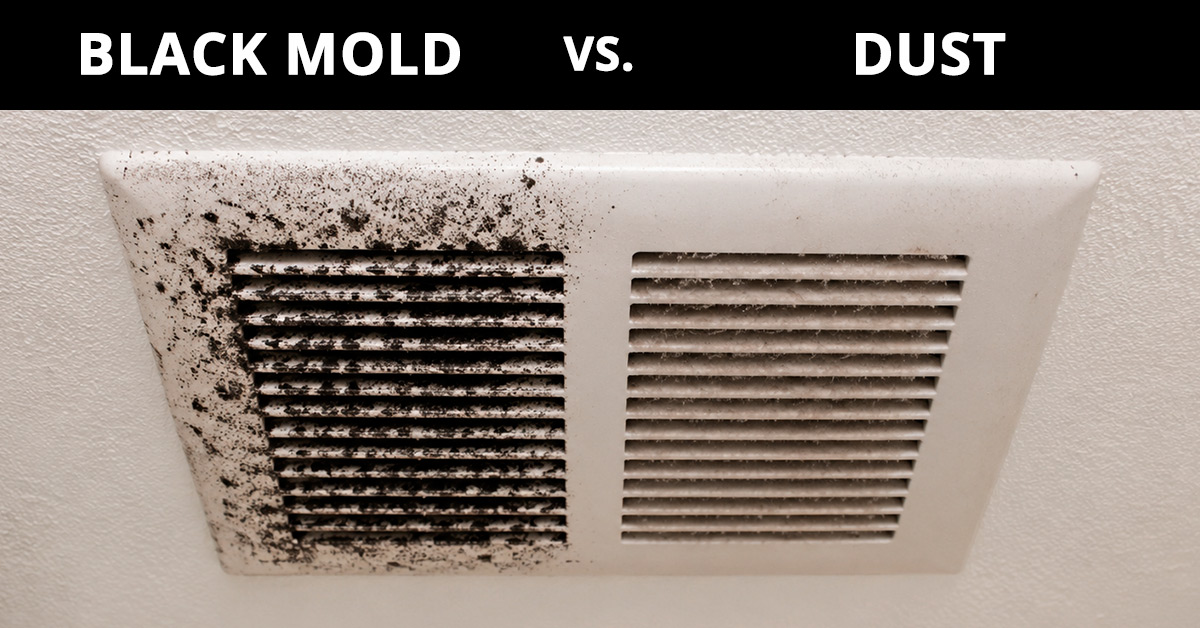
Dark patches on bathroom surfaces are not always mold. Dust, soot, soap scum, hard water deposits, and residue buildup can all produce dark discoloration that looks similar at a glance. The practical distinction comes down to two things: how the growth responds when you try to wipe it off, and whether it comes back after cleaning. Dust and residue do not grow back. Mold does.
Does Black Mold Wipe Off Like Dust?
The wipe test is the quickest way to get a better idea of what you’re looking at, and it only takes about 30 seconds.
Dampen a cloth and wipe the spot firmly. Here’s what the result can tell you:
- Dust or soot: Wipes away cleanly with a dry or lightly damp cloth, leaves no stain, and doesn’t come back a few days later.
- Soap scum or hard water buildup: Usually needs a cleaner to come off fully. It may leave a light film behind, but it doesn’t grow back as a patch. It also tends to look white, gray, or yellowish instead of dark greenish-black.
- Surface mold: May wipe off partly, but it often leaves staining behind. It may also come back in the same spot within a few days to two weeks.
- Embedded mold: Doesn’t wipe away easily, leaves dark staining even after cleaning and drying, and usually returns quickly in the same area.
If the spot wipes away cleanly, doesn’t leave a stain, and doesn’t come back, it’s probably just dust, soot, or surface residue.
But if it resists wiping, leaves discoloration behind, or shows up again in the same spot a few days later, treat it like mold. At that point, it’s worth taking a closer look before deciding how to handle it.
Is Black Mold in the Bathroom Dangerous
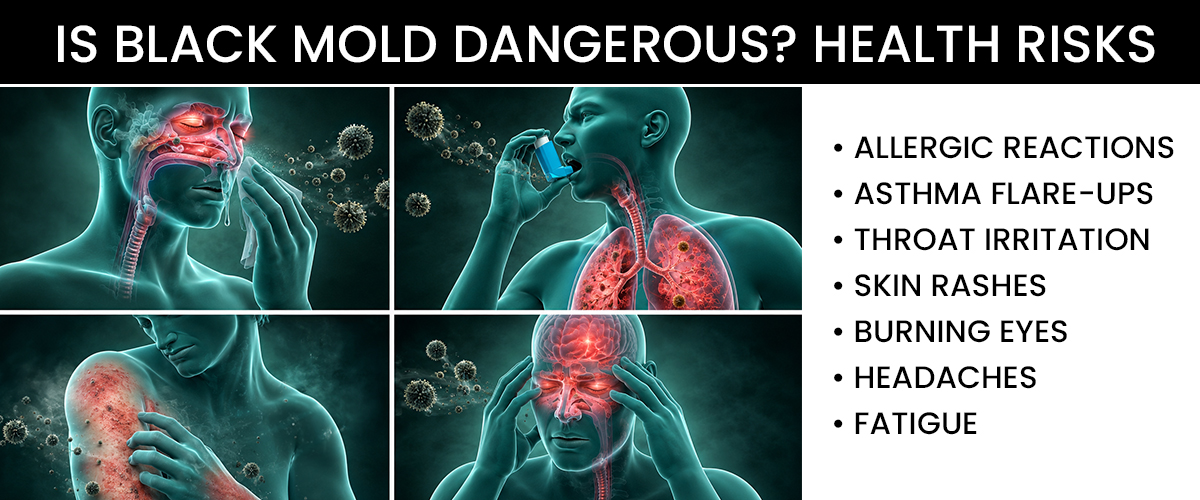
Black mold in a bathroom can be a health concern because mold spores and fragments may trigger allergies, asthma symptoms, coughing, or respiratory irritation. Risk is higher for people with asthma, mold allergies, or weakened immune systems. Bathrooms can increase exposure because mold grows easily in humid, poorly ventilated areas that are used frequently.
Important: Dark-colored bathroom mold can look similar to Stachybotrys chartarum, commonly called “black mold,” but not every black or dark mold is Stachybotrys. Mold species cannot be reliably identified by color or appearance alone.
Health Risks
The health effects below are generally associated with indoor mold exposure, including dark-colored molds sometimes called “black mold.” These symptoms are not unique to Stachybotrys chartarum, and you cannot determine a mold’s health risk or species by its color alone.
| HEALTH EFFECT | WHAT YOU MAY NOTICE |
|---|---|
| Allergic reactions | Sneezing, stuffy or runny nose, itchy or watery eyes |
| Asthma flare-ups | Coughing, wheezing, chest tightness, shortness of breath |
| Skin rashes | Redness, itching, irritation, or rash |
| Burning or irritated eyes | Burning, redness, itching, or watery eyes |
| Throat irritation | Sore, scratchy, or irritated throat |
| Headaches | Head pain or discomfort while spending time in a damp or moldy environment |
| Fatigue | Unusual tiredness or lack of energy |
| Vulnerable individuals | Children, seniors, and immunocompromised individuals |
IMPORTANT: Mold exposure can affect people differently. If you experience symptoms that may be related to mold exposure, consult a healthcare professional for guidance.
Risk levels
The risk levels depends on three factors
- Location: Mold on a ceiling directly above the shower presents a higher inhalation risk than mold on a floor tile at the opposite end of the bathroom. Proximity during use matters.
- Extent: A small surface patch on glazed tile is a different situation from mold embedded in grout throughout the shower, on the ceiling, and behind the wall. Extent determines how much of the bathroom air is affected.
- Household health: Immunocompromised individuals, young children, older adults, and anyone with asthma or chronic respiratory conditions are at meaningfully higher risk from the same exposure that a healthy adult might tolerate with minimal symptoms.
For a comparison of how black mold health risk compares to pink mold specifically, our guide on Pink Mold in Shower and Bathroom covers the distinction in detail.
Black Mold Non Toxic
No, black mold is not always toxic. “Black mold” is a general term for dark-colored mold, and “toxic” is not an official mold classification. Some species can produce mycotoxins under certain conditions, while others are more likely to cause allergy, asthma, or irritation symptoms.
Black Mold on Bathroom Tile and Grout
Black mold appears differently on glazed tile than it does in grout, and that difference tells you a lot about how serious the situation is. On the glazed tile face, dark mold sits on top of soap scum, body oil residue, or organic buildup rather than rooting into the tile material itself. It typically appears as dark slimy or powdery patches that wipe off more easily than grout discoloration. On grout lines, dark discoloration that follows the grout precisely and returns after cleaning is almost always mold that has penetrated into the porous grout matrix rather than residue sitting on top.
One tile detail that’s easy to miss: dark growth often shows up first where tile meets fixtures.
Check around faucet bases, soap dish edges, showerhead plates, and any spot where a fixture meets the wall. Water collects in those little edges and seams during every shower, and those areas don’t always dry all the way between uses.
When mold appears there, it may be an early sign that moisture has already been sitting in the surrounding grout before the problem becomes obvious across the rest of the wall.
Is Black Mold in Tile Grout Dangerous?
The health risk from black mold in grout is higher because grout is porous, and mold embedded below the surface is never fully removed by household cleaning. That means exposure is ongoing even after the surface appears clean.
Allergenic dark species in grout cause continuous low-level respiratory irritation and allergy symptoms because the colony below the surface keeps releasing spores into the bathroom air with every shower. Stachybotrys is less common in grout specifically because grout is not cellulose-rich, but dark Aspergillus and Cladosporium establish readily in grout pores fed by organic residue and biofilm.
For recurring black mold in shower grout that keeps coming back, our professional tile and grout cleaning service helps address mold at the grout level, where surface products can’t fully reach.
Black Mold in Bathroom Sink
The bathroom sink is one of the most overlooked locations for black mold because it gets cleaned regularly but rarely gets fully dried between uses. Here is what to look for and what the risks actually are.
Black Mold in Sink
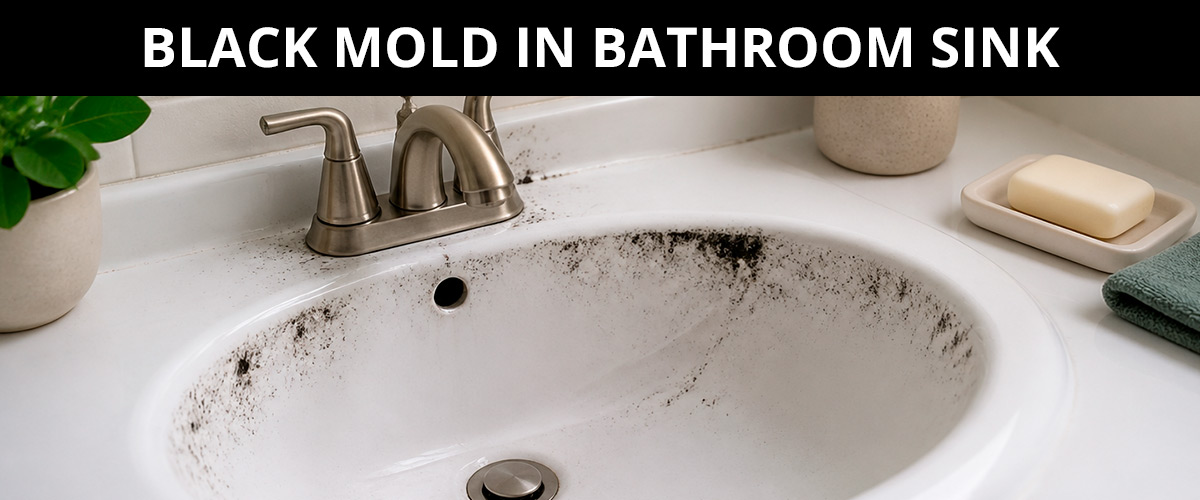
Black mold in a bathroom sink typically appears as dark patches or slimy growth around the drain opening, along the caulk or sealant where the sink meets the countertop or wall, at the faucet base, and in the overflow channel, the small hole near the top of the sink basin that prevents overflow.
The overflow channel is another spot people often miss. It stays damp, collects residue, and rarely gets cleaned during regular sink maintenance.
Dark, slimy buildup can grow inside the overflow channel for a while without being noticed. Most people only realize something is there once a musty smell starts coming from the sink.
Black Mold Under Sink
Black mold under the sink typically appears on the interior of the cabinet, the wall behind the pipes, and the cabinet floor directly below the drain connection. It develops when slow drips from pipe connections, condensation on cold water pipes, or a slow leak from the drain goes unnoticed long enough for moisture to saturate the cabinet interior.
Mold under the sink often grows directly on the wood or particleboard cabinet materials, which are cellulose-rich. That makes under-sink mold one of the locations in the bathroom where Stachybotrys is more likely to establish than on tile surfaces.
What makes under-sink mold particularly easy to miss is what most people store in that cabinet. Toilet paper rolls, paper towels, extra towels, cleaning product bottles, and cardboard boxes are common items stored under sinks. All of them absorb moisture in a damp cabinet environment, and several are cellulose-rich materials that give mold an additional food source beyond the cabinet wood itself.
Is Black Mold Under Sink Dangerous?
Black mold under a sink can be a health concern because mold spores and fragments may trigger allergies, asthma symptoms, coughing, or respiratory irritation. Risk can be higher in enclosed cabinets where mold grows unnoticed on damp wood, particleboard, drywall, paper, or cardboard. These enclosed spaces often stay humid with little airflow, allowing mold to spread unnoticed.
For the full cleaning method guide including surface-specific product recommendations, refer to our guide on How to Remove Mold and Mildew from Shower
Black Mold on the Bathroom Vent
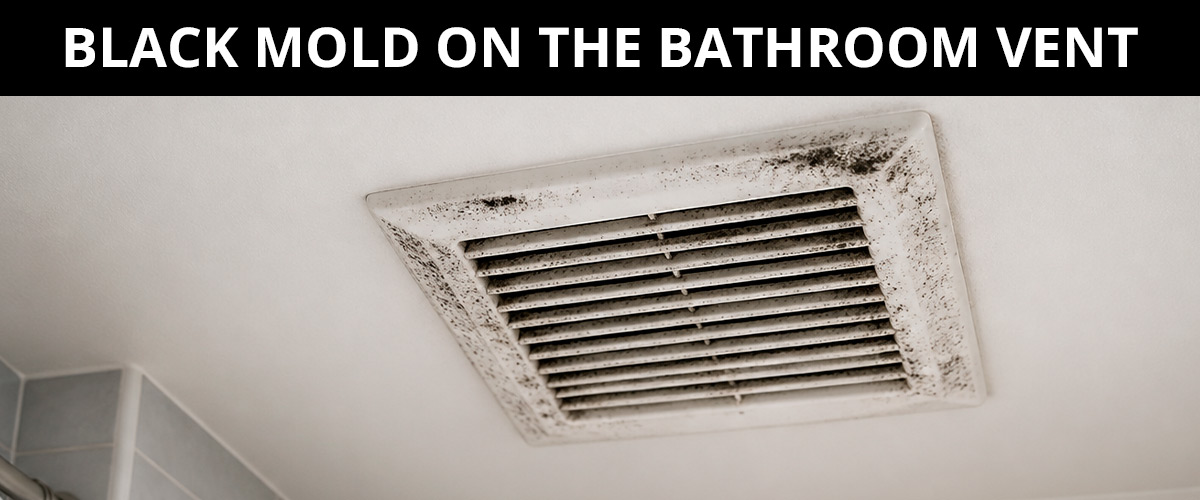
Dark growth on a bathroom vent may be mold, but you cannot confirm the species by color or appearance alone. It usually forms when warm, humid air condenses on the cooler vent cover and lingers because airflow is weak, the fan is dirty or undersized, or the vent is not exhausting properly outdoors.
If you see dark, fuzzy, or slimy growth around the vent cover, that is a sign the fan may not be clearing post-shower humidity effectively. When moisture keeps collecting on the grille and nearby ceiling, those surfaces can stay damp long enough for mold to grow.
A dirty vent can create a bigger problem because the bathroom may take much longer to dry after a shower, even when the fan is running. Wipe the vent cover regularly and vacuum the grille and visible fan blades about once a year to help maintain airflow.
Cleaning the visible mold without fixing the ventilation problem usually means it will come back. If the mold keeps returning, the fan may need a deeper cleaning, repair, or upgrade.
For guidance on exhaust fan sizing, the toilet paper test, and what it means if the fan vents into the attic rather than outside, our guide on How to Prevent Mold and Mildew in Shower covers every ventilation fix in detail.
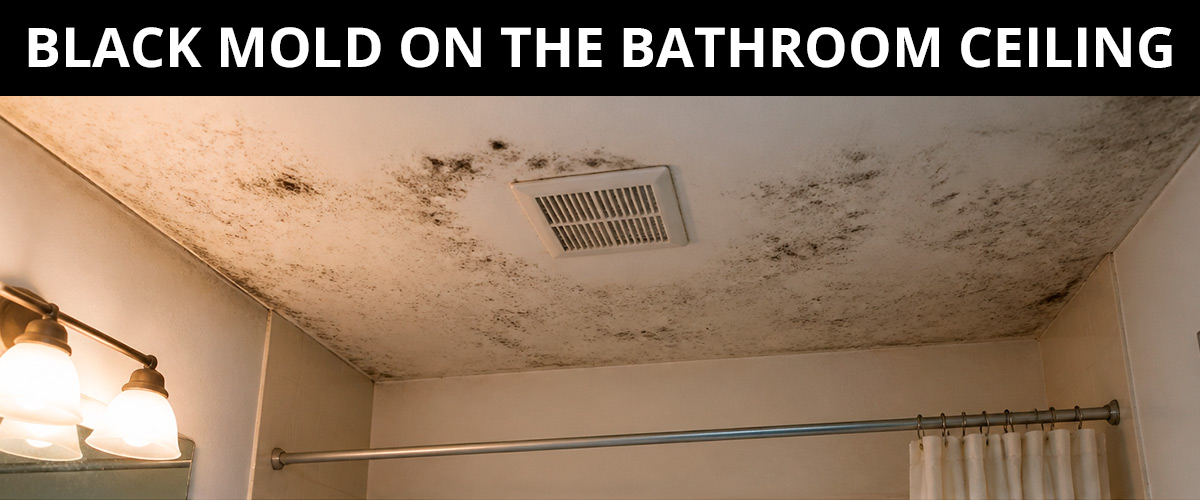
Black Mold Spots on the Bathroom Ceiling
Black mold spots on the bathroom ceiling almost always point to one of two causes: inadequate ventilation that allows post-shower humidity to condense on the cooler ceiling surface, or a slow leak from the floor above that keeps the ceiling damp from behind. The appearance is similar in both cases but the correct response is different.
Is Black Mold on the Bathroom Ceiling Dangerous?
Black mold on the bathroom ceiling carries a higher exposure risk than mold at floor level for a simple reason: the ceiling is directly above the occupant during every shower. Airborne spores released from ceiling mold fall downward and are inhaled at close range during the most humid and enclosed moment of the day.
The risk level depends on the species and the extent of the growth. Dark allergenic species on a painted ceiling surface cause respiratory irritation and allergy symptoms with regular exposure in an enclosed bathroom. If the mold has penetrated through the paint into the drywall behind it, or if a leak from above has been feeding the growth for an extended period, the conditions become more favorable for Stachybotrys on the cellulose-rich drywall substrate.
Pro tip: There are two signs that ceiling mold is better left to a professional assessment. First, the paint is bubbling or peeling around the mold, which may mean moisture is coming from behind the surface. Second, the mold keeps coming back quickly after proper cleaning and good ventilation. In both cases, the source may be above or behind the ceiling, not just sitting on the surface.
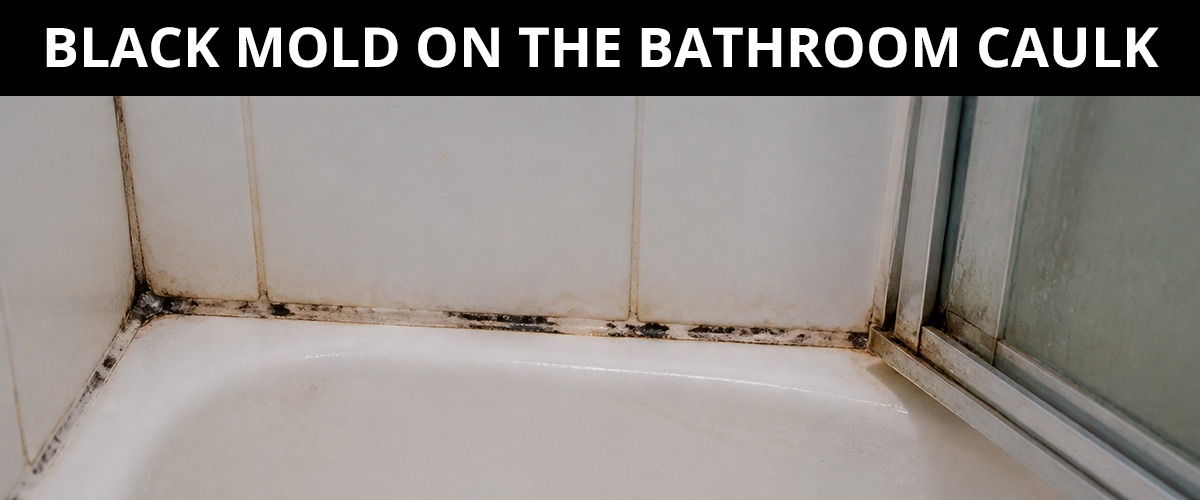
Black Mold on Caulk
Caulk is one of the most common locations for black mold in the bathroom and one of the most misunderstood. The question that determines how serious the situation is: is the mold on the caulk or behind it?
Black Mold in Bathroom Caulk
Black mold on bathroom caulk appears as dark greenish-black to black staining along the caulk bead. In early stages it sits on the caulk surface as a slimy or powdery film. As it progresses, the staining penetrates the caulk material itself, producing discoloration that cleaning cannot fully resolve regardless of which product is used.
The most common locations for black mold on bathroom caulk are the seam where the bathtub meets the wall, the base of the shower where the floor meets the wall, and around the sink where it meets the countertop or vanity. These seams stay wet longest after every shower or hand wash and receive the least airflow once the bathroom door is closed.
Black Mold on Shower Caulking
Black mold on shower caulking appears as black staining along the caulk bead but is more consistently severe because the shower caulk is exposed to direct water contact with every shower rather than just ambient humidity. The shower floor caulk seam is almost always the furthest along when black mold is present anywhere in the bathroom.
The most vulnerable shower caulk locations are:
- Where the shower base meets the wall tile: The horizontal seam at the bottom of the shower receives pooling water with every use and dries slowest of any caulk seam in the shower
- Where two walls meet: Corner seams concentrate moisture and receive almost no airflow. Dark mold in shower corner caulk is one of the earliest signs of a broader caulk maintenance problem
- Where the shower door frame or glass meets the wall or base: Door frame seals stay damp from water that runs down the glass after every shower and pools at the frame base
- Where built-in fixtures like soap dishes or ledges meet the wall: These horizontal surfaces collect standing water and soap residue directly on the caulk seam, accelerating mold growth at those joints
Two appearance signals specific to shower caulking that indicate the problem has progressed beyond surface cleaning:
- Staining that runs throughout the caulk bead: If the dark discoloration is not just on the surface but visible throughout the caulk material when examined closely, the mold has penetrated the caulk itself
- Caulk that has changed texture: Intact caulk is firm and slightly flexible. Caulk with embedded mold growth often feels softer than surrounding sections or has developed a slightly tacky or degraded surface texture
Pro tip: Replace the caulk if it feels soft, pulls away from the surface, has deep staining that remains after cleaning and drying, or mold returns along the same line within two weeks. Look for 100% silicone or an advanced siliconized sealant is usually the better choice.
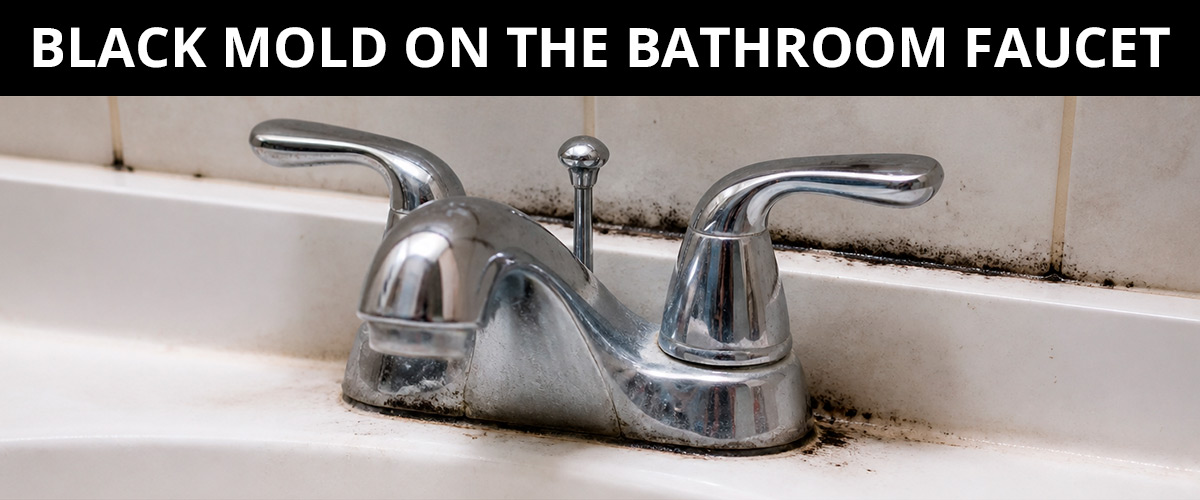
Black Mold on Faucet
Black mold on a bathroom faucet typically appears as dark, slimy, or powdery growth around the base, handle joints, or inside the aerator, where moisture, mineral deposits, sediment, and residue can collect.
Because buildup can form inside the aerator, remove it if possible and clean it separately. Use warm water, mild dish soap, and a soft brush or cloth to clean the base, handles, and aerator. Rinse everything well and let it dry completely before reinstalling the aerator.
You usually do not need to replace the faucet unless mold keeps returning, corrosion is present, or the buildup cannot be fully removed.
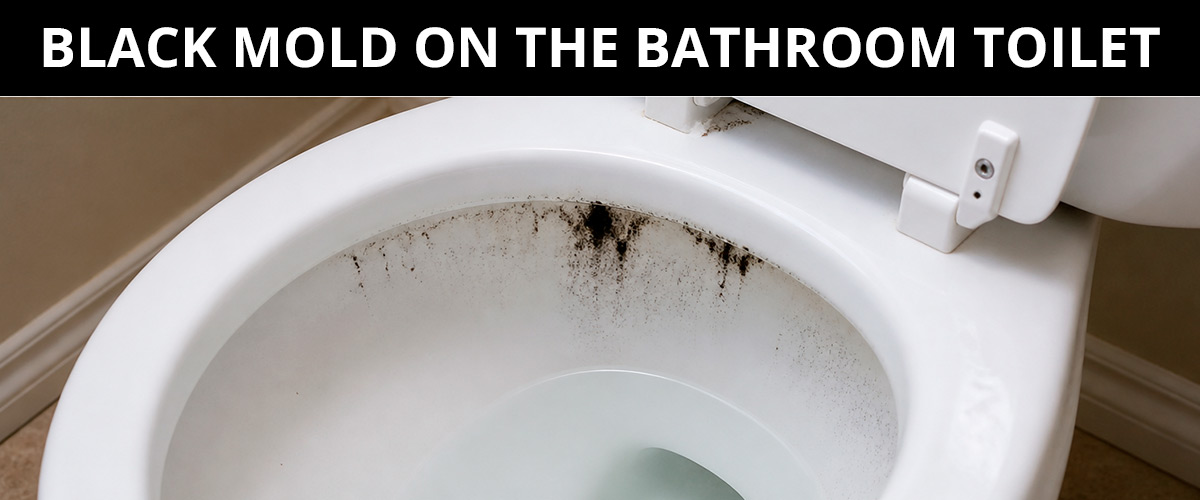
Black Mold in Toilet
The toilet is one of the most consistent locations for dark mold growth in the bathroom because it provides standing water, mineral deposits, and organic material in a location that rarely fully dries between uses. Here is what black mold looks like in each part of the toilet and what the risk actually is.
Why Does Black Mold Grow in the Toilet Bowl?
Black mold grows in the toilet bowl because the bowl provides everything mold needs in one location: standing water, warmth, organic material from waste, and mineral deposits at the waterline that give mold a surface to establish on. The area under the rim is particularly vulnerable because it stays wet continuously, receives minimal airflow, and is rarely cleaned as thoroughly as the visible bowl surface.
If the growth in your toilet bowl is pink or orange-pink rather than dark greenish-black, that is most likely Serratia marcescens, which requires a different treatment approach than fungal mold. Our guide on Pink Mold in Shower and Bathroom covers it in detail. If the growth appears olive-green or brown rather than dark greenish-black, our guides on Green Mold in Bathroom and Brown Mold in Bathroom cover those species specifically.
Is Black Mold in the Toilet Dangerous?
Black mold in a toilet is usually a lower health risk than mold on walls or ceilings, but it can still trigger allergies or irritation in sensitive people. Dark toilet growth may also be bacterial biofilm or mineral buildup rather than mold. True toxic black mold prefers wood or paper, not porcelain.
The more relevant concern is contact transmission: touching a contaminated toilet surface and then touching the face, eyes, or an open wound without washing hands thoroughly.
Is Black Mold in the Toilet Tank Dangerous?
Black mold in a toilet tank is usually a low health risk, because small amounts in a contained tank do not release enough spores to harm healthy people. Also, dark buildup is not always mold. It may be mildew, bacterial biofilm, or mineral deposits that form over time because the tank stays wet and enclosed.
If you really have black mold in the toilet tank is more concerning than toilet bowl mold for one specific reason: the tank refills with fresh water after every flush, and if mold is present in the tank, that water flows through the bowl with every flush, potentially spreading mold and spores to the bowl surface continuously.
If you see dark growth inside the tank, especially on the tank walls, float mechanism, or flapper valve, clean the inside of the tank with a toilet bowl cleaner or a diluted bleach solution, then scrub the surfaces before flushing. If the mold comes back quickly, mineral buildup or the water supply may be part of the problem, and it may be worth having a professional take a look.
Black Mold in Drain
Drains are one of the most consistent black mold locations in the bathroom because they combine standing water, organic residue, and minimal airflow in a single concentrated spot. Here is how black mold looks like in the shower drains.
Black Mold in the Shower Drain?
Black mold in the shower drain appears as dark, slimy growth on the drain cover, around the drain opening, and inside the drain pipe itself where hair, soap scum, and organic debris accumulate. The drain cover and the visible drain opening are the surfaces most likely to show visible growth. What accumulates inside the pipe below the cover is rarely visible but is almost always present when surface growth is apparent.
The shower drain stays wet longer than almost anywhere else in the shower, and it collects a lot of buildup. Hair, soap scum, body oils, and debris all end up there.
Hair caught in the drain gives mold an easier place to grow than smooth tile or grout alone. That’s why drain areas can get musty, slimy, or dark again so quickly after cleaning.
Black Mold in Shower
The shower is the primary environment for black mold in most bathrooms because it receives direct water contact on every surface multiple times daily. Here is the health risk specific to the shower and the most serious scenario: mold behind the shower wall.
Is Black Mold in the Shower Dangerous?
Black mold in a shower can be a health concern, especially for people with allergies, asthma, or weakened immune systems. Because showers are small, humid spaces where mold can grow on several nearby surfaces, regular use may increase exposure to airborne mold spores and fragments causing respiratory issues and allergic reactions.
If mold is growing in several areas of the shower, your overall exposure may be greater. When you take a hot humid shower, you’re in close contact with those surfaces for several minutes, breathing in spores and tiny mold fragments suspended in the air.
For most healthy adults, occasional exposure does not automatically mean serious illness. However, people with asthma, mold allergies, respiratory conditions, or weakened immune systems may be more sensitive and should take recurring shower mold seriously.
Black Mold Behind a Shower Wall
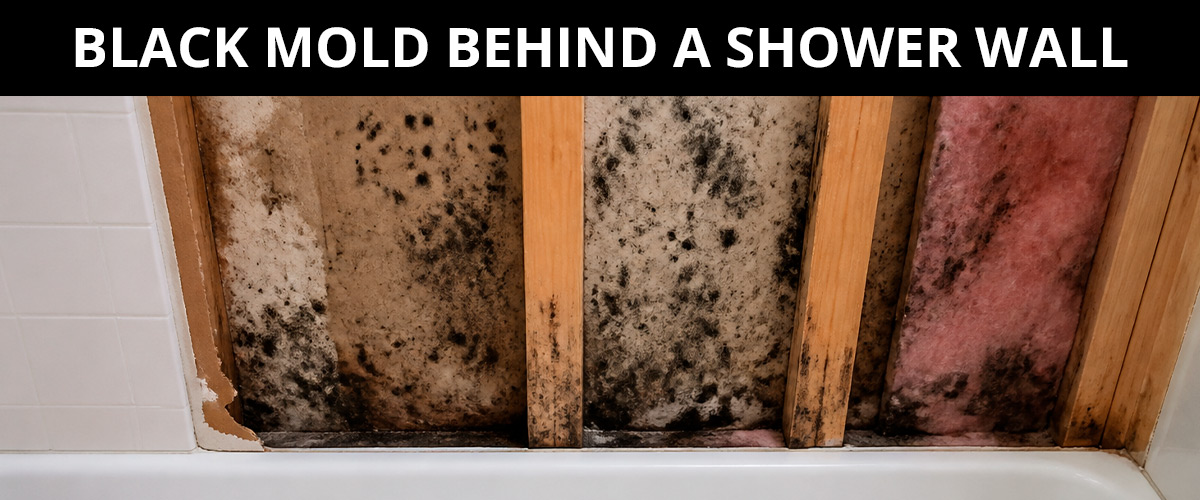
Black mold behind a shower wall is more serious than surface growth because it usually means moisture has reached hidden building materials. Cracked grout, failing caulk, loose tile, or plumbing leaks can allow water to soak into drywall or other materials behind the shower, creating conditions where mold can grow unnoticed for weeks or months.
A small dark spot on grout or caulk may be only the visible part of a larger moisture problem. Watch for these warning signs:
- Soft spots, loose tiles, or hollow sounds: These can indicate moisture damage behind the tile.
- Grout or caulk failing along wall seams: Repeated failure may point to moisture coming from behind the surface.
- A history of leaks or water intrusion: Previous moisture that was not fully dried increases the chance of hidden mold growth.
If you notice these signs, avoid scrubbing the area right away. Surface cleaning will not remove mold growing behind the wall and may disturb spores. A professional assessment can help determine how far the moisture and mold have spread.
How to Remove Black Mold From a Shower
Before removing black mold from a shower, identify where the growth is located. If you have black mold behind a shower wall, a professional assessment before cleaning is the right call.
For surface-level dark mold on a shower, here is the full process:
⚠️Disclaimer: Use these cleaning methods occasionally and at your own risk. Always follow the manufacturer’s cleaning instructions. Test on a hidden area first. For recurring growth, growth near wall cavities, or any household with immunocompromised members, contact a certified professional before proceeding. Never mix cleaning products.
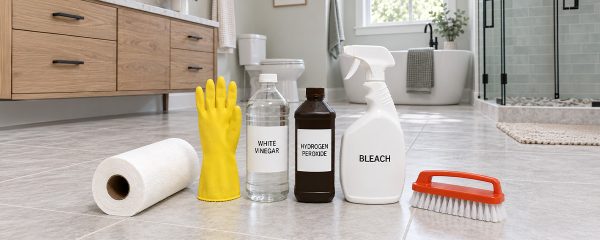
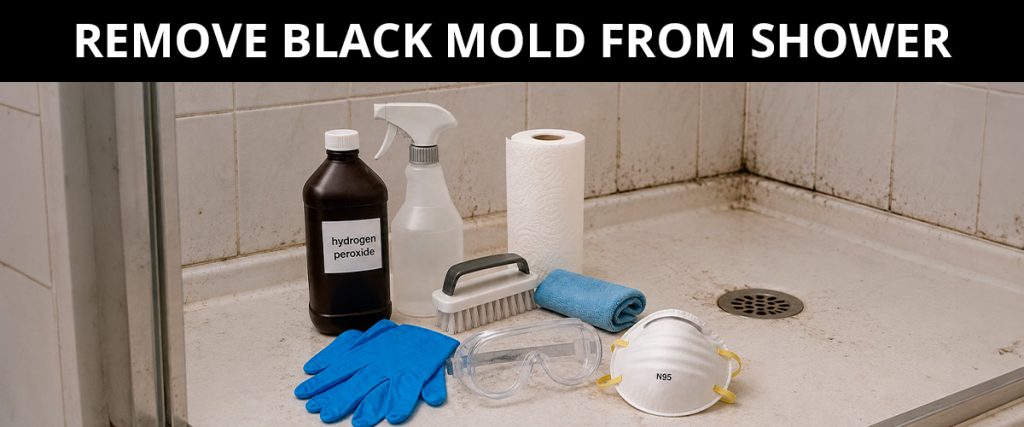
Materials, Tools, and Supplies You’ll Need
- 3% hydrogen peroxide (undiluted)
- Spray bottle or applicator
- Stiff-bristled grout brush or toothbrush for grout lines
- Soft-bristled brush for fixtures and non-porous surfaces
- Clean cloths or paper towels
- Protective gloves
- Safety glasses
- N95 mask rated for mold spores
- Exhaust fan running or window open before you start
Step 1: Ventilate the bathroom
Turn on the exhaust fan or open a window before applying any cleaner. Keep ventilation running throughout and for at least 20 minutes after you finish. Black mold spores become airborne during scrubbing in an enclosed shower space. Do not skip this step.
Step 2: Protect yourself
Put on gloves, safety glasses, and an N95 mask before touching any mold growth. Scrubbing dark mold in a shower releases spores and mold fragments into the breathing zone at close range. Protection is more important here than in any other bathroom cleaning scenario.
Step 3: Apply the right cleaner for your surface
For most shower surfaces, 3% hydrogen peroxide is the strongest practical starting point. Apply generously enough to keep the surface visibly wet throughout the contact time. For vertical surfaces where liquid runs off, press a folded paper towel soaked in hydrogen peroxide against the surface during the dwell time.
Step 4: Allow the full contact time
For 3% hydrogen peroxide, allow at least 10 minutes on most surfaces. Do not exceed 15 minutes on colored or unsealed grout. Do not wipe or rinse during this step.
Step 5: Scrub firmly
Use a stiff-bristled toothbrush or grout brush for grout lines, working in small circular strokes along the grout line. Use a soft-bristled brush for fixture surfaces and glazed tile. For caulk seams, use an old toothbrush with short back-and-forth strokes.
Step 6: Rinse thoroughly and dry completely
Rinse all surfaces with clean water and dry every surface immediately after rinsing with a clean cloth. Leaving moisture behind after cleaning recreates the exact conditions that allowed black mold to establish in the first place.
⚠️ Important: Use only one cleaning product at a time. Never mix bleach with vinegar, hydrogen peroxide, or ammonia. Mixing bleach with vinegar or hydrogen peroxide produces toxic chlorine gas or peracetic acid. Mixing bleach with ammonia produces toxic chloramine gas. All are harmful when inhaled.
Pro tip: Hot showers create a lot of steam and keep bathroom humidity higher for longer, giving mold spores more time to settle on damp surfaces. The shower temperature itself isn’t what causes mold. The real issue is the humidity it leaves behind. EPA recommends keeping humidity levels between 30% and 50%. After showering, run the exhaust fan at least for 20min or consider using a dehumidifier. Otherwise, all that moisture can linger and help black mold thrive on grout, caulk, walls, and ceilings.
What Is the Best Way to Clean Black Mold in a Shower?
The best way to clean black mold in a shower depends on which surface it is on and how deep it has penetrated. Here is how the most practical options compare:
| Method | Best For | Limitation |
|---|---|---|
| 3% hydrogen peroxide | Glazed tile, cement grout surface mold, intact silicone caulk on standard finishes | Can discolor some caulk types, specialty fixture finishes like brushed nickel or matte black, and flat or matte paint finishes; always test on a hidden area first; do not exceed 15 minutes on colored or unsealed grout |
| Diluted bleach (1:10) | Glazed tile and glass on non-porous surfaces only | Can pit and dull chrome and metal fixture finishes; cannot penetrate porous grout; can weaken, discolor, or wear down cement grout and sealer with repeated use; fume risk in an enclosed shower; not for colored grout, acrylic, or specialty finishes |
| Borax solution (1 cup per gallon warm water) | Cement grout maintenance cleaning; glazed tile | Less effective on heavy established mold than hydrogen peroxide; not for natural stone; let it sit for 10 to 15 minutes; rinse thoroughly after use and avoid skin and eye contact during application |
| Steam cleaning | Surface grout and tile where the surface and sealer are in good condition | Does not penetrate embedded grout mold; avoid on natural stone unless specifically approved for your stone type and sealer; not safe on cracked grout or failing caulk |
| Professional tile and grout cleaning | Embedded grout mold that household cleaning cannot resolve | Requires scheduling; not a DIY option |
No household method fully penetrates mold embedded deep in porous grout. That is where professional tile and grout cleaning makes the difference.
What Kills Black Mold in a Shower?
It depends on the surface. For surface mold on non-porous shower materials such as glazed tile and glass, 3% hydrogen peroxide or a properly diluted bleach solution can help remove and disinfect visible growth.
For mold on grout avoid bleach and use occasionally undiluted 3% Hydrogen peroxide instead. Grout is porous, which makes it trickier. Household cleaners may remove or reduce mold on the surface, but they may not reach growth that has penetrated deeper into the grout.
Use caution with both products. Hydrogen peroxide can discolor colored grout or certain specialty finishes if left on too long. Bleach can damage some metal finishes and, with repeated use, may deteriorate cement-based grout. Neither is a good choice for natural stone, where the wrong cleaner can etch, discolor, or damage the surface.
Professional tile and grout cleaning is the only method that addresses embedded grout mold at the depth where it has been established.
Does Bleach Kill Black Mold?
Yes, bleach can kill surface mold on hard, non-porous materials such as glazed tile and glass, but it is not recommended for routine mold cleanup. It is less effective on porous materials such as grout, where mold may grow below the surface. Bleach can also damage colored grout, metal finishes, acrylic, and natural stone. Never mix bleach with ammonia or other cleaners.
Get Rid of Black Mold in Bathroom
Cleaning removes what is visible. Getting rid of black mold for the long term means eliminating the root conditions that allowed it to establish in the first place. The prevention habits that work for all bathroom mold apply here too: controlling post-shower humidity, maintaining the exhaust fan, sealing cement grout, and replacing failing caulk. Our guide on How to Prevent Mold and Mildew in Shower covers all of those in full detail.
What is specific to black mold prevention beyond the general routine is addressing hidden moisture sources before Stachybotrys has a chance to establish on cellulose-rich materials behind the tile. Stachybotrys does not grow from a single wet shower the way surface allergenic mold does. It requires sustained moisture on drywall, wood, or paper backing over an extended period. That means slow drips under the sink, slow leaks behind the toilet, failed caulk allowing water behind the tile, and cracked grout creating a moisture pathway below the surface are the specific conditions that create Stachybotrys risk rather than general bathroom humidity.
Fix those moisture sources before cleaning and before applying any new caulk or sealer. Cleaning the visible mold without addressing a hidden drip or failed seal behind the tile means the conditions driving the growth are still present, and the mold will return regardless of how thoroughly the surface is treated.
Will Black Mold Die Without Moisture?
Yes, mold including black mold cannot survive without moisture. Removing the moisture source stops active growth and eventually causes existing mold to become dormant or die. However, removing moisture does not remove the mold itself. Dead or dormant mold on surfaces still needs to be physically cleaned. It can still cause allergic reactions in sensitive individuals even when no longer actively growing, and it can reactivate if moisture returns.
The practical takeaway is simple: fix the moisture problem first, then clean the mold. You need both.
If you fix the moisture but don’t clean, mold residue can stay on the surface. If you clean but don’t fix the moisture, the mold is likely to come right back.
How to Prevent Black Mold in the Shower?
The daily habits that prevent bathroom mold generally, squeegeeing walls, running the exhaust fan, rinsing soap residue, and maintaining caulk and grout, all apply to black mold prevention. The one addition specific to black mold is checking for hidden moisture sources that daily habits cannot reach. Slow drips under the sink, condensation behind the toilet, failed caulk allowing water behind the tile, and cracked grout creating a moisture pathway to the drywall below are the conditions that create Stachybotrys risk specifically, because Stachybotrys requires sustained moisture on cellulose-rich materials rather than just surface dampness from showering.
Also, if you take consistently hot showers, running a dehumidifier and the exhaust fan after showering and confirming your fan is correctly sized for your bathroom becomes more important. Hot showers produce significantly more steam than warm showers, raising post-shower humidity levels higher and for longer and giving mold spores more time to settle on damp surfaces.
For the complete prevention guide covering daily habits, ventilation strategies, grout sealing, and dehumidifier use, our guide on How to Prevent Mold and Mildew in Shower covers everything in detail.
Black Mold in the Bathroom FAQs
What naturally kills black mold?
For chemical-free options, 3% hydrogen peroxide and borax solution are the most practical choices for surface black mold on shower surfaces. Hydrogen peroxide oxidizes mold at the cellular level. Borax solution, one cup per gallon of warm water, is the safer option for repeated grout cleaning because it does not degrade the cement grout binder. Neither fully penetrates mold embedded deep in porous grout.
Vinegar has antimicrobial properties against many fungal species but works more slowly than hydrogen peroxide and is not the strongest starting point for established black mold growth.
Is black mold always toxic?
No. Not all dark mold is the toxic species Stachybotrys. The terms toxic and non-toxic as applied to black mold are not official scientific classifications. Dark allergenic species like Aspergillus, Alternaria, and Cladosporium cause real health effects too, including respiratory irritation and asthma flare-ups, but are not typically associated with mycotoxin exposure. All dark mold should be addressed regardless of species. The appropriate level of response depends on location, extent, recurrence, and household health, not on a visual species guess.
Is black mold in the bathroom toxic?
It depends on the species, and the species cannot be confirmed without laboratory testing. Black mold in a bathroom is more likely an allergenic dark mold strain rather than toxic Stachybotrys. Black toxic mold requires sustained moisture on cellulose-rich materials like drywall to establish and is less common on tile and grout surfaces.
If Stachybotrys is confirmed, it can produce mycotoxins under certain conditions, though not every growth produces mycotoxins at the same level. For any household with immunocompromised members, young children, or older adults, treat dark bathroom mold as a serious concern regardless of species and seek professional assessment before cleaning.
How Can You Tell the Difference Between Mildew and Black Mold
For a full side-by-side comparison of black mold and mildew, including appearance, texture, smell, the wipe test, and health risk differences, our guide on Mold vs. Mildew in the Shower covers every identifying characteristic in detail.
Conclusion
Most dark bathroom mold is not Stachybotrys (toxic black mold), but it still should not be ignored. Smell, texture, location, and repeated growth can help you judge the problem, but only lab testing can identify the species.
If mold keeps returning, moisture may be hidden below the surface. When you suspect growth behind walls, ongoing leaks, or vulnerable people are in the home, a professional assessment is the safer next step.
If mold keeps returning in the same grout lines, surface cleaning may not be enough.
Mint Condition’s IICRC-certified technicians provide professional tile and grout cleaning using family- and pet-safe methods throughout Orlando and Central Florida. Call us at (407) 456-2035 or fill out a contact form today for your free estimate.
References
- IICRC S520 Standard for Professional Mold Remediation: https://www.iicrc.org/page/IICRCStandards
- U.S. Environmental Protection Agency, A Brief Guide to Mold, Moisture, and Your Home: https://www.epa.gov/mold/brief-guide-mold-moisture-and-your-home
- U.S. Environmental Protection Agency, Mold Course Chapter 2: https://www.epa.gov/mold/mold-course-chapter-2
- Centers for Disease Control and Prevention, Basic Facts About Mold and Dampness: https://www.cdc.gov/mold-health/about/index.html
- Home Ventilating Institute, Bathroom Ventilation Guidelines: https://www.hvi.org/resources/publications/bathroom-ventilation/
- Institut national de santé publique du Québec, Stachybotrys chartarum: https://www.inspq.qc.ca/en/moulds/fact-sheets/stachybotrys-chartarum
- EPA Safer Choice Program: https://www.epa.gov/saferchoice
- International Residential Code, Section M1505, Exhaust Systems: https://codes.iccsafe.org/content/IRC2021P2/chapter-15-exhaust-systems
- U.S. Environmental Protection Agency (EPA), Mold and Health Effects: https://www.epa.gov/mold/can-mold-cause-health-problems
- U.S. Environmental Protection Agency (EPA), Mold Course, Chapter 1: https://www.epa.gov/mold/mold-course-chapter-1
- Centers for Disease Control and Prevention (CDC), Mold and Health: https://www.cdc.gov/mold-health/about/index.html
- CDC/NIOSH, Health Problems Associated With Mold: https://www.cdc.gov/niosh/mold/health-problems/index.html