Pink mold in the shower is usually a bacterium called Serratia marcescens, not a true mold or fungus. It forms a slimy pink to orange-pink biofilm on warm, damp surfaces by feeding on soap scum, shampoo residue, and organic deposits. It keeps coming back because airborne bacteria recolonize wet surfaces within days, even after thorough cleaning.
If you’ve noticed a slimy pink or pinkish-orange film in your shower, around the drain, along the grout lines, or on the shower curtain, you’re probably wondering: Is that actually mold? Is it dangerous? And why does it keep showing up even when you clean regularly? This article is for you.
Pink mold is a little sneaky. It looks like mold, acts like mold, and loves damp bathroom surfaces, but it’s usually not mold at all. And that distinction matters more than you might think, because it changes how you treat it.
This guide walks you through what pink mold actually is, what it looks like, where it grows, why it keeps forming, and how to get rid of it for good.
Key Takeaways about Pink Mold
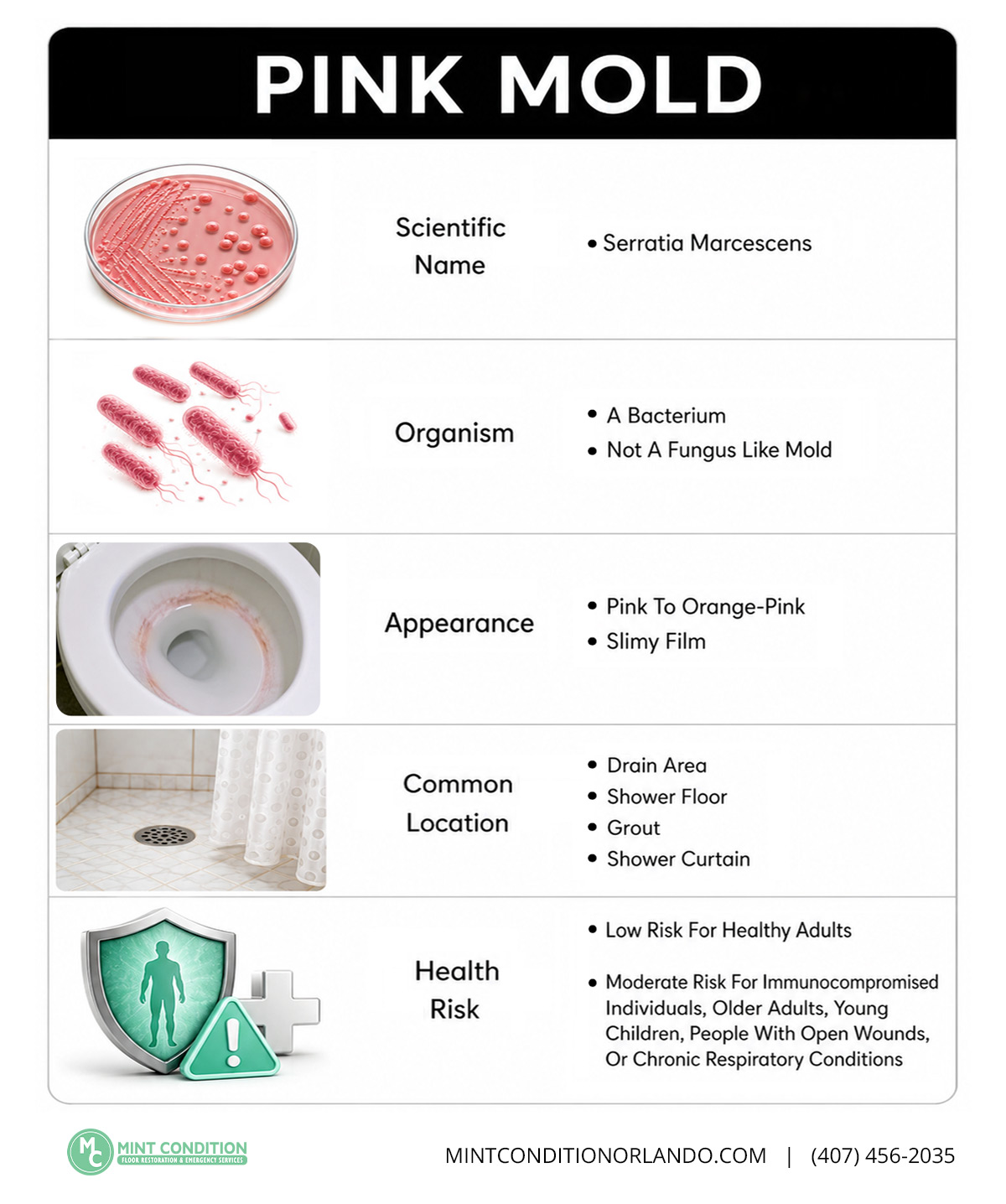
- Pink mold in the shower is not actually a fungus. It’s a bacterium called Serratia marcescens that forms a slimy pink or orange-pink biofilm on warm, damp surfaces.
- Because it’s a bacterium and not a fungus, antifungal mold treatments won’t work on it. Use a disinfectant instead. But even with the right cleaner, it comes back when moisture, soap residue, and biofilm remain on surfaces after cleaning.
- It feeds on soap scum, shampoo residue, body oils, and mineral deposits. Remove the food source and you reduce the recurrence significantly.
- Pink mold is generally low risk for healthy adults but can cause urinary tract infections, respiratory infections, and wound infections in immunocompromised individuals, the elderly, and young children.
- It’s airborne, meaning it can re-enter the bathroom through the air and recolonize wet surfaces even after thorough cleaning.
- Bleach kills it on non-porous surfaces but cannot penetrate grout. Vinegar and hydrogen peroxide are better options for occasional grout treatment, but none of them fully reach bacteria embedded below the grout surface.
- If pink mold keeps coming back in the same grout lines, even after regular cleaning, that usually means it’s not just sitting on the surface anymore. At that point, the biofilm may have worked its way into the grout itself. And once that happens, basic bathroom cleaning can only do so much. Professional tile and grout cleaning is usually the better option because it can reach deeper, remove the buildup more effectively, and help keep the problem from returning so quickly.
Pink Mold Summary Table
If you’re trying to make a fast identification, here’s a quick reference before we go deeper.
| Organism | Serratia marcescens |
|---|---|
| Appearance | Pink to orange-pink, slimy film |
| Common Location | Drain area, shower floor, grout, and shower curtain |
| Health Risk | Low to moderate: low risk for healthy adults; higher risk for immunocompromised individuals, older adults, young children, or people with open wounds or medical devices |
Pink Mold Shower
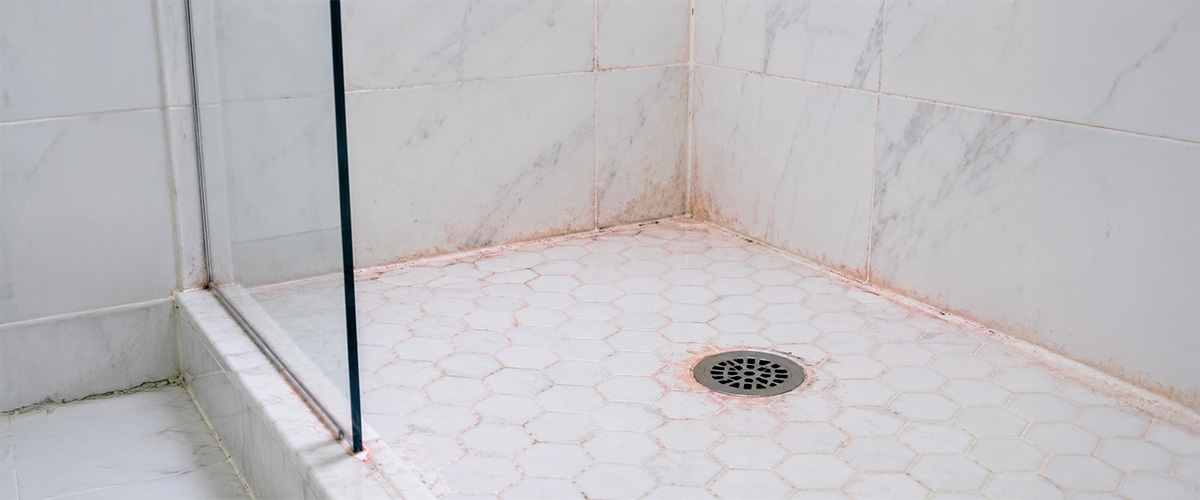
Pink mold in the shower is one of the most misidentified bathroom problems at home. It looks like mold, it grows where mold grows, but it behaves differently, and it needs to be treated differently. Here’s what you actually need to know about what it is, what it looks like, and why color alone isn’t enough to go on.
What Is Pink Mold in Shower?
Pink mold in the shower is actually a bacterium called Serratia marcescens, not a true mold or fungus. It thrives in warm, humid environments and forms a slimy pink or orange-pink biofilm on shower surfaces by feeding on soap scum, shampoo residue, and mineral deposits.
This distinction matters because antifungal treatments are designed to kill fungi. Serratia marcescens is a bacterium, so it needs a disinfectant, not just an antifungal product. Using the wrong treatment is one of the most common reasons pink mold keeps returning, even after cleaning.
Pink mold can also spread through the air. The bacteria can travel in tiny airborne particles, land on wet bathroom surfaces, and start growing again within days if the conditions are right.
That’s why pink mold can come back even after you’ve just cleaned the shower. If moisture is still hanging around and there’s residue from soap, shampoo, body oils, or skin cells, it has everything it needs to settle back in.
So yes, even a bathroom that looks clean can develop pink mold again when damp surfaces and leftover residue are still part of the picture.
Is Mold Pink?
True mold is not typically pink. Pink or orange-pink growth in a bathroom is almost always Serratia marcescens, a bacterium, not a fungus.
Some true mold species can appear pinkish under specific conditions, but that is uncommon in bathroom environments. The slimy, flat, pink-to-orange-pink film that you typically find near drains, on grout, and along shower curtain edges is bacterial biofilm, not fungal growth. The treatment approach is different, and knowing which one you’re dealing with changes how you respond.
What Does Pink Mold Look Like?
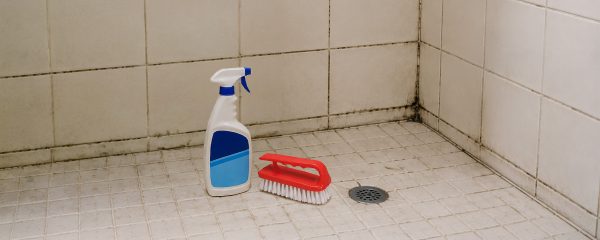
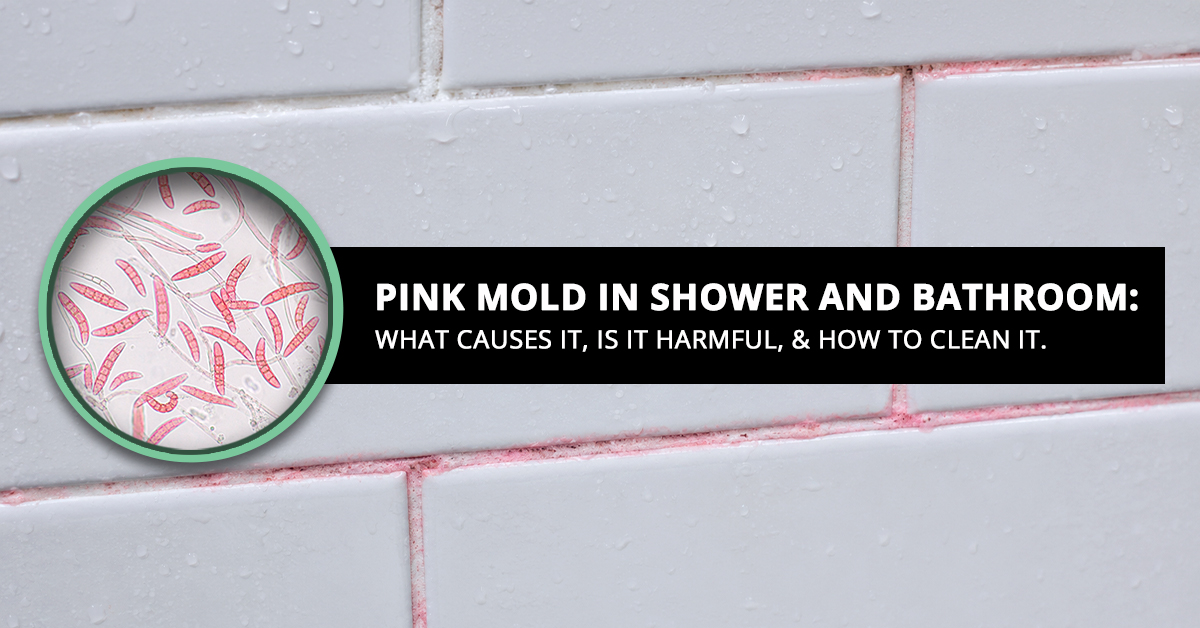
Pink mold typically appears as a slimy, gelatinous film ranging in color from soft pink to reddish-orange. It’s most commonly found along grout lines, around drains, on shower curtain edges, and at the base of the shower floor. Unlike fuzzy or powdery fungal mold, pink mold has a slick, wet surface that looks almost like a thin coat of colored slime.
Here’s what to look for:
- Color: Soft pink to vibrant pink, reddish-orange, or orange-yellow
- Texture: Slimy, gelatinous, and slick to the touch
- Pattern: Flat film or streaks rather than raised fuzzy patches
- Location: Corners, drain edges, grout lines, caulk seams, shower curtain base
It doesn’t look like the black or green fuzzy mold most people picture. That’s part of why it gets dismissed or misidentified. If the residue in your shower has a pinkish tint and feels slippery rather than fuzzy, it’s almost certainly Serratia marcescens.
Pink Fuzzy Mold
If the growth in your shower looks pink and fuzzy rather than slimy, it’s worth taking a closer look.
True pink fuzzy growth in a bathroom is uncommon but possible. In most cases, what appears fuzzy is Serratia marcescens in an earlier or drier growth stage, or it’s a combination of bacterial biofilm and soap scum buildup that creates a textured surface. In rare cases, certain fungal species can produce pinkish growth in high-humidity environments.
The most reliable way to tell them apart:
- Slimy and flat: Almost certainly Serratia marcescens
- Fuzzy and raised: More likely a fungal mold species
- Smell: Both can produce a musty odor, but bacterial biofilm often has a less earthy, more chemical or sour smell
If you’re not sure which one you’re dealing with, treat it as bacterial first and use a disinfectant rather than an antifungal cleaner. If it returns quickly and the texture stays slimy, you’re dealing with Serratia marcescens.
Is Pink Mold Harmful?
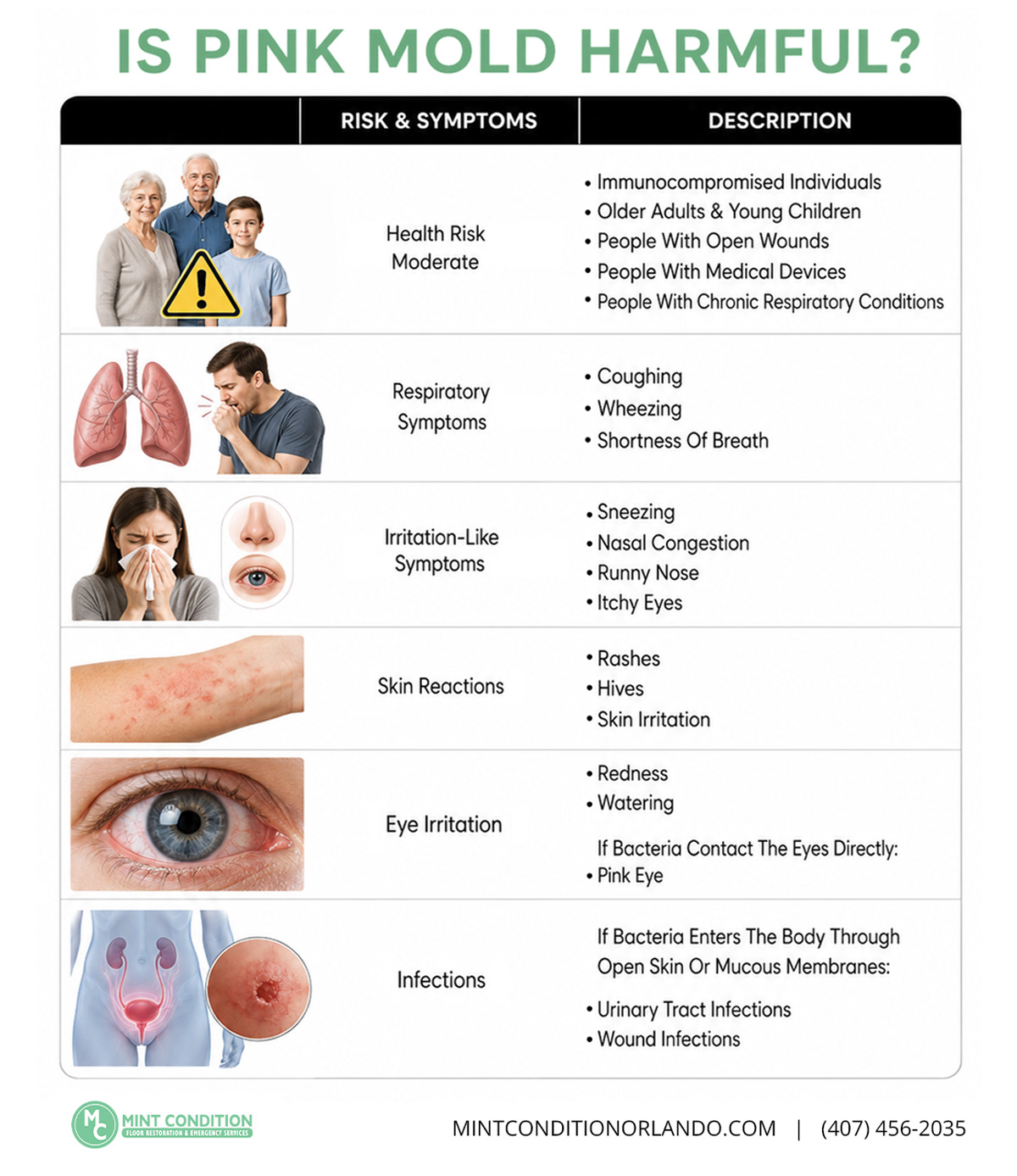
Pink mold (Serratia marcescens) is low to moderate risk for healthy adults, where casual shower exposure is unlikely to cause serious problems. It becomes a genuine health concern for immunocompromised individuals, older adults, young children, and anyone with open wounds or medical devices, where it can cause urinary tract, respiratory, and wound infections.
Serratia marcescens is classified as an opportunistic pathogen. In plain terms, that means it doesn’t typically cause illness in people with healthy immune systems. But it becomes a real concern when it enters the body through places it shouldn’t: open cuts, the eyes, or the respiratory tract.
The risk increases significantly in households with:
- Young children
- Older adults
- People with weakened immune systems
- Anyone with open wounds or medical devices
- People with chronic respiratory conditions
For healthy adults who don’t fall into any of these categories, finding pink mold in the shower is not a reason to panic. But it is a reason to clean it promptly, address the moisture conditions that allowed it to establish, and keep an eye on whether it keeps coming back in the same spot.
Pink Mold Symptoms
Most healthy adults won’t experience noticeable symptoms from brief or occasional exposure to Serratia marcescens in the shower. For sensitive individuals or those with regular exposure in an enclosed bathroom, symptoms can range from mild irritation to infection depending on health status and exposure level.
For sensitive individuals, regular exposure can cause:
- Respiratory symptoms: Coughing, wheezing, shortness of breath.
- Irritation-like symptoms: Sneezing, nasal congestion, runny nose, itchy eyes.
- Skin reactions: Rashes, hives, or skin irritation.
- Eye irritation: Redness, watering, or pink eye if bacteria contacts the eyes directly.
- Infections: Urinary tract infections or wound infections if bacteria enters the body. through open skin or mucous membranes.
Symptoms from pink mold exposure can show up pretty quickly for some people, especially if they’re sensitive to it. For others, it may take days or even weeks of repeated exposure before they notice anything.
You might see issues like coughing, sneezing, throat irritation, breathing discomfort, or even recurring infections if the exposure keeps happening.
Start by getting rid of the source and fixing the moisture problem that’s helping it grow. And if symptoms keep hanging around, it’s a good idea to check in with a healthcare professional.
How Does Pink Mold Form?
Pink mold forms when airborne Serratia marcescens bacteria settle on a warm, damp surface with available organic material to feed on. The bacteria attach, multiply, and develop into the slimy pink or orange-pink biofilm visible on shower floors, grout lines, and curtain edges.
Four conditions drive the formation:
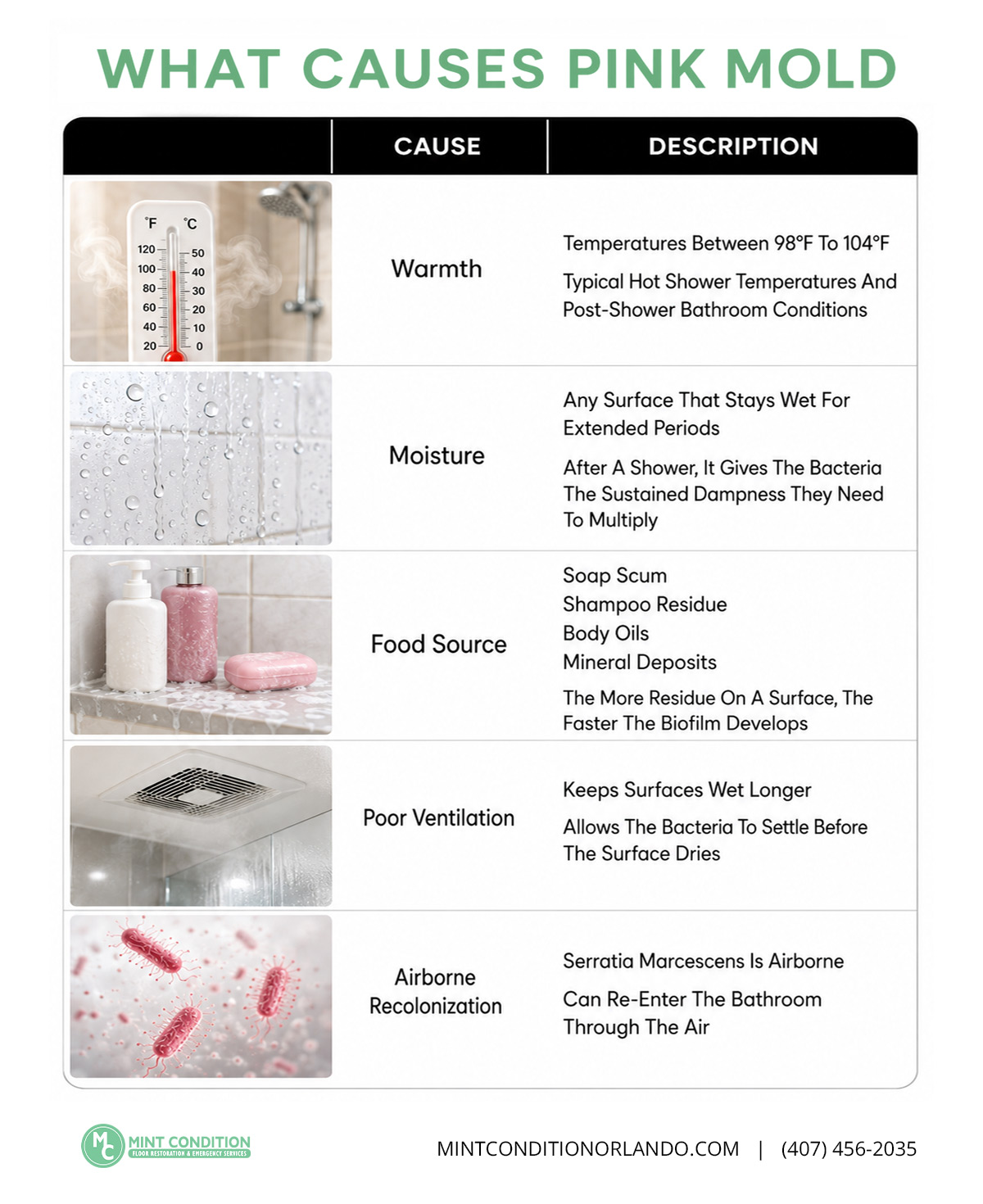
- Warmth: Serratia marcescens grows well between 37°C and 40°C (98°F to 104°F), which overlaps directly with typical hot shower temperatures and post-shower bathroom conditions.
- Moisture: Any surface that stays wet for extended periods after a shower gives the bacteria the sustained dampness it needs to multiply.
- Food source: Soap scum, shampoo residue, body oils, and mineral deposits all act as nutrients. The more residue on a surface, the faster the biofilm develops.
- Low airflow: Poor ventilation keeps surfaces wet longer and allows the bacteria to establish before the surface dries.
What makes Serratia marcescens particularly persistent is that it’s airborne. Even after a thorough cleaning, bacteria can re-enter the bathroom through the air and recolonize wet surfaces within days. That’s not a cleaning failure. That’s just the nature of an airborne organism finding favorable conditions.
What Causes Pink Mold in Shower?
Serratia marcescens causes pink mold in showers by colonizing warm, damp surfaces where soap scum, shampoo residue, and organic deposits are present. Because it’s airborne and already exists in most home environments, it doesn’t need to be introduced from outside. It only becomes visible when moisture, warmth, and residue give it the conditions it needs to multiply.
Why Is There Pink Mold in My Shower?
Pink mold appears in showers because Serratia marcescens bacteria are airborne and recolonize any surface that stays warm, damp, and coated with soap or shampoo residue. Poor ventilation, surfaces that don’t dry fully between showers, and organic buildup in grout and caulk are the most common reasons it keeps coming back.
Let’s address them one by one next:
- Surfaces stay wet too long. If shower walls, grout lines, and the drain area don’t dry out between uses, the bacteria have a continuously favorable environment.
- Soap and shampoo residue isn’t fully rinsed away. That residue is a direct food source. The more buildup on surfaces, the faster pink mold reestablishes after cleaning.
- Ventilation is insufficient. A bathroom that stays humid for hours after a shower keeps surfaces damp and gives airborne bacteria the moisture they need to take hold.
- Grout is porous. Even after surface cleaning, biofilm can remain inside the grout matrix where standard cleaners can’t fully reach it.
The good news is that all of these conditions are addressable. Reducing moisture, improving ventilation, and removing residue consistently are the three most effective things you can do to slow pink mold down significantly.
Pink Mold in Bathroom: Where It Grows
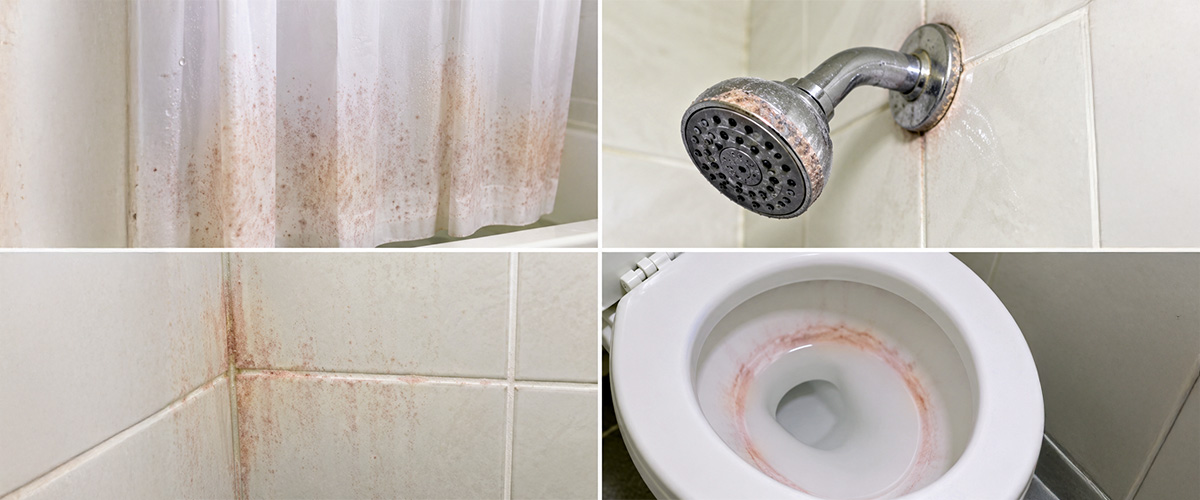
Pink Mold doesn’t grow randomly. It follows a very predictable pattern: wherever warmth, moisture, and organic residue come together with minimal airflow, that’s where you’ll find it.
What Causes Pink Mold in Shower?
The conditions that cause pink mold in the shower come down to the same four factors every time: warmth, moisture, organic residue, and poor airflow. Here is how each one plays out specifically in the shower environment.
Warm and Humid Environment
Hot showers basically create the cozy, warm conditions Serratia marcescens loves. Add steam, damp grout, wet corners, and poor airflow, and your bathroom can stay in that “perfect growth zone” longer than you think.
According to IICRC standards, bacterial and mold growth on damp surfaces can start within 24 to 48 hours of moisture exposure, in that scenario in a bathroom where steam lingers after every shower, that drying window barely has a chance to reset before the next shower adds more moisture.
That’s why pink mold can seem like it comes back out of nowhere. If the surfaces never fully dry, the bacteria gets a head start every single day.
Soap Scum and Fatty Residue
Serratia marcescens feeds on the phosphorus and nitrogen-containing compounds found in soap scum, shampoo residue, and body oils. This is why pink mold shows up so consistently in showers and so rarely on dry bathroom surfaces with no residue. Remove the food source consistently, and you significantly slow recolonization.
Airborne Recolonization
Because Serratia marcescens is airborne, it can re-enter the bathroom through the air and settle on wet surfaces within days of a thorough cleaning. This is the factor most people don’t account for, and it’s why pink mold feels impossible to eliminate permanently. You can clean it off completely today and have a new colony starting within 48 hours if the surface stays damp.
Poor Ventilation
An exhaust fan that is undersized, clogged, or not run long enough after a shower leaves humid air sitting in the bathroom for hours. That humidity keeps surfaces damp, which keeps conditions favorable for Serratia marcescens to recolonize after cleaning.
Are you dealing with pink mold on your shower? Go to the cleaning steps to learn how to remove it safely.
Pink Mold on Shower Curtain
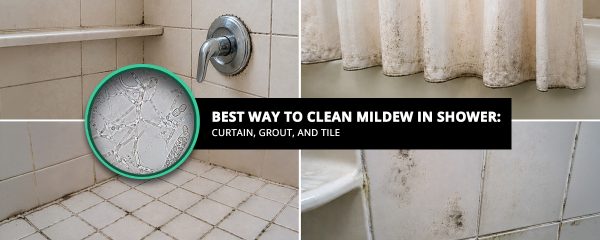
Pink mold on a shower curtain typically appears as a slimy pink or orange-pink film along the bottom edge and in the folds where water collects longest after a shower.
The shower curtain is one of the most common locations for Serratia marcescens because it checks every box: it stays damp for hours, it accumulates soap and shampoo residue, and it rarely gets the airflow needed to dry fully between showers. Curtains that bunch against the wall after use are especially vulnerable because the folds trap moisture and never fully dry out.
Here’s how to tell the difference between pink mold and soap scum on a curtain:
- Pink mold: Slimy, pink to orange-pink, resists wiping, may have a faint sour or musty odor
- Soap scum: White to gray, chalky texture, wipes off relatively easily
Are you dealing with pink mold on your shower curtain? Go to the cleaning steps to learn how to remove it safely.
Pink Mold on Shower Head
Pink mold on a showerhead appears as a slimy pink or orange-pink film on the nozzle face, around the fixture base, and inside the nozzle openings where water sits between uses.
The shower head is a spot most people forget to clean, and it’s an ideal environment for Serratia marcescens. Warm water runs through it daily, mineral deposits accumulate around the nozzle openings, and water sits inside the fixture long after the shower is off.
Are you dealing with pink mold on shower head? Go to the cleaning steps to learn how to remove it safely.
Pink Mold on Wall
Pink mold on bathroom walls typically appears as a thin, slimy pink or orange-pink film on painted drywall surfaces near the shower, particularly in corners and along the lower sections of the wall where moisture and soap splatter accumulate.
Walls outside the shower are easy to overlook because they don’t get soaked the same way tile does. But they’re still exposed to all that humid bathroom air, plus tiny bits of soap residue, body oils, and moisture that drift around after every shower.
That gives pink mold a chance to show up outside the shower area, too. Serratia marcescens can settle on painted walls more easily than on glazed tile because paint is slightly more porous and has more texture for that slimy biofilm to grab onto.
If you notice pinkish spots or streaks on bathroom walls, especially near the shower, it may be the same moisture-and-residue problem showing up in a less obvious place.
If you’re seeing pink film on the wall rather than in the shower itself, poor ventilation is almost always a contributing factor. The bacteria aren’t just colonizing the wall. They’re colonizing the wall because the humid air from the shower is staying in the room long enough to keep the wall surface damp.
Are you dealing with pink mold on your wall? Go to the cleaning steps to learn how to remove it safely.
Pink Mold in Toilet Bowl
Pink mold in a toilet bowl appears as a pink to reddish-orange ring or film at the waterline, under the rim, and around the drain opening at the base of the bowl.
The toilet bowl is one of the most common locations for Serratia marcescens outside the shower. Standing water, mineral deposits at the waterline, and limited airflow inside the bowl create ideal conditions. The bacteria feed on mineral deposits and organic matter in the water and on the bowl surface.
Are you dealing with pink mold on your toilet bowl? Go to the cleaning steps to learn how to remove it safely.
How to Clean Pink Mold in Shower
Getting rid of pink mold starts with using the right type of cleaner. Because Serratia marcescens is a bacterium and not a fungus, you need a disinfectant, not an antifungal mold cleaner. On non-porous surfaces like glazed tile, glass, and fixtures, a good disinfectant will kill it on contact. On grout and caulk, the challenge is penetration depth, and that’s where recurring pink mold becomes harder to resolve with household products alone.
Vinegar for Pink Mold
⚠️ Not recommended for natural stone, quartz, or marble. Vinegar’s acidity can permanently etch and dull these surfaces.
⚠️Disclaimer: Use these cleaning methods occasionally and at your own risk. Always follow the manufacturer’s cleaning instructions. Materials vary and may react differently to certain products, which could cause damage or discoloration. Test on a small hidden area first before applying any product to a visible surface. For stubborn mold or growth that keeps coming back, contact a certified professional. Never mix cleaning products. Mixing bleach with vinegar or hydrogen peroxide produces toxic chlorine gas.
Mint Condition Pro tip: Vinegar is not an EPA-registered disinfectant, so it should not be used alone to eliminate Serratia marcescens. What it does well is break down the soap scum, mineral deposits, and organic residue that the bacteria feed on, making it a useful first step before applying an EPA-registered disinfectant. Think of vinegar as the prep work and the disinfectant as the actual kill step. Using both in sequence gives you a more complete result than either one alone.
On grout, both have their limits. Vinegar reduces visible surface buildup but cannot reach bacteria settled deeper inside the grout matrix. And used repeatedly as a regular cleaner, its acidity gradually breaks down the calcium carbonate binder in cement grout, making it more porous and giving bacteria an easier place to reestablish after cleaning.
Materials, Tools, and Supplies You’ll Need
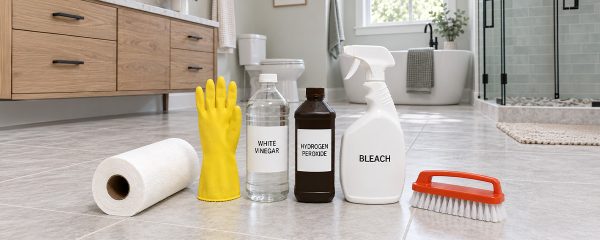
- Undiluted plain white vinegar
- EPA-registered bathroom disinfectant spray
- Spray bottle
- Stiff-bristled scrub brush
- Old toothbrush for grout lines and caulk seams
- Clean cloth or paper towels
- Protective gloves
- Safety glasses
Step 1: Apply the vinegar directly.
Pour undiluted white vinegar into a spray bottle and apply it generously to the affected area. Do not dilute it. Vinegar works at this stage as a residue loosener and biofilm reducer, not as a disinfectant. You will follow up with an EPA-registered disinfectant after scrubbing.
Step 2: Let it sit.
Leave the vinegar on the surface for at least 30 to 60 minutes without wiping. For grout lines and caulk seams, press a folded paper towel soaked in vinegar against the area during the dwell time to keep the product in direct contact rather than running off.
Step 3: Scrub, rinse, and dry.
Scrub the area firmly with a stiff-bristled brush and use an old toothbrush to work into grout lines and caulk seams. Rinse thoroughly with clean water. Then spray an EPA-registered bathroom disinfectant onto the cleaned surface and allow it to dwell for the label’s required contact time before rinsing again. Dry the surface completely with a clean cloth immediately after. Leaving moisture behind after cleaning creates the exact conditions that allow Serratia marcescens to recolonize within days.
⚠️ Important: Use only one cleaning product at a time. Never mix bleach with vinegar, hydrogen peroxide, or any other cleaner. Mixing bleach with either product produces toxic chlorine gas.
How to Remove Pink Mold with Hydrogen Peroxide
⚠️ Not recommended for natural stone, marble, or colored grout. May cause discoloration with repeated use.
⚠️Disclaimer: Use these cleaning methods occasionally and at your own risk. Always follow the manufacturer’s cleaning instructions. Materials vary and may react differently to certain products, which could cause damage or discoloration. Test on a small hidden area first before applying any product to a visible surface. For stubborn mold or growth that keeps coming back, contact a certified professional. Never mix cleaning products. Mixing bleach with vinegar or hydrogen peroxide produces toxic chlorine gas.
Materials, Tools, and Supplies You’ll Need
- 3% hydrogen peroxide solution (standard drugstore concentration)
- Spray bottle
- Stiff-bristled scrub brush
- Old toothbrush for grout lines and caulk seams
- Clean cloth or paper towels
- Protective gloves
- Safety glasses
Step 1: Apply the hydrogen peroxide.
Pour the 3% hydrogen peroxide solution into a spray bottle and apply it directly to the affected area. The standard drugstore concentration is exactly what you need. No mixing or diluting required.
Step 2: Let it sit.
Leave it on the surface for 10 to 15 minutes. Hydrogen peroxide works by releasing oxygen that breaks down the bacterial biofilm structure.
Step 3: Scrub, rinse, and dry.
Scrub firmly with a stiff-bristled brush and use an old toothbrush for grout lines and caulk seams. Rinse thoroughly with clean water and dry all surfaces completely with a clean cloth immediately after rinsing. A dry surface is the single most effective barrier against Serratia marcescens recolonization.
Pro tip: Hydrogen peroxide works well on non-porous surfaces like glazed tile, tubs, and bathroom fixtures. If the pink mold or biofilm is sitting on the surface, it can help break it down and clean it up.
Grout is a different story. Because grout is porous, hydrogen peroxide can reduce the visible biofilm, but it usually won’t reach deep into the grout itself.
So if the grout still looks discolored after treatment and full drying, that’s a sign the bacteria may have settled deeper than hydrogen peroxide can reach.
⚠️ Important: Use only one cleaning product at a time. Never mix bleach with vinegar, hydrogen peroxide, or any other cleaner. Mixing bleach with either product produces toxic chlorine gas.
⚠️ Warning: Do Not Use Bleach, Vinegar, And Hydrogen Peroxide Regularly on Grout
Bleach, vinegar, and hydrogen peroxide are acceptable for occasional mold treatment on grout surfaces. Used repeatedly as regular cleaners, all three cause damage:
- Bleach: Cannot penetrate porous grout fully. Repeated use degrades the grout binder and lightens staining without eliminating the bacteria below the surface.
- Vinegar: The acidity gradually breaks down the calcium carbonate binder in cement grout, making it more porous over time and creating better conditions for bacteria to return.
- Hydrogen peroxide: Minimal substrate damage with occasional use, but like bleach and vinegar, it does not penetrate the grout matrix to reach embedded bacteria.
How to Get Rid of Pink Mold in the Bathroom
Getting rid of pink mold starts with removing both the visible buildup and the conditions that keep bringing it back. The right cleaner can handle the surface growth, but drying the area, improving airflow, and reducing soap residue are what help stop it from returning so quickly.
Below are the most common places pink mold shows up in the bathroom, along with the best way to clean each one.
⚠️Disclaimer: Use these cleaning methods occasionally and at your own risk. Always follow the manufacturer’s cleaning instructions. Materials vary and may react differently to certain products, which could cause damage or discoloration. Test on a small hidden area first before applying any product to a visible surface. For stubborn mold or growth that keeps coming back, contact a certified professional. Never mix cleaning products. Mixing bleach with vinegar or hydrogen peroxide produces toxic chlorine gas.
How to Get Rid of Pink Mold on Shower Curtain
⚠️ Not recommended for delicate or dry-clean-only fabric curtains. Always check the manufacturer’s care label before washing.
How to Get Rid of Pink Mold on Fabric Curtains
Materials, Tools, and Supplies You’ll Need
- Regular laundry detergent
- Laundry disinfectant or bleach for white fabric only
- One cup of white vinegar for the rinse cycle
- Washing machine
- Clean dry towel or drying rack
Step 1: Pre-treat visibly stained areas
Apply a small amount of undiluted white vinegar directly to pink mold stains before washing. Let it sit for 10 to 15 minutes to loosen the biofilm before the wash cycle begins.
Step 2: Machine wash in hot water.
Wash the curtain on the hottest water setting the fabric allows with regular laundry detergent. Add one cup of white vinegar to the rinse cycle to help break down soap residue and biofilm on the fabric. For more reliable disinfection of Serratia marcescens on fabric, add a laundry disinfectant product to the wash cycle per the manufacturer’s instructions. Hot water plus detergent plus a laundry disinfectant gives you the most complete result.
Step 3: Dry completely
Hang the curtain fully extended on the rod or a drying rack immediately after washing. Never bunch it against the wall while still damp. A curtain that stays folded and wet will recolonize within days.
How to Get Rid of Pink Mold on Plastic or Vinyl Liners
Materials, Tools, and Supplies You’ll Need
- Disinfectant spray (choose one option below, DO NOT MIX)
- EPA-registered disinfectant spray
- 1:1 bleach and water solution
- Undiluted 3% hydrogen peroxide
- Spray bottle
- Soft-bristled scrub brush
- Clean cloth or paper towels
- Protective gloves
- Safety glasses
Step 1: Apply your chosen cleaner
Spray the disinfectant, bleach solution, or hydrogen peroxide directly onto the affected areas of the liner, paying particular attention to the bottom edge and folds where water collects longest.
Step 2: Let it sit
Allow the cleaner to dwell for 10 to 15 minutes. This contact time is what allows the product to penetrate and break down the bacterial biofilm rather than just reducing surface visibility.
Step 3: Scrub, rinse, and dry
Scrub firmly with a soft-bristled brush, rinse thoroughly with clean water, and hang the liner fully extended to dry completely. Never return it to a bunched position against the wall while still damp.
⚠️ Important: Use only one cleaning product at a time on plastic or vinyl liners. Never mix bleach with vinegar, hydrogen peroxide, or any other cleaner. Mixing bleach with either product produces toxic chlorine gas or peracetic acid, both of which are harmful when inhaled.
Pro tip: If pink mold returns on a plastic or vinyl liner within 2 weeks of cleaning, consider replacing it. Liners are inexpensive, and some have built-in mildew resistance and antimicrobial protection. To prevent future mold growth, spread the curtain out completely after every shower to allow it to dry.
How to Get Rid of Pink Mold on Shower Head
⚠️ Not recommended for shower heads with plastic or rubber components that may be damaged by prolonged vinegar exposure. Check manufacturer guidelines before soaking.
Materials, Tools, and Supplies You’ll Need
- Undiluted plain white vinegar
- EPA-registered bathroom disinfectant spray
- Plastic bag large enough to submerge the shower head nozzle
- Rubber band or zip tie to secure the bag
- Old toothbrush
- Clean cloth or paper towels
- Protective gloves
- Safety glasses
Step 1: Fill and secure the soaking bag
Pour enough undiluted white vinegar into the plastic bag to fully submerge the shower head nozzle. Place the bag around the shower head and secure it firmly with a rubber band or zip tie so the nozzle stays fully submerged during the soak. Vinegar is effective at breaking down the mineral deposits and soap scum buildup that Serratia marcescens feeds on inside nozzle openings. For the disinfection step, you will follow up with an EPA-registered bathroom disinfectant after the soak.
Step 2: Let it soak
Leave the shower head submerged for at least 30 minutes. For heavier buildup or visible pink residue inside the nozzle openings, leave it for up to a few hours. The longer dwell time allows the vinegar to break down mineral deposits and biofilm buildup inside the nozzle more effectively before the disinfection step.
Step 3: Scrub, rinse, and dry
Remove the bag and scrub the nozzle face firmly with an old toothbrush, paying particular attention to the individual nozzle openings where buildup accumulates. Then spray an EPA-registered bathroom disinfectant on the nozzle face and exterior surfaces and allow it to dwell for the label’s required contact time. Run hot water through the shower head for a full minute to flush out loosened deposits and residue. Dry the exterior completely with a clean cloth immediately after rinsing.
⚠️ Important: Use only one cleaning product at a time. Never mix bleach with vinegar, hydrogen peroxide, or any other cleaner. Mixing bleach with vinegar or hydrogen peroxide produces toxic chlorine gas or peracetic acid, both of which are harmful when inhaled.
How to Get Rid of Pink Mold on Bathroom Wall
⚠️ Not recommended for flat or matte paint finishes. Scrubbing and disinfectants can strip or dull these surfaces. Use a soft cloth and gentle pressure only. Always check paint manufacturer guidelines before applying any cleaner.
Materials, Tools, and Supplies You’ll Need
- EPA-registered bathroom disinfectant spray or 3% hydrogen peroxide
- Spray bottle
- Soft-bristled scrub brush or clean sponge
- Clean cloth or paper towels
- Protective gloves
- Safety glasses
Step 1: Apply your chosen cleaner
Spray the EPA-registered disinfectant or 3% hydrogen peroxide directly onto the affected wall surface, covering the pink film and a few inches beyond the visible growth. Apply generously enough that the surface stays visibly wet during the dwell time.
Step 2: Let it sit.
Allow the cleaner to dwell for 10 to 15 minutes without wiping. This contact time is what allows the product to penetrate and break down the Serratia marcescens biofilm rather than just reducing surface visibility. Do not rush this step.
Step 3: Scrub, rinse, and dry.
Scrub gently with a soft-bristled brush or sponge. On painted walls, avoid abrasive scrubbers that can damage the paint surface. Wipe away residue with a clean damp cloth, then dry the wall completely with a dry cloth immediately after. Leaving moisture on the wall surface after cleaning creates the exact conditions that allow Serratia marcescens to recolonize.
⚠️ Important: Use only one cleaning product at a time. Never mix bleach with vinegar, hydrogen peroxide, or any other cleaner. Mixing bleach with vinegar or hydrogen peroxide produces toxic chlorine gas or peracetic acid, both of which are harmful when inhaled.
Pro tip: If pink mold keeps returning on the same section of bathroom wall after cleaning, the problem is almost always ventilation, not the wall itself. Serratia marcescens recolonizes painted walls quickly when humid air from the shower stays in the room long enough to keep the surface damp. Cleaning removes what’s visible. Running the exhaust fan for at least 20 minutes or using a dehumidifier after every shower is what stops it from coming back.
How to Get Rid of Pink Mold in Toilet Bowl
⚠️ Not recommended for toilets with colored porcelain or specialty coatings. Check manufacturer guidelines before applying bleach-based cleaners.
Materials, Tools, and Supplies You’ll Need
- Toilet bowl cleaner or diluted bleach solution (1 part bleach to 10 parts water)
- Toilet brush with firm bristles
- Under-rim brush or old toothbrush for tight areas
- Protective gloves
- Safety glasses
Step 1: Apply your chosen cleaner.
Pour toilet bowl cleaner or a diluted bleach solution directly into the bowl, making sure it reaches under the rim where Serratia marcescens biofilm accumulates most heavily. Apply enough to coat the waterline, the bowl surface, and the inside of the rim completely.
Step 2: Let it sit.
Allow the cleaner to dwell for at least 10 minutes without flushing. For heavier pink buildup at the waterline or under the rim, extend the dwell time to 20 to 30 minutes. The contact time is what allows the cleaner to break down the bacterial biofilm rather than just reducing surface visibility.
Step 3: Scrub, rinse, and dry.
Scrub firmly under the rim, around the waterline, and down to the drain opening with a toilet brush. Use an under-rim brush or old toothbrush to reach tight spots under the rim where buildup hides. Flush to rinse completely. Dry the exterior rim and seat with a clean cloth immediately after to remove any surface moisture.
⚠️ Important: Use only one cleaning product at a time. Never mix bleach with vinegar, hydrogen peroxide, or any other cleaner. Mixing bleach with vinegar or hydrogen peroxide produces toxic chlorine gas or peracetic acid, both of which are harmful when inhaled.
Pro tip: If pink mold keeps returning in the toilet despite regular cleaning, a combination of small habits makes the biggest difference: flush regularly, scrub under the rim weekly, reduce overall bathroom humidity, and do not let the bowl sit unused for extended periods. In guest bathrooms or rarely used toilets, flushing daily prevents standing water from becoming a breeding ground. But flushing alone is not enough. Good ventilation and consistent cleaning matter just as much.
How to Prevent Pink Mold in Shower
The most effective way to prevent pink mold in the shower is to remove moisture and residue before they have a chance to build up. Squeegee shower surfaces after each use, run the exhaust fan for at least 20 minutes after showering, rinse soap residue from tile and grout regularly, and use a dehumidifier after showers when bathroom humidity is at its highest.
When you consistently reduce moisture and organic buildup, you make it much harder for Serratia marcescens to recolonize after cleaning.
Here are the habits that make the biggest difference:
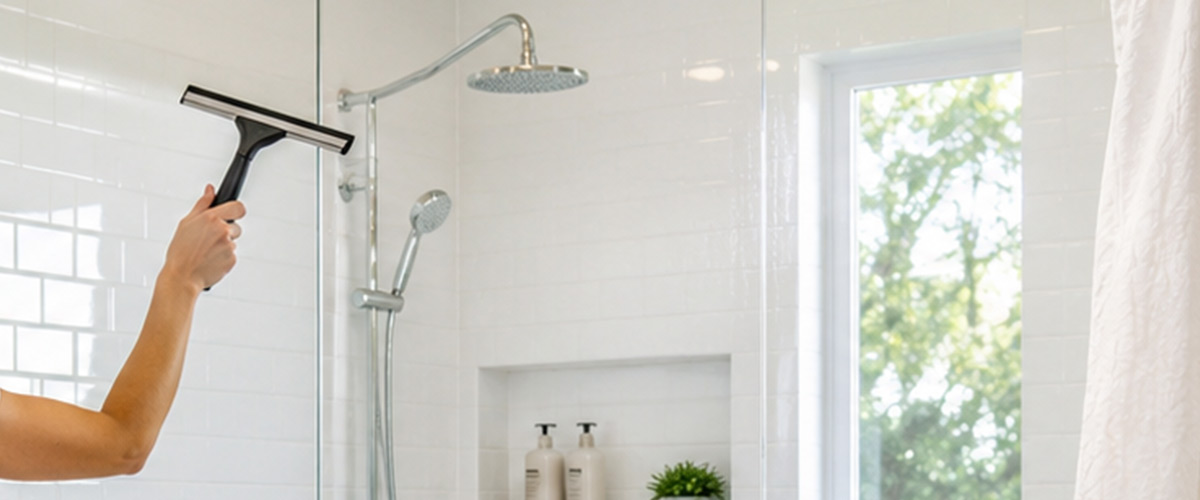
- Squeegee shower walls and doors after every shower. Removing that surface water right away is one of the best daily habits for slowing pink mold growth. The less moisture sitting on the tile, glass, grout, and caulk, the less opportunity Serratia marcescens has to settle in and start forming that slimy pink film again.
- Run the exhaust fan during the shower and for at least 20 minutes after. This reduces ambient humidity and helps surfaces dry faster.
- Use a dehumidifier right after showering and run it for 30 to 60 minutes, or until the bathroom humidity drops back below 50%.
- Rinse soap scum and shampoo residue off surfaces regularly. Don’t let residue build up between deep cleanings. A quick rinse of the walls, floor, and drain area after each shower removes the food source.
- Wash shower curtains and liners regularly. At minimum once a month. More often if pink film appears frequently.
- Keep the shower curtain or door fully open after showering. This maximizes airflow and speeds up drying.
- Clean the drain area weekly. The drain is where residue accumulates fastest and where Serratia marcescens establishes most quickly.
- Seal grout annually. Sealed grout is less porous and gives bacteria fewer places to establish below the surface.
When DIY Is Not Enough For Removing Pink Mold
Surface cleaning works well for pink mold caught early on non-porous surfaces. Three signals tell you when it’s time to go beyond DIY.
Pink mold returns within two weeks of cleaning.
If it’s back in the same spot that quickly, the biofilm has established itself inside the grout matrix or caulk seam where surface cleaners can’t reach it. Cleaning the surface isn’t addressing the source.
Grout stays discolored after scrubbing.
If grout doesn’t return to its original color after a thorough cleaning and full drying, bacteria have penetrated the grout itself. Household disinfectants are not reaching the problem.
A persistent sour or musty odor remains after cleaning.
If your shower still smells sour, or musty after you’ve cleaned all the visible surface, there’s a good chance biofilm is hiding somewhere you can’t see. Common trouble spots include inside the grout, behind old caulk, or under a failing tile seal.
For pink mold that keeps returning in grout lines despite regular cleaning, professional tile and grout cleaning reaches what household products can’t. Mint Condition’s IICRC-certified tile and grout cleaning technicians use professional-grade extraction and treatment methods that go beyond surface cleaning to address biofilm at the grout level. If pink mold in your shower grout keeps coming back, that’s exactly the situation our tile and grout cleaning service is designed for.
For serious bacterial growth, it’s best not to treat it like a simple bathroom cleaning job.
If the pink mold covers a large area, has spread to walls or subfloor materials, or keeps coming back in a way that seems hard to control, it may be time to call a certified specialist.
Pink Mold Frequently Asked Questions
These are the questions people ask most often once they’ve spotted pink mold in their shower and are trying to figure out what it actually is and what to do about it.
Is Pink Mold in the Shower Normal?
Yes, pink mold in the shower is very common. Serratia marcescens is an airborne bacterium found in most home environments. It shows up in showers because bathrooms provide exactly what it needs: warmth, moisture, and soap residue. Finding it doesn’t mean something is wrong with your home specifically. It means the conditions in your bathroom are favorable for bacterial growth, and those conditions can be changed with consistent cleaning habits and better ventilation.
Is Pink Mold Toxic?
Pink mold is not considered highly toxic, but it’s not completely harmless either. Serratia marcescens is an opportunistic pathogen, meaning it doesn’t typically cause illness in healthy people but can cause infections when it enters the body through open wounds, the eyes, or the respiratory tract. It does not produce mycotoxins the way some mold species do. For healthy adults, the risk from normal bathroom exposure is low. For immunocompromised individuals, older adults, young children, or anyone with open wounds or medical devices, the risk is meaningfully higher, and the growth should be addressed promptly.
Is Pink Mold as Bad as Black Mold?
No. Pink mold and black mold are very different in terms of health risk. Black mold, most commonly Stachybotrys chartarum, produces mycotoxins linked to serious respiratory illness, headaches, and fatigue, and is classified as toxigenic. Serratia marcescens is a bacterium that can cause opportunistic infections in vulnerable individuals but does not produce mycotoxins. For most healthy adults, pink mold is a significantly lower health concern than black mold. That said, neither should be left unaddressed in a bathroom you use every day.
Learn more about black mold identification, health risks, and how to remove it in our guide to
Black Mold in the Bathroom: What It Looks Like, Where It Grows, and How to Remove It.
How to Get Rid of Serratia Marcescens?
To get rid of Serratia marcescens, clean affected surfaces with an EPA-registered bathroom disinfectant, a 1:1 bleach and water solution on non-porous surfaces, or hydrogen peroxide at 3% concentration. Apply the cleaner, allow it to dwell for 10 to 15 minutes, scrub thoroughly, rinse, and dry the surface completely. On grout, no household cleaner fully penetrates the grout matrix to eliminate biofilm below the surface, which is why it returns in the same spots after cleaning.
The longer-term solution is removing the conditions that allow recolonization: reducing moisture, improving ventilation, rinsing soap residue after every shower, and keeping surfaces as dry as possible between uses.
⚠️ Important: Use only one cleaning product at a time. Never mix bleach with vinegar, hydrogen peroxide, or any other cleaner. Mixing bleach with either product produces toxic chlorine gas.
What Happens If I Touch Serratia Marcescens?
Touching Serratia marcescens with bare hands is generally harmless for healthy adults. Casual skin contact during normal bathroom use or cleaning is unlikely to cause problems. The risk increases significantly if the bacteria enter the body through an open wound, contact the eyes, or are ingested. Always wear gloves when cleaning pink mold, wash your hands thoroughly with soap and warm water immediately after, and avoid touching your eyes or mouth during the cleaning process. If you have an open wound that comes into contact with the bacteria, clean it immediately, keep it covered, and monitor for signs of infection.
How Does Serratia Marcescens Get in the Shower?
Serratia marcescens is airborne. It exists naturally in soil, dust, and water and travels through the air, settling on surfaces wherever warmth, moisture, and organic residue are available. It doesn’t enter your bathroom through a specific source you can eliminate. It’s already present in the environment and simply colonizes your shower when conditions are favorable. That’s why prevention focuses on removing favorable conditions, primarily moisture and residue, rather than trying to keep the bacteria out entirely.
Can Bleach Get Rid of Pink Mold?
Yes, diluted bleach kills Serratia marcescens on contact on non-porous surfaces like glazed tile, glass, and metal fixtures. Mix one part bleach with ten parts water, apply, let it sit for 10 minutes, scrub, rinse thoroughly, and dry completely. On porous surfaces like grout and caulk, bleach cannot fully penetrate below the surface to reach bacteria embedded in the grout matrix. It removes the visible pink film but leaves the bacterial colony below intact, which is why pink mold returns in the same grout spots after bleach treatment.
⚠️ Important: Never mix bleach with vinegar, hydrogen peroxide, or any other cleaner. Mixing bleach with either product produces toxic chlorine gas. Always use bleach in a well-ventilated bathroom.
Conclusion
Pink mold in the shower is frustrating for one big reason: it keeps coming back.
Now you know why. Serratia marcescens can travel through the air, feed on soap residue, and recolonize wet surfaces pretty quickly. So cleaning the surface is only half the battle. The other half is getting rid of the conditions that let it settle back in.
For surface-level pink mold on tile, fixtures, and shower curtains, the cleaning methods above are a good place to start. Use an EPA-registered bathroom disinfectant or hydrogen peroxide, dry everything completely after cleaning, and keep up with small daily habits that cut down on moisture and residue.
But if pink mold keeps coming back in the same grout lines, even after regular cleaning and better bathroom habits, that’s usually a sign the biofilm has moved deeper into the grout. And once it gets inside that porous grout matrix, household products can only do so much.
That’s when professional tile and grout cleaning can make a real difference. It goes beyond surface cleaning and helps remove the buildup that regular bathroom cleaners can’t fully reach.
Still seeing pink mold come back in the same grout lines no matter how often you clean? That’s the clearest sign the biofilm has moved past what a scrub brush can fix.
Mint Condition’s IICRC-certified tile and grout cleaning technicians specialize in professional tile and grout cleaning that goes beyond surface treatment to address biofilm at the grout level, using eco-friendly, family and pet safe methods. Serving households across Orlando and Central Florida, we’re ready to help you get your shower back to clean and keep it that way.
Call us at (407) 456-2035 or fill out a contact form today for your free estimate.
References
- IICRC S520 Standard for Professional Mold Remediation: https://www.iicrc.org/page/IICRCStandards
- U.S. Environmental Protection Agency, Mold and Health: https://www.epa.gov/mold/mold-and-health
- Centers for Disease Control and Prevention, Basic Facts About Mold and Dampness: https://www.cdc.gov/mold/faqs.htm
- CDC, Serratia marcescens: https://www.cdc.gov/hai/organisms/serratia-marcescens.html
- U.S. Environmental Protection Agency, Registered Antimicrobial Products: https://www.epa.gov/pesticide-registration/registered-antimicrobial-products
- American Academy of Allergy, Asthma and Immunology, Mold Allergy: https://www.aaaai.org/tools-for-the-public/conditions-library/allergies/mold-allergy