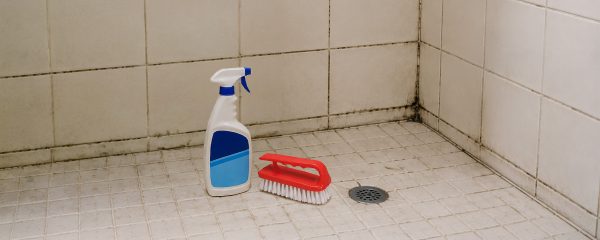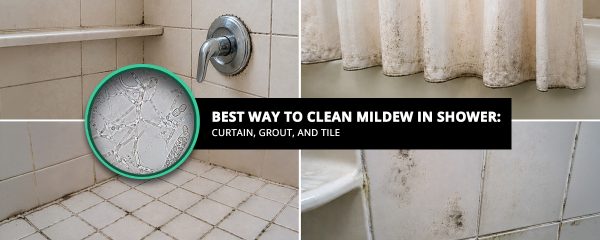
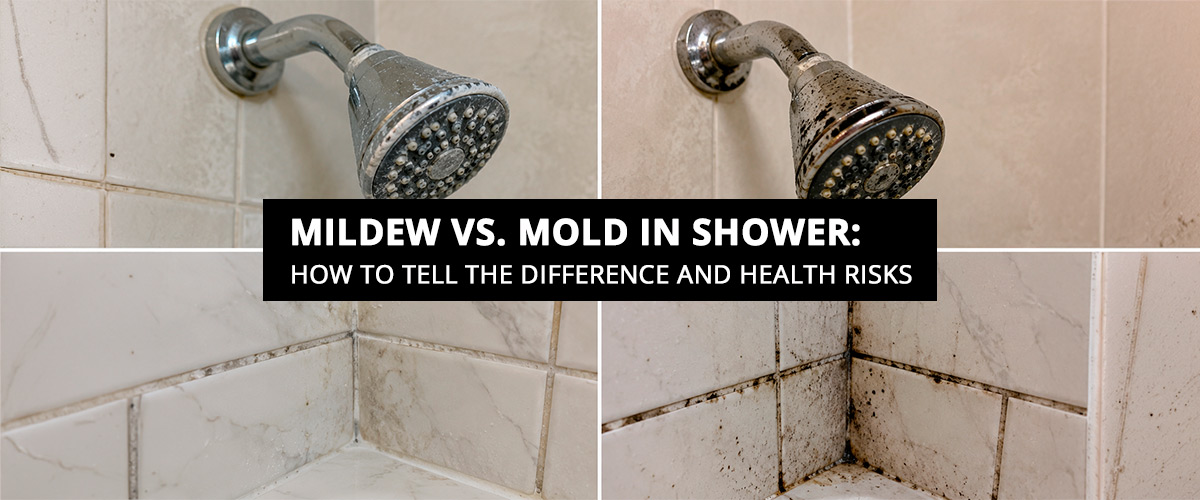
Mildew is a surface fungus that stays flat, looks powdery or downy, and is usually white, gray, or light yellow. Mold is a more invasive fungus that penetrates porous materials like grout and caulk, appears raised, fuzzy, or slimy, and comes in darker colors. Mildew wipes off easily. Mold resists cleaning and keeps coming back.
If you’re standing in your shower and notice something growing on the grout or along the caulk line that looks white and powdery, or dark and fuzzy, I’m sure that you’re wondering what it could be.
Here’s the thing: not everything growing in your shower is the same, and the difference between mildew and mold matters more than most people realize.
Mildew is usually the easier one to deal with. It tends to sit on the surface and can often be cleaned with the right bathroom cleaner and a little scrubbing.
Mold is different. It can work its way deeper into grout, caulk, and damp corners, which is why it may keep coming back no matter how many times you clean the surface. If that spot keeps returning, smells musty, or refuses to fully wipe away, you may be dealing with more than a simple surface nuisance.
This guide gives you a clear, practical way to tell them apart, understand the health risks, and know what to do next.
Key Takeaways
- Mildew is a surface fungus. It stays flat, looks powdery or downy, and is usually white, gray, or yellowish. It’s the easier one to deal with.
- Mold is a deeper, more invasive fungus. It penetrates porous materials like grout and caulk, appears raised, fuzzy, or slimy, and comes in darker colors like black, green, or brown.
- Mildew and mold both thrive in the same damp conditions. Mildew often appears first because it colonizes surfaces quickly. If the moisture is not corrected, conditions become increasingly favorable for mold to establish alongside it and penetrate deeper into porous surfaces.
- You can tell mold and mildew apart with the wipe test. Mildew wipes off easily. Mold resists cleaning and often leaves a stain behind.
- Both thrive in warm, humid, poorly ventilated bathrooms. Controlling moisture is the most effective long-term prevention strategy.
- For mold embedded in grout that keeps returning despite cleaning, professional tile and grout cleaning reaches what household products can’t.
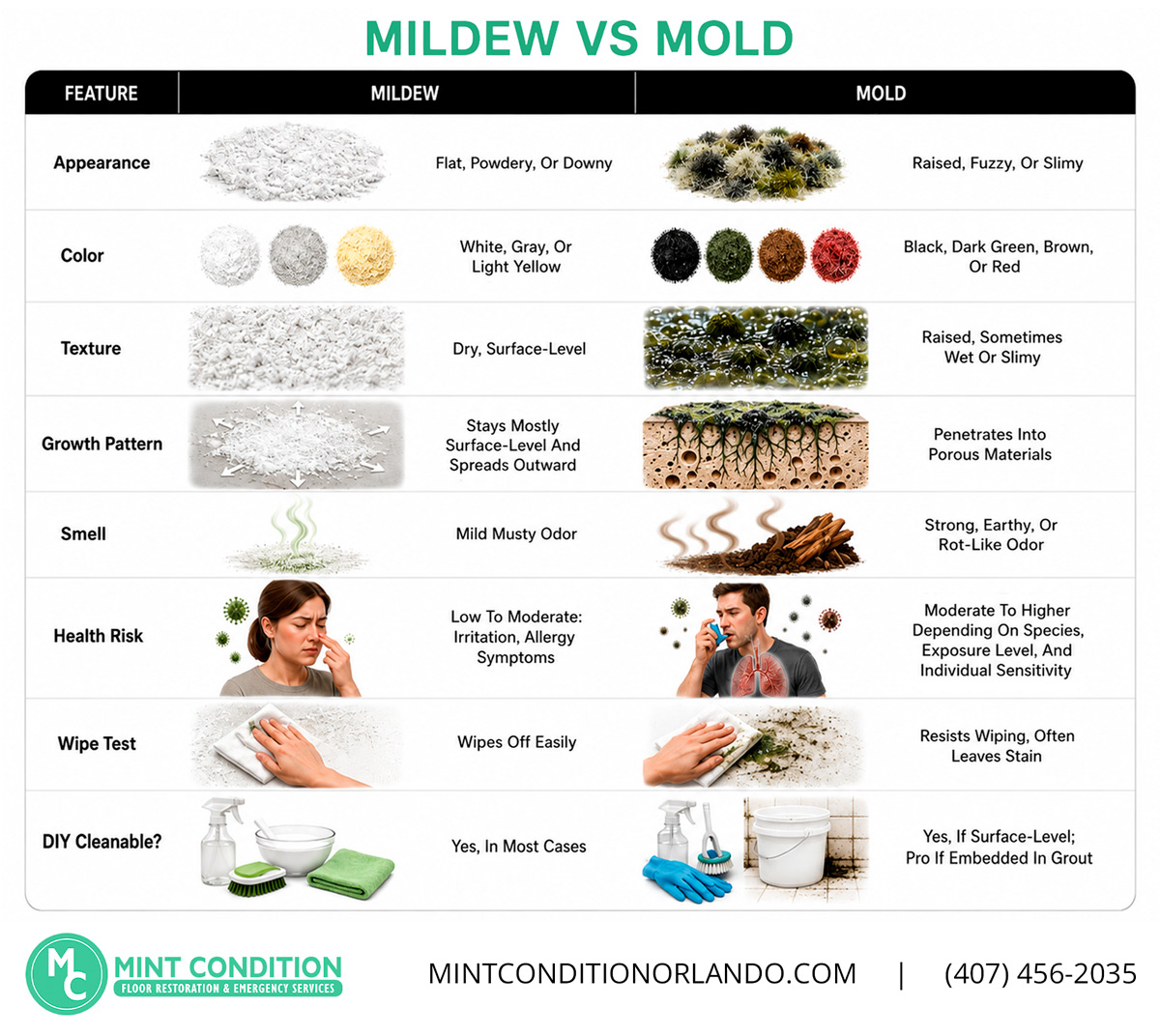
Mildew vs Mold: Quick Reference
| Feature | Mildew | Mold |
|---|---|---|
| Appearance | Flat, powdery, or downy | Raised, fuzzy, or slimy |
| Color | White, gray, or light yellow | Black, dark green, brown, or red |
| Texture | Dry, surface-level | Raised, sometimes wet or slimy |
| Growth pattern | Stays mostly surface-level and spreads outward | Penetrates into porous materials |
| Smell | Mild musty odor | Strong, earthy, or rot-like odor |
| Health risk | Low to moderate: irritation, allergy symptoms | Moderate to higher depending on species, exposure level, and individual sensitivity |
| Wipe test | Wipes off easily | Resists wiping, often leaves stain |
| DIY cleanable? | Yes, in most cases | Yes, if surface-level; Pro if embedded in grout |
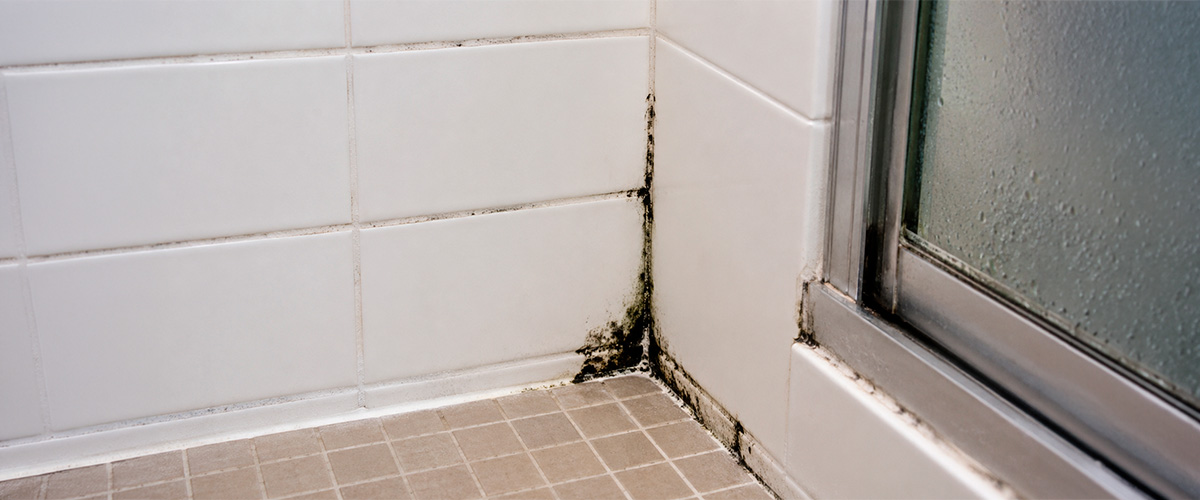
Shower Mildew vs Mold
Mildew and mold are both fungi that show up in showers, but they’re not the same organism; they don’t behave the same way, and they don’t respond to the same level of treatment. Here’s what each one actually is.
Mildew vs. Mold in Shower: How to Tell the Difference and Health Risks
What Is Mildew?
Mildew is a surface fungus that grows flat on damp surfaces and stays there. It doesn’t penetrate materials the way mold does. In showers, it typically appears as a white, gray, or light yellow powdery or downy film on tile, grout, and shower curtains.
Mildew is the earlier-stage growth. It shows up quickly in humid bathrooms with poor ventilation and limited airflow. The good news is that because it stays on the surface, it’s usually much easier to clean than mold. A standard bathroom cleaner or a diluted vinegar solution applied with a scrub brush is often enough to remove it.
What Is Mold?
Mold is a more invasive fungus that penetrates porous materials rather than sitting on top of them. In showers, it commonly appears in grout lines, caulk seams, and corners where moisture persists. It’s typically raised, fuzzy, or slimy and comes in darker colors including black, dark green, brown, and occasionally red.
Unlike mildew, mold doesn’t just sit on the surface waiting to be wiped away. Mold sends tiny thread-like filaments, called hyphae, into porous materials like grout and caulk. That’s what makes it so frustrating. You scrub the surface, it looks better for a little while, and then the same dark spot shows back up. Why? Because you cleaned what you could see, but the deeper growth was still there.
Mildew Health Risks And Health Effects
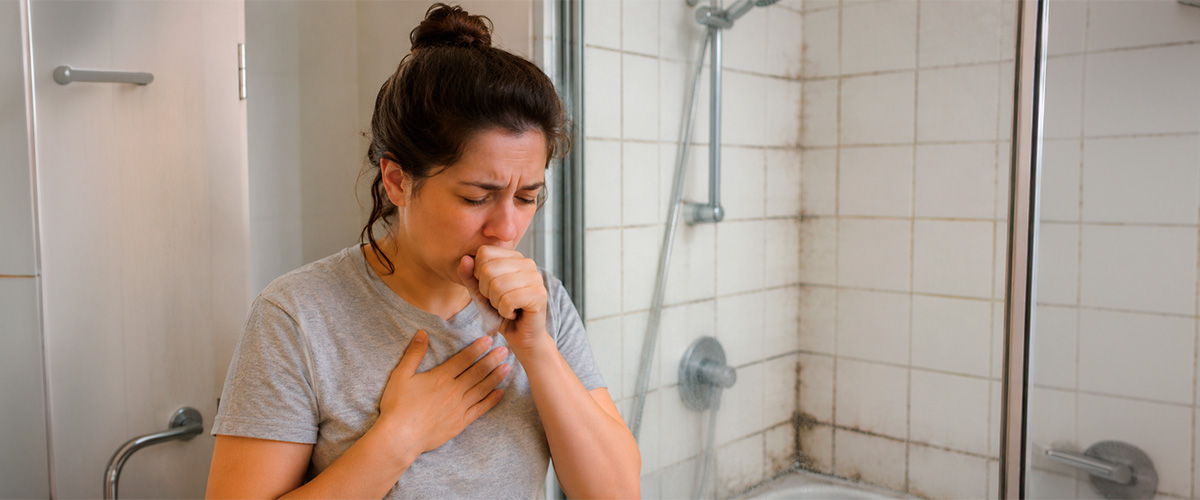
Mildew is usually less serious than mold, but it is not completely harmless. Surface mildew can release spores into bathroom air, and repeated exposure may cause sneezing, nasal congestion, coughing, itchy eyes, or skin irritation, especially for people with asthma, allergies, respiratory conditions, or weakened immune systems.
For healthy adults
A small patch of surface mildew on tile or grout is unlikely to cause serious harm with short-term exposure. That said, you’re breathing in that bathroom air every single day. Mildew releases spores into the air, and repeated exposure in an enclosed space can cause irritation-like symptoms over time, even in people without pre-existing conditions.
For sensitive or higher-risk individuals
For sensitive or higher-risk individuals, mildew deserves extra attention. People with asthma, allergies, respiratory conditions, weakened immune systems, children, and older adults may be more likely to react to repeated mildew exposure in a small, enclosed bathroom. Even surface-level mildew can release spores into the air, and breathing them in daily may contribute to:
- Sneezing and nasal congestion
- Coughing and wheezing
- Itchy or watery eyes
- Skin irritation
In summary, mildew may start as a surface issue, but if someone in your home is more sensitive, it’s worth cleaning it quickly and fixing the moisture problem before it keeps coming back.
Mildew vs. Mold in Shower: How to Tell the Difference and Health Risks
Is Mildew As Dangerous As Mold?
No. Mildew is generally less dangerous than mold. Mildew stays mostly on the surface, is easier to clean, and does not penetrate porous materials the way mold does. Mold, depending on the species, can produce mycotoxins, penetrate grout and drywall, and cause more serious health effects with prolonged exposure. Both warrant prompt attention in a bathroom used daily, but mold poses a significantly higher risk in most situations.
Is It Safe to Shower with Mildew?
Showering with a small amount of mildew present is generally considered low risk for healthy adults. However, “safe” is relative, and the answer depends on how much mildew is present, how long it has been there, and the health of the people using the bathroom.
So, if you see mildew, don’t panic but don’t ignore it either. Clean it promptly, fix the moisture or ventilation issue that allowed it to grow, and check the area again to make sure it doesn’t return.
If it keeps coming back in the same spot, that’s your clue. You may not be dealing with simple surface mildew anymore. The problem could be deeper.
Is Breathing In Mildew Harmful?
Mildew can still release spores into the air. And in a small, enclosed bathroom where you’re showering and breathing in that humid air every day, repeated exposure can start to bother you.
For some people, especially anyone with allergies, asthma, or other sensitivities, mildew may trigger irritation-like symptoms such as sneezing, nasal congestion, itchy eyes, or general respiratory discomfort. So even if mildew is usually easier to remove than mold, it’s still something you want to clean up and prevent from coming back.
How Do You Know If Mildew Is Making You Sick?
The clearest sign that mildew may be affecting your health is a pattern of symptoms that improve when you leave the bathroom or home and return when you go back. Persistent nasal congestion, coughing, itchy eyes, or skin irritation that does not resolve with typical allergy treatment, combined with visible mildew growth in your bathroom, is a strong indicator. If symptoms persist, consult a healthcare professional.
How Long Does Mildew Sickness Last?
Mildew-related symptoms typically improve within hours to days once exposure is removed. For sensitive individuals or those with asthma or allergies, symptoms may linger longer if spores remain in the air or on surfaces. If symptoms persist beyond a few days after the mildew has been cleaned and the moisture source addressed, consult a healthcare professional as other factors may be involved.
What Are The Effects Of Mildew On Humans?
Mildew exposure most commonly causes irritation-like symptoms including sneezing, nasal congestion, coughing, itchy or watery eyes, and skin irritation. With prolonged exposure in an enclosed space, some individuals experience headaches and fatigue. People with asthma, seasonal allergies, or weakened immune systems tend to experience more pronounced symptoms than healthy adults.
Mildew Vs. Mold in Shower: How to Tell Them Apart
Telling mildew and mold apart comes down to four things: color, texture, smell, and how it responds when you try to clean it. The wipe test is the fastest and most reliable field check you can do without any special equipment.
The Wipe Test: A Simple Field Test
The wipe test is the quickest way to tell mildew and mold apart in your shower. Dampen a cloth with water or a mild bathroom cleaner and wipe the affected area firmly.
Here’s what the result tells you:
- Wipes off completely with minimal effort: Almost certainly mildew. Surface fungus that hasn’t penetrated the material.
- Smears but doesn’t fully come off: Early-stage mold. It’s starting to penetrate but hasn’t gone deep yet.
- Resists wiping entirely or leaves a dark stain after cleaning: Mold that has penetrated below the surface. Surface cleaning alone won’t resolve it.
Pro tip: on dark-colored grout, both mildew and early mold can be hard to see clearly. If the wipe test result is inconclusive, check for smell. Mildew has a mild, musty odor. Mold typically has a stronger, more persistent earthy or rot-like smell that comes back quickly even after cleaning.
Something Mint Condition’s tile and grout cleaning technicians notice consistently while on the job: customers are often surprised by how far the discoloration extends once the surface layer is removed during a professional cleaning. What looks like a small patch of mildew on the surface frequently turns out to be a much larger area of embedded growth underneath.
Mildew vs. Mold in Shower: How to Tell the Difference and Health Risks
Mold or Mildew in Shower?
If you’re still not sure which one you’re looking at after the wipe test, use this quick identification checklist:
It’s more likely mildew if:
- The growth is white, gray, or light yellow
- It has a flat, powdery, or dusty texture
- It wipes off easily with a damp cloth
- The smell is mild and goes away after cleaning
- It’s on the tile surface or upper grout lines
It’s more likely mold if:
- The growth is black, dark green, brown, or has color variation
- It has a raised, fuzzy, or slimy texture
- It resists wiping or leaves a stain behind
- There’s a persistent earthy or musty odor even after cleaning
- It keeps returning in the same spot within two weeks of cleaning
- It’s in deep grout lines, caulk seams, or corners that stay damp
One practical rule: if it keeps coming back in the same spot no matter how often you clean it, it’s almost certainly mold that has penetrated the grout or caulk below the surface. Mildew that returns quickly usually signals that the moisture conditions haven’t been addressed, but it responds to more frequent cleaning. Mold that returns quickly signals a substrate problem that surface cleaning can’t fix.
Not sure which color of mold you’re dealing with? Our guide on Types of Bathroom Mold breaks down black, green, brown, and pink varieties by appearance, location, and health risk.
Black Mold vs Mildew in Shower
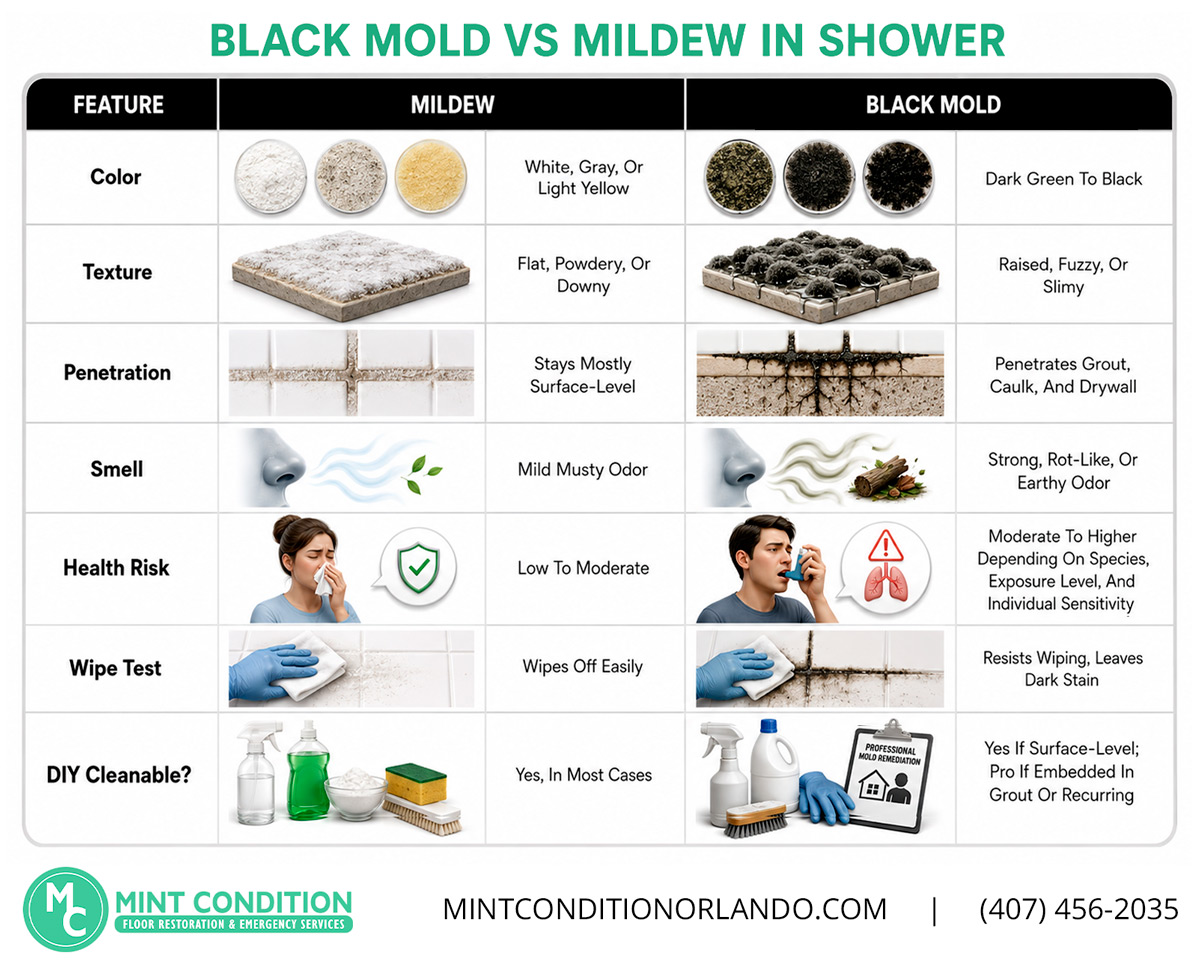
Black mold is a raised, fuzzy, or slimy dark green to black growth that penetrates porous surfaces like grout and caulk and carries a significantly higher health risk than mildew. Mildew is flat, powdery, and white to gray, stays mostly on the surface, and wipes off with standard cleaners. Both thrive in humid showers but require very different responses.
Black mold in a shower is most commonly Stachybotrys chartarum, or sometimes a dark strain of Aspergillus or Alternaria. It typically appears as dark greenish-black patches with a raised, fuzzy, or slimy texture in the spots that stay damp the longest: grout lines, caulk seams, corners, and areas where water sits after every shower.
Mildew looks noticeably different. It stays flat and powdery and is almost always lighter in color, white, gray, or pale yellow. It doesn’t have the raised, textured appearance of mold, and it doesn’t penetrate surfaces the way mold does. That’s actually what makes it easier to deal with. A standard bathroom cleaner and a scrub brush is usually enough to handle it when caught early.
The confusion between the two is understandable. Both show up in the same spots, both thrive in humid bathrooms, and early-stage black mold can look a lot like a darker patch of mildew. The clearest way to tell them apart is the wipe test. Mildew wipes off. Black mold resists, smears, or leaves a dark stain behind. And if it keeps coming back in the same spot within two weeks of cleaning, that’s mold, not mildew.
| Feature | Mildew | Black Mold |
|---|---|---|
| Color | White, gray, or light yellow | Dark green to black |
| Texture | Flat, powdery, or downy | Raised, fuzzy, or slimy |
| Penetration | Stays mostly surface-level | Penetrates grout, caulk, and drywall |
| Smell | Mild musty odor | Strong, rot-like, or earthy odor |
| Health risk | Low to moderate | Moderate to higher depending on species, exposure level, and individual sensitivity |
| Wipe test | Wipes off easily | Resists wiping, leaves dark stain |
| DIY cleanable? | Yes, in most cases | Yes if surface-level; Pro if embedded in grout or recurring |
The single most important practical difference: mildew responds to regular cleaning. Black mold that has penetrated grout or caulk does not. If you have scrubbed the same dark patch multiple times and it keeps coming back within two weeks, you are almost certainly dealing with mold, not mildew.
For a full breakdown of black mold identification, health risks, and when to call a professional, read our complete guide to Black Mold in the Bathroom: What It Looks Like, Where It Grows, and How to Remove It.
What Comes First, Mildew or Mold?
Mildew typically appears before mold because it colonizes damp surfaces faster. Mold can establish itself in the same conditions and penetrate deeper into porous materials if moisture is not corrected.
Here is how the progression typically works in a shower:
Stage 1: Moisture builds up
After a shower, grout, caulk, and tile surfaces can stay damp for a long time. If the bathroom doesn’t have good ventilation, that humidity just hangs around instead of drying out quickly.
Stage 2: Mildew establishes
Mildew spores are already floating around in most indoor air, so once they find a damp surface, they can settle in and start growing. At first, you’ll usually notice a flat, powdery white or gray film. It often appears along grout lines, caulk seams, or on the shower curtain.
Stage 3: Moisture conditions persist
If the underlying humidity and surface moisture are not addressed, the same conditions that allowed mildew to establish become increasingly favorable for mold spores to settle and grow.
Stage 4: Mold penetrates
At this point, mold has started growing on or near the mildew and is no longer just sitting on the surface.
It begins sending tiny filaments into porous materials like grout and caulk. That’s when the growth usually gets darker, develops more texture, and becomes much harder to remove with basic surface cleaning. You may scrub it, think it’s gone, and then see the same spot come back again.
The practical takeaway: mildew is the early warning sign. Finding it is your cue to address the moisture conditions in your bathroom before deeper mold growth has a chance to establish. Catching it at Stage 1 or 2 is a cleaning problem. Letting it reach Stage 3 or 4 is a substrate problem.
Mint Condition’s tile and grout cleaning technicians see this progression regularly in bathrooms that haven’t had professional grout cleaning in several years. The grout closest to the shower floor and the caulk bead at the tub line are almost always the furthest along. That’s where moisture persists the longest and where the progression from surface mildew to embedded mold happens fastest.
Mildew vs. Mold in Shower: How to Tell the Difference and Health Risks
What Is Worse, Mildew or Mold?
Mold is significantly worse than mildew in terms of both health risk and how difficult it is to address. Mildew stays mostly surface-level and responds to standard cleaning. Mold penetrates porous materials, produces a stronger health risk depending on the species, and requires deeper treatment to resolve fully.
Mildew can be bad when
- It is ignored, and moisture conditions are not corrected, because it creates the conditions for mold to follow.
- It is present in a bathroom used daily by someone with asthma or respiratory sensitivity, because even surface-level spore exposure in an enclosed space adds up over time.
Mold is worse because
- It penetrates grout, caulk, and drywall rather than sitting on the surface.
- It is harder to remove and keeps coming back after surface cleaning.
- Certain species produce mycotoxins linked to more serious health effects.
- It can indicate a hidden moisture problem behind walls or under flooring that surface cleaning will never address.
In summary: Mildew is the nuisance. Mold is the bigger problem.
If you spot either one, deal with it quickly, especially in a bathroom you use every day. Even mildew can irritate sensitive people when it keeps coming back, and mold can become harder to remove once it gets into grout, caulk, or damp corners.
If you have kids, older adults, or anyone with asthma, allergies, or other respiratory issues at home, don’t let either one stay, clean it early, keep the bathroom dry, and fix the moisture problem before it turns into something bigger.
When DIY Is Not Enough for Mold & Mildew Removal
Surface cleaning handles mildew and early-stage mold effectively when it’s caught quickly on non-porous surfaces. Three signals tell you when it’s time to go beyond DIY.
Mold or mildew returns within two weeks of cleaning
If growth is back in the same spot that quickly, the source has not been addressed. Either the moisture conditions are still present, the growth has penetrated below the surface, or both.
Grout stays dark after thorough cleaning and full drying
Residual discoloration after cleaning and complete drying is almost always mold that has penetrated the grout matrix. Household cleaners are not reaching the problem.
A Musty Smell Persists
If your shower still smells earthy, damp, or musty after you’ve cleaned every visible surface, there’s a good chance mold is hiding somewhere you can’t see. Common trouble spots include inside the grout, behind old caulk, or under a failing tile seal. So even when the tile looks clean on the surface, that lingering smell may be your clue that something deeper is still going on.
For mold that keeps returning in grout lines despite regular cleaning, professional tile and grout cleaning reaches what household products can’t. Mint Condition’s IICRC-certified tile and grout cleaning technicians use professional-grade extraction and treatment methods that go beyond surface cleaning to address mold at the grout level. If shower mold in your grout keeps coming back, that’s exactly the situation our tile and grout cleaning service is designed for.
For significant mold growth covering an area larger than 10 square feet, suspected mold behind walls, or any situation involving immunocompromised household members, contact a certified mold remediation specialist.
Mold vs Mildew Frequently Asked Questions
These are the questions people ask most often once they’ve spotted something growing in their shower and are trying to figure out exactly what they’re dealing with and what to do next.
Mildew vs. Mold in Shower: How to Tell the Difference and Health Risks
Can Mildew Be Harmful To Your Health?
Mildew can be harmful to your health, particularly with regular exposure in an enclosed space like a bathroom. It releases spores into the air that can cause irritation-like symptoms including sneezing, nasal congestion, coughing, and itchy eyes. People with asthma, allergies, or weakened immune systems are at higher risk. For healthy adults, short-term exposure to a small patch is unlikely to cause serious harm.
How to Tell If It’s Mold or Mildew in the Shower?
To tell mold from mildew in the shower, check color, texture, smell, and how it responds to cleaning. Mildew is flat, powdery, and white, gray, or light yellow. It wipes off easily and has a mild musty smell. Mold is darker, raised or slimy, resists wiping, and produces a stronger persistent odor. If it keeps coming back in the same spot after cleaning, it’s almost certainly mold.
Use the wipe test for a quick first check. Dampen a cloth with water or a mild cleaner, then wipe the affected area firmly. If it comes off cleanly, it’s probably mildew.
If it smears, resists cleaning, or leaves a stain behind, you’re more likely dealing with mold. That’s a sign the growth may be deeper than the surface, especially if it keeps coming back in the same spot.
Is It Okay to Live with Mildew?
Living with mildew is not recommended, even though it’s less serious than mold. Mildew releases spores into the air, and in a bathroom you use every day, repeated exposure in an enclosed space adds up. For healthy adults, short-term exposure to a small patch is unlikely to cause serious harm. For children, older adults, or anyone with asthma, allergies, or a weakened immune system, regular mildew exposure can cause persistent irritation-like symptoms including sneezing, nasal congestion, coughing, and itchy eyes.
Mildew won’t go away on its own, and ignoring it creates the conditions for mold to establish. Address it promptly, and don’t assume it’s harmless just because it’s easier to clean than mold.
How Long Can Mildew Survive?
Mildew spores can remain dormant for long periods, sometimes months or years, when conditions are dry or unfavorable. Active growth requires moisture, warmth, and a surface to colonize. When those conditions return, dormant spores can reactivate quickly, sometimes within 24 to 48 hours if conditions are favorable.
That’s why simply drying out the bathroom after a mildew outbreak isn’t enough to fully solve the problem. Even when the visible growth is gone, dormant spores can still remain on the surface. So if moisture comes back, mildew can start growing again.
To prevent that cycle, you need to: physically remove the mildew with a cleaner, and fix the moisture issue. Otherwise, you’re just giving it a chance to come back.
Is Pink Mold Mildew?
No. Pink mold is not mildew. What most people call pink mold is actually a bacterium called Serratia marcescens, not a fungus at all. It forms a slimy pink to orange-pink biofilm on warm, damp shower surfaces and feeds on soap scum and shampoo residue. Because it’s a bacterium, it doesn’t respond to antifungal mold treatments and needs a disinfectant instead. For a full breakdown of what pink mold is, whether it’s dangerous, and how to get rid of it, read our complete guide to Pink Mold in the Shower.
Conclusion
Mildew and mold both show up in showers for the same reasons: warmth, moisture, and leftover residue sitting on surfaces that don’t fully dry between uses.
The difference is what they do once they settle in. Mildew usually stays on the surface. If you catch it early, clean it the right way, and fix the moisture problem that allowed it to grow in the first place, you can usually handle it yourself.
Mold is more stubborn. It can work its way into porous materials like grout and caulk, which is why it often resists surface cleaning and keeps coming back until the material underneath is addressed.
Now that you know the difference between mildew and mold, you are in a much better position to make the right call for your specific situation. If what you are seeing wipes off cleanly and stays gone, you are likely dealing with mildew you can handle yourself. If it keeps coming back in the same spot, resists cleaning, or has that persistent musty smell, the problem has gone deeper than the surface.
Mint Condition’s IICRC-certified tile and grout cleaning technicians specialize in professional tile and grout cleaning that goes beyond surface treatment to address mold at the grout level, using eco-friendly, family- and pet-safe methods. Serving households across Orlando and Central Florida, we’re ready to help you get your shower back to clean and keep it that way.
Call us at (407) 456-2035 or fill out a contact form today for your free estimate.
References
- IICRC S520 Standard for Professional Mold Remediation: https://www.iicrc.org/page/IICRCStandards
- U.S. Environmental Protection Agency, Mold and Health: https://www.epa.gov/mold/mold-and-health
- U.S. Environmental Protection Agency, A Brief Guide to Mold, Moisture, and Your Home: https://www.epa.gov/mold/brief-guide-mold-moisture-and-your-home
- Centers for Disease Control and Prevention, Basic Facts About Mold and Dampness: https://www.cdc.gov/mold/faqs.htm
- American Academy of Allergy, Asthma and Immunology, Mold Allergy: https://www.aaaai.org/tools-for-the-public/conditions-library/allergies/mold-allergy
- CDC, Serratia marcescens: https://www.cdc.gov/hai/organisms/serratia-marcescens.html
- EPA, Care for Your Air: A Guide to Indoor Air Quality https://www.epa.gov/indoor-air-quality-iaq/care-your-air-guide-indoor-air-quality
- INDOOR HUMIDITY LEVELS AND ASSOCIATIONS WITH REPORTED SYMPTOMS https://stacks.cdc.gov/view/cdc/151648/cdc_151648_DS1.pdf
- Mold Course Chapter 9: Prevention, https://www.epa.gov/mold/mold-course-chapter-9